(+035) 527-1710-70
 google@gmail.com
 住所を選択してください

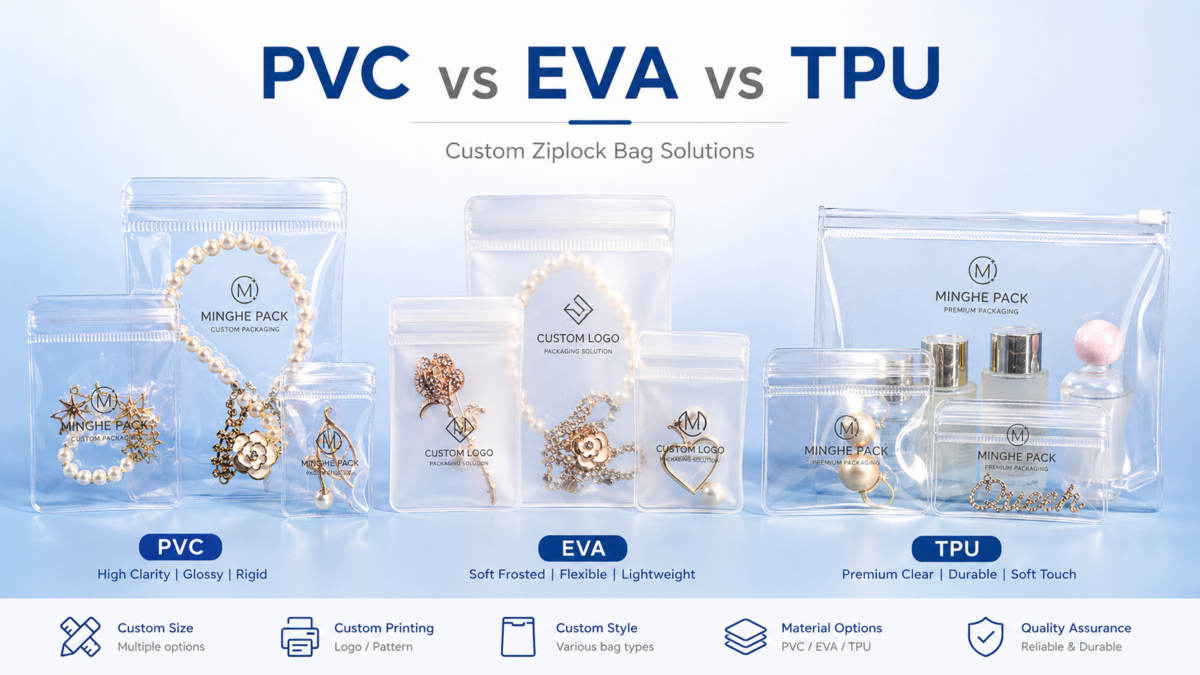
PVCの本当の違いは何ですか, エヴァ, TPUジップロックバッグ?
PVC は、優れた透明性と低コストを備えた硬質から半軟質のプラスチックです。, 小売および一般的なパッケージのデフォルトの選択肢となっています. エヴァ (エチレン酢酸ビニル) 柔らかいです, より弾力性のある, リサイクルが容易で塩素含有量が低いため、より環境に配慮した代替品として一般的に販売されています。. TPU (熱可塑性ポリウレタン) 最もプレミアムで耐久性のあるオプションです, 高い弾性を実現, 強い耐摩耗性, 極端な温度下でのパフォーマンスの向上, ただし材料費が大幅に高くなります.
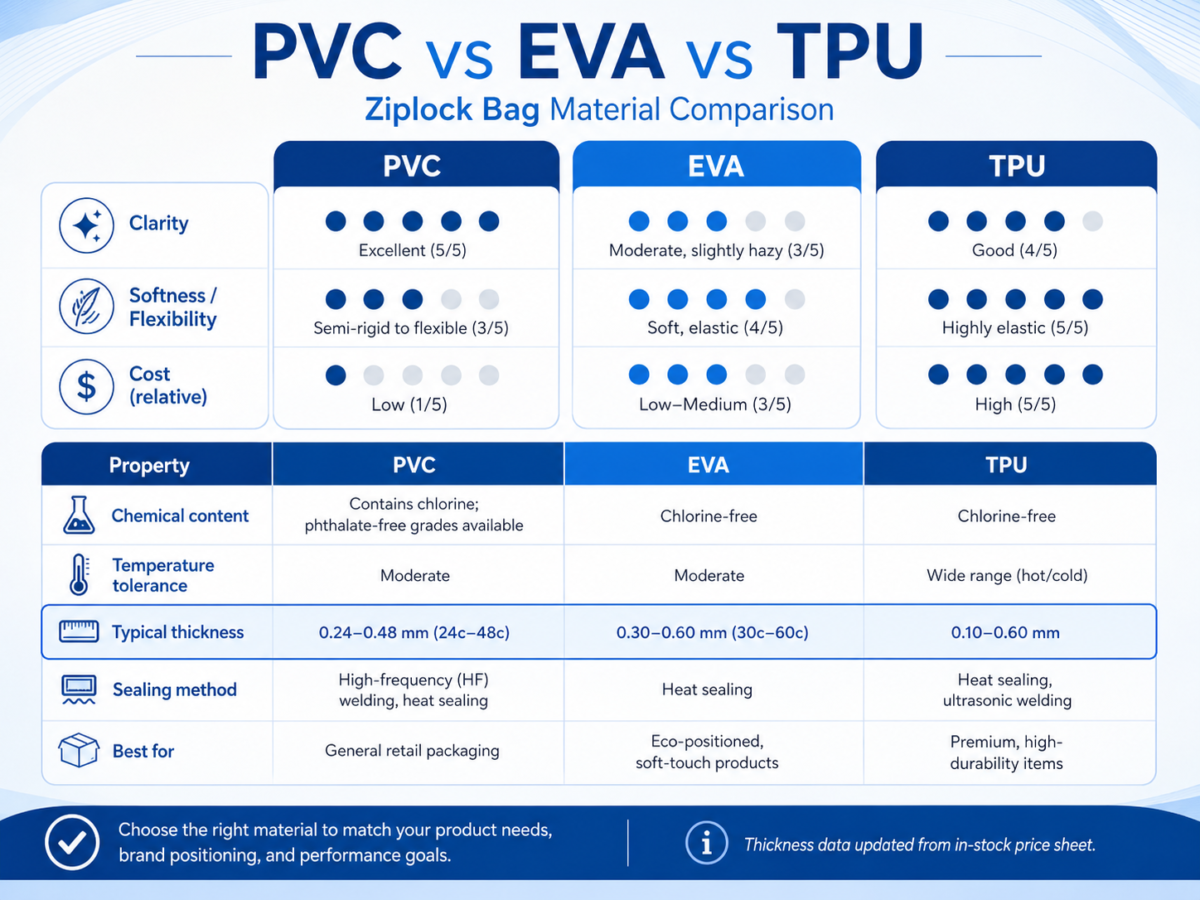
| 財産 | PVC | エヴァ | TPU |
|---|---|---|---|
| 明瞭さ | 素晴らしい | 適度 (わずかにかすんでいる) | 良い |
| 柔らかさ・柔軟性 | セミリジッドからフレキシブルまで | 柔らかい, 弾性のある | 高弾性 |
| 料金 (相対的) | 低い | 低~中 | 高い |
| 化学物質含有量 | 塩素を含む; フタル酸エステル不使用グレードも利用可能 | 塩素フリー | 塩素フリー |
| 温度許容差 | 適度 | 適度 | 広範囲 (暑い/寒い) |
| 一般的な厚さ | 0.24–0.48mm (24–4,800万) | 0.30–0.60mm (30–6000万) | 0.1–0.6mm |
| シール方法 | 高周波 (HF) 溶接, ヒートシール | ヒートシール | ヒートシール, 超音波溶接 |
| こんな方に最適 | 一般的な小売パッケージ | 環境に配慮した, ソフトタッチの製品 | プレミアム, 高耐久アイテム |
企業がジップロックバッグに PVC を選択すべき場合?
PVC は、依然として透明性が高く、大量の小売包装に最も費用対効果の高い選択肢です。, 印刷可能, エコラベルよりも価格が重要. 高周波できれいに溶接します (HF) 装置, シャープな縫い目ラインを保持, グラビア印刷やスクリーン印刷にも対応し、色再現性が安定しているため、化粧品包装の標準素材として採用されています。, ガーメントバッグ, そして文具ポーチも.
PVCを選択する企業は、使用されているグレードを確認する必要があります, すべての PVC が同じではないため. フタル酸フリーで RoHS 準拠の PVC 配合は現在、輸出向け生産の標準となっており、見積時に明示的に要求する必要があります。. PVCなどのプラスチックに使用されるフタル酸エステルについての詳細はこちら, 購入者はレビューすることができます 欧州化学庁によるフタル酸エステルの概要.
明和にて, PVCフィルムはインフレーションフィルム押出により社内で生産されています, 厚みを小刻みに調整できる (とても良い 0.01 mm) 既製の固定ゲージに依存するのではなく、特定の製品に適合するようにする.
- こんな方に最適: 化粧品, 服装, 文房具, 一般的な小売パッケージ
- 利点: 低コスト, 優れた透明度, 強力な印刷粘着力, きれいなHF溶接の継ぎ目
- 考慮: フタル酸エステル不使用を確認 / 輸出市場向けのRoHS準拠グレード
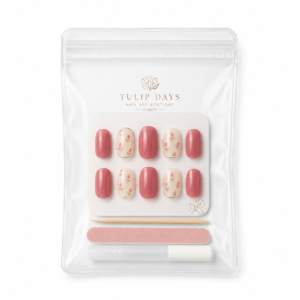
一部の購入者が包装に PVC よりも EVA を好む理由?
購入者は主に環境上の位置付けとより柔らかい手触りを求めて EVA に移行します。, コストを下げるためではありません - EVA は通常、標準の PVC よりも原材料の価格が若干高くなります。. EVAには塩素は含まれていません, これにより、環境に配慮していることを宣伝しているブランドの使用済み廃棄メッセージが簡素化されます。, 柔らかい質感は化粧品バッグによく好まれます。, トイレタリーポーチ, 持続可能性を重視した小売チャネル向けに販売される製品.
トレードオフとして、PVC と比較して光学的透明性が低下します。EVA は通常、わずかに曇っています。, これは、小売ディスプレイでの完全な視覚的透明性に依存する製品にとって重要になる可能性があります. EVA も高周波溶接ではなくヒートシールを必要とします。, 縫い目の外観が変わり、別の製造ツールが必要になります.
- こんな方に最適: 環境に配慮した化粧品バッグ, トイレタリーポーチ, ソフトタッチの小売パッケージ
- 利点: chlorine-free composition, soft texture, easier recyclability messaging
- 考慮: slightly reduced clarity versus PVC; requires heat-seal tooling, not HF welding
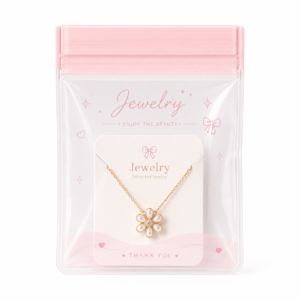
Is TPU Worth the Higher Cost for Ziplock Bag Packaging?
TPU is justified when a product requires repeated flexing, exposure to temperature extremes, or long-term durability beyond what PVC or EVA can reliably provide—for example, watch strap packaging, outdoor gear accessories, or premium electronics packaging where the bag itself is part of the perceived product value. TPU costs considerably more per unit than PVC or EVA, so it is typically reserved for premium product lines or applications where bag failure creates a real cost (damaged goods, warranty claims).
TPU の耐摩耗性と弾力性は、最終顧客が何度も再利用するバッグにも適しています。, 使い捨ての小売パッケージではなく. シールにはヒートシールまたは超音波溶着が必要です, ここではPVCよりも厚さの選択が重要です, TPU のコストはゲージに応じてすぐに変化するため、.
- こんな方に最適: watch strap packaging, プレミアムエレクトロニクスアクセサリー, 再利用可能なオーガナイザーポーチ
- 利点: 高弾性, 強い耐摩耗性, 広い温度耐性
- 考慮: 3つの中で最も材料費が高い; シールには超音波またはヒートシール装置が必要です, not HF welding
フルチェーン工場はバイヤーが適切な材料を選択するのにどのように役立ちますか?
フィルム制作時に素材を正しく選択しやすくなります, 印刷, ひとつ屋根の下でバッグ作りが行われます, 厚みがあるので, 明瞭さ, シールの品質は、複数のベンダーと個別に交渉するのではなく、各段階でテストおよび調整できます。. 以上 20+ 長年にわたるPVC製造, エヴァ, TPUパッケージ, Minhe のプロセスは、原材料の選択とインフレーションフィルムの押出から始まります。, 続いて印刷, 素材に合わせたシール方法で製袋→PVCのHF溶着, EVA用ヒートシール, TPUの熱または超音波溶着.
この垂直統合により、大量注文を確定する前にサンプルバッグを複数の素材で製造し、並べて比較することができます。, これは明瞭さを確認する最も信頼できる方法です, シール強度, 材料スペックシートだけではなく、実際の製品に対する手触り感.
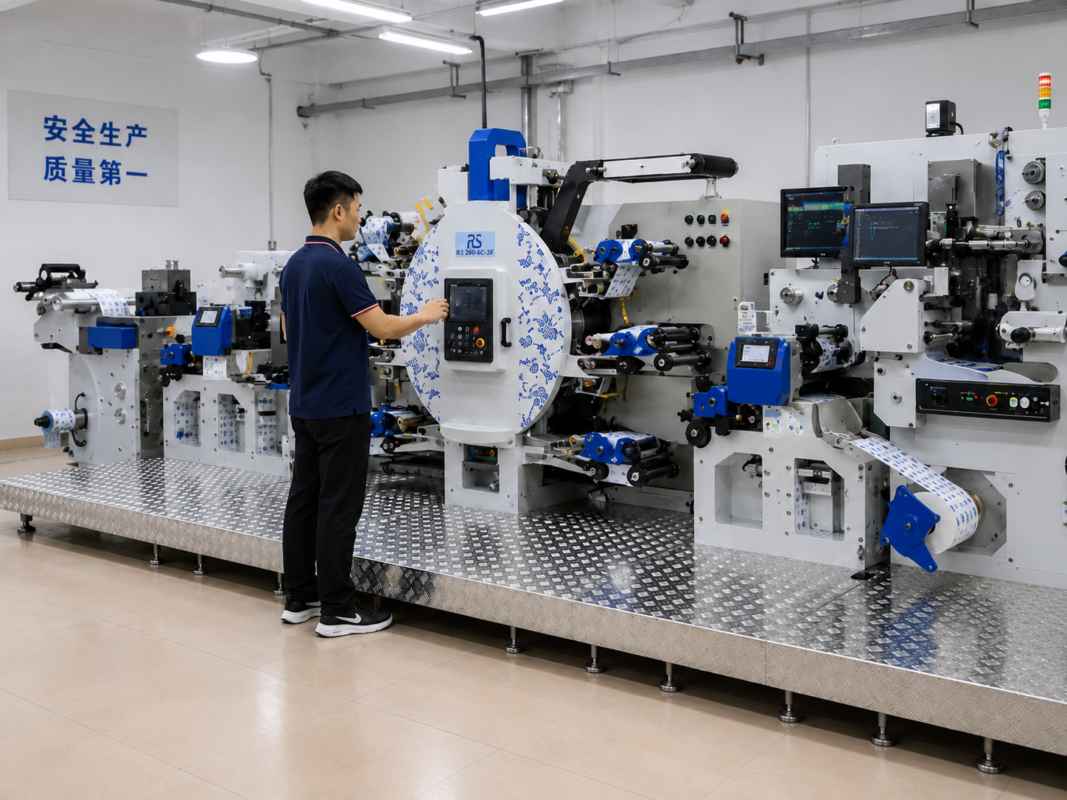
Minheのフルチェーン生産ラインが材料選択をサポート, 印刷, シーリングとカスタムジップロックバッグの製造.
よくある質問
缶PVC, エヴァ, and TPU all use the same ziplock or slider components?
常にではありません. Zipper and slider components need to be compatible with the base film’s sealing method—HF-welded PVC uses different zipper tooling than heat-sealed EVA or TPU, so component compatibility should be confirmed during sampling, not after tooling is set.
Is EVA actually more eco-friendly than PVC in practice?
EVA is generally chlorine-free and easier to position as eco-conscious, しかし、実際の環境への影響は、買い手市場のリサイクルインフラに依存します。. フタル酸フリーの PVC は主要な輸出規制にも準拠しています, そのため、選択は材料化学と同じくらいマーケティング上のポジショニングに帰着することがよくあります。.
ブランドやロゴの印刷に最適な素材はどれですか?
一般に PVC は、透明度が高く表面が滑らかであるため、印刷の鮮明さと色の精度が最高になります。, 鮮明なロゴの再現が優先される場合に好ましい選択肢となります。.
TPUはPVCに比べてどれくらい高価ですか?
TPU は通常、ユニットあたり標準の PVC の数倍のコストがかかります, 厚さとグレードに応じて, そのため、通常は一般的な小売用パッケージではなく、プレミアムまたは高耐久性の用途に使用されます。.