(+035) 527-1710-70
 google@gmail.com
 آدرسی را انتخاب کنید

پاسخ سریع: A PVC ziplock bag is a flexible, transparent pouch made from polyvinyl chloride film with a press-seal, نوار لغزنده, or double-track zipper closure. It’s waterproof, durable, and easy to customize — making it a common choice for jewelry, لوازم آرایشی, documents, and retail packaging, though not the best pick for food storage or curbside recycling.
What Is a PVC Ziplock Bag?
A PVC ziplock bag is a resealable pouch made from polyvinyl chloride (پی وی سی) film rather than the polyethylene (PE) used in most household “Ziploc”-style bags. PVC film is blended with plasticizers to stay soft and pliable, which gives these bags their glossy, high-clarity look and a bit more structure than thin PE at the same weight. That extra body is why PVC shows up so often in retail, لوازم آرایشی, and collectibles packaging rather than everyday food storage.
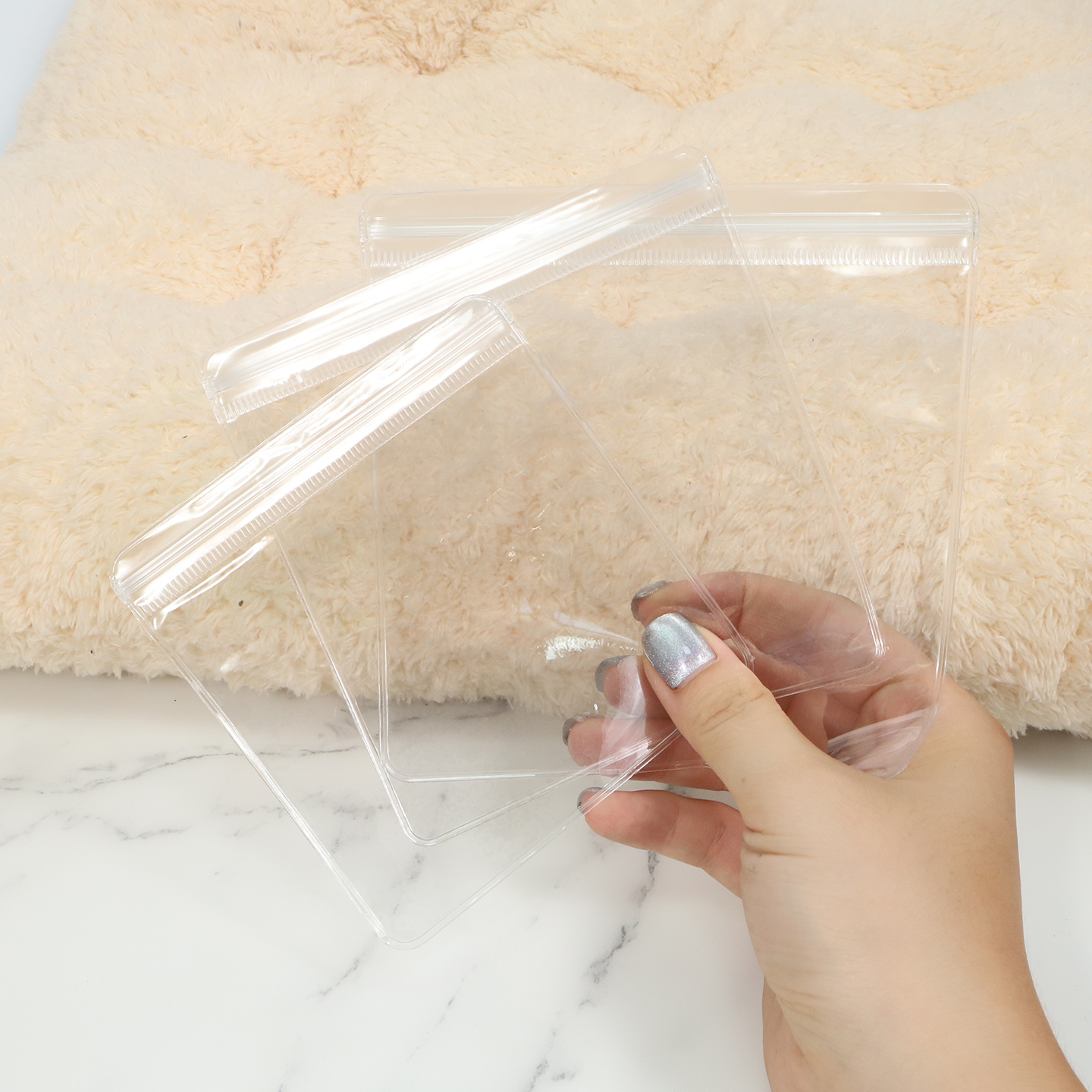
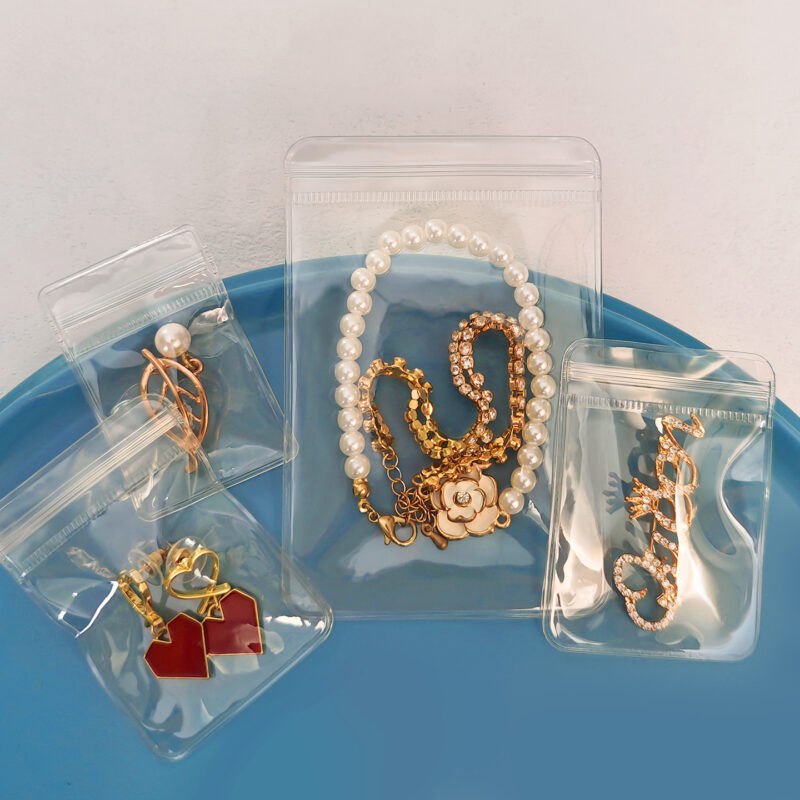
Empty Clear PVC Ziplock Bags
PVC Ziplock Bags Closure Types
Closures generally come in three types:
- Press-to-close (pinch-seal) — simplest and cheapest
- Slider zipper — glides open and closed, good for frequent use
- Double-track zipper — reinforced seal for heavier or bulkier contents
پی وی سی در مقابل. PE در مقابل. PP Ziplock Bags
| Feature | پی وی سی | PE (LDPE) | PP |
|---|---|---|---|
| وضوح | High-gloss, very clear | پاک کردن, slightly hazy | Excellent, براق |
| Flexibility | نرم, pliable | Very soft, stretchy | سفت تر |
| Cold performance | Fair | Excellent (freezer-safe) | Poor, brittle when cold |
| تحمل حرارت | کم, softens easily | کم | خوب |
| Standard for food use | خیر | بله | بله |
| Curbside recycling | Rare (code 3) | Limited (code 4) | Limited (code 5) |
| استفاده معمولی | Cosmetic, جواهرات, retail pouches | نگهداری مواد غذایی, general ziplock | Food display, کیسه های خرده فروشی |
Takeaway: pick PE for food, PP when heat resistance matters, and PVC when clarity, structure, and low cost outweigh eco-friendliness.
Common Uses of PVC Ziplock Bags
- جواهرات, coins, and collectible card storage
- لوازم آرایشی, toiletries, and travel organizer pouches
- Documents, لوازم التحریر, and ID sleeves
- Retail and promotional packaging, including clear-bag security compliance
- Watch cases and small-electronics protection
- Craft supplies and small-parts organization
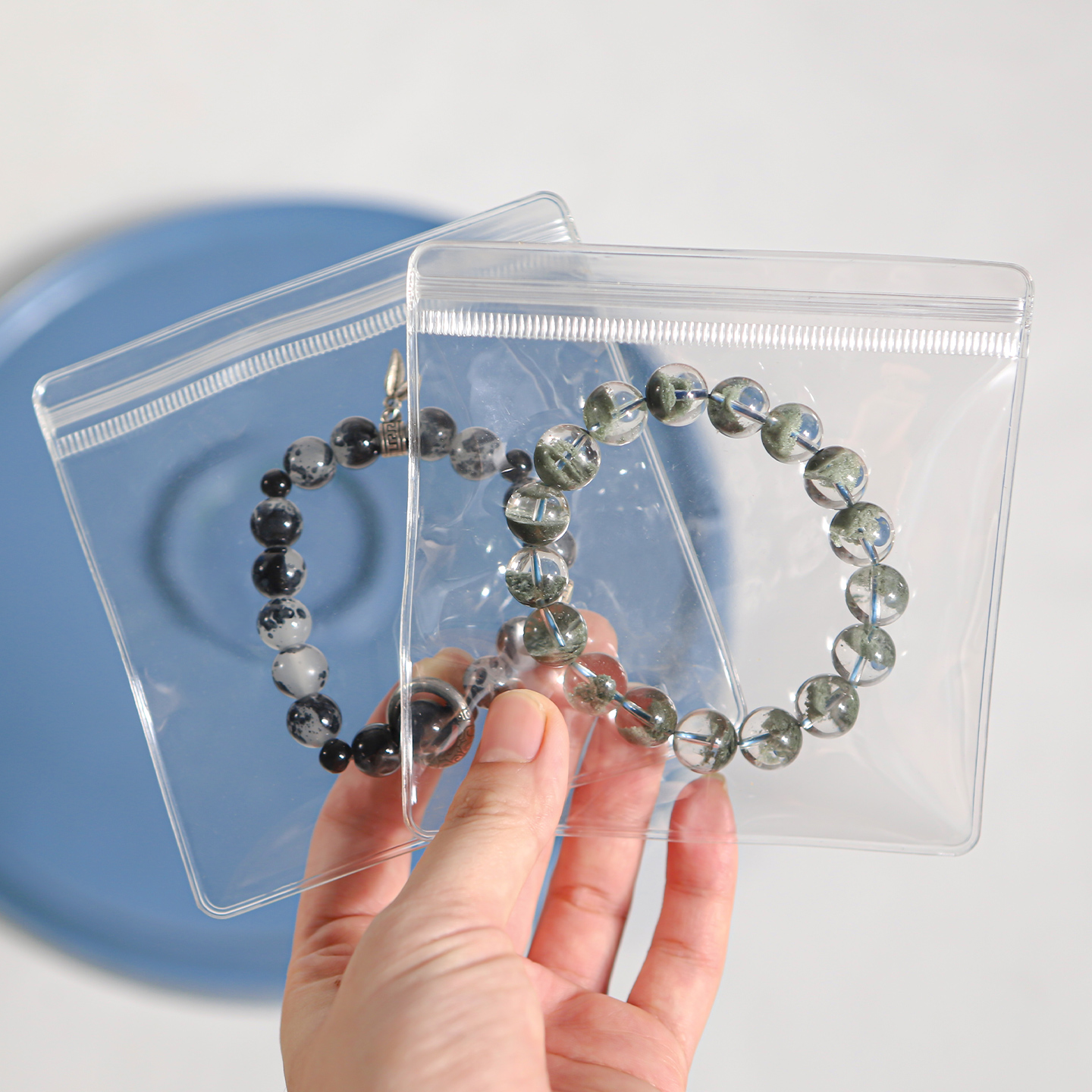
Clear PVC Ziplock Bags for Bracelet Packaging
PVC Ziplock Bags Thickness & راهنمای اندازه
Thickness is measured in mils (1 mil = 0.0254 میلی متر) or millimeters. Match it to what the bag holds and how roughly it will be handled.
| Gauge | Approx. ضخامت | بهترین برای |
|---|---|---|
| Light | 0.04–0.1 mm (≈1.5–4 mil) | Cards, stamps, جواهرات, light paperwork |
| Standard | 0.1–0.3 mm (≈4–12 mil) | General retail pouches, لوازم التحریر |
| Heavy-duty | 0.3–0.8 mm (≈12–31 mil) | Structured cosmetic bags, repeated reuse |
Sizing tip: add about 0.5 در (1.3 سانتی متر) to the item’s width for a press-seal closure, or up to 1.5 in for a slider, so the contents clear the zipper track.
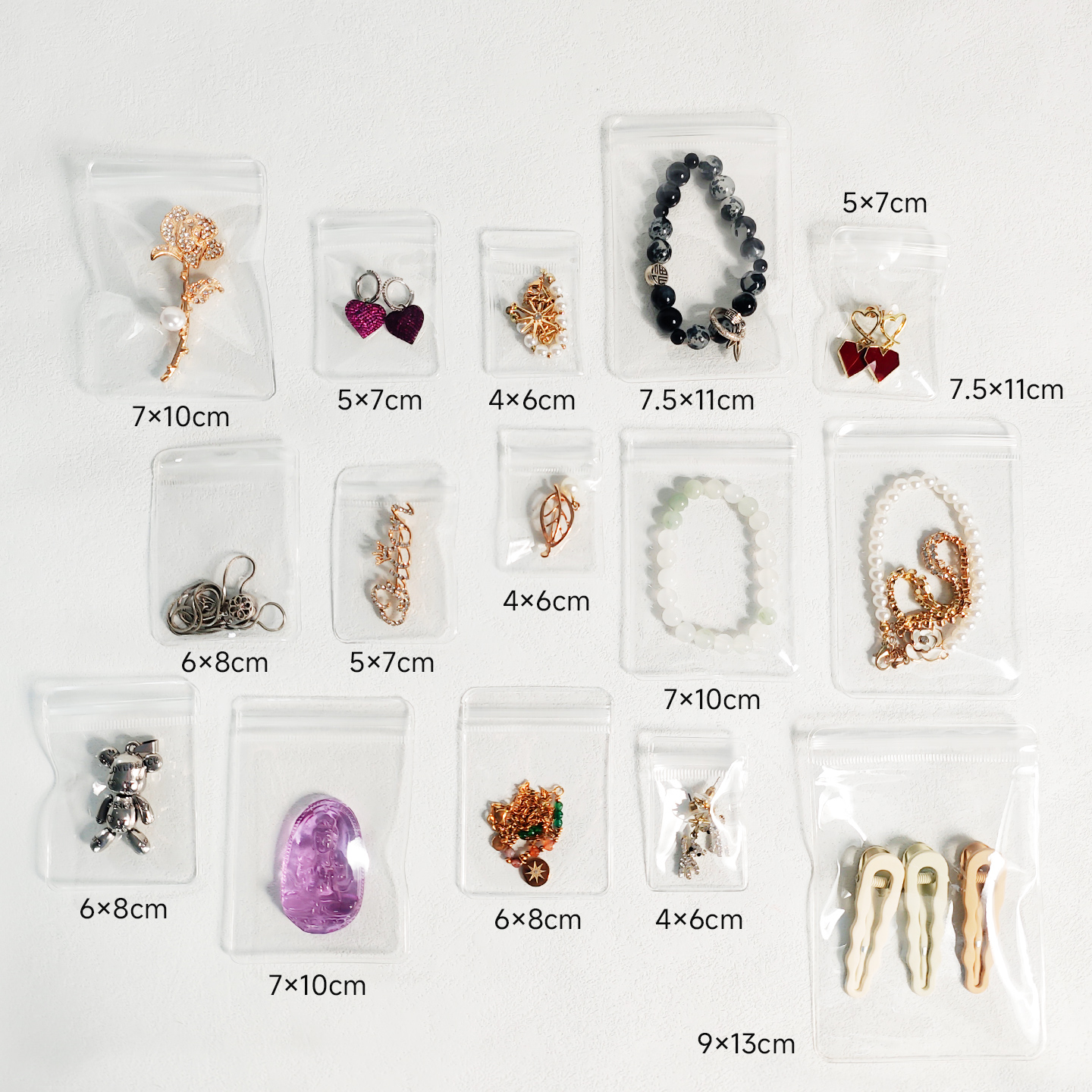
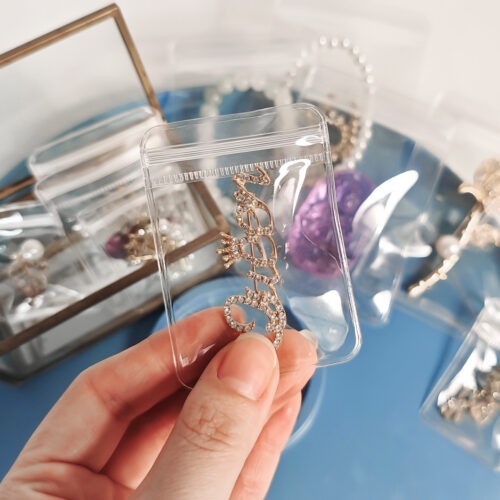
PVC Ziplock Bags Size Guide for Jewelry Packaging
PVC Ziplock Bag Pros and Cons
| جوانب مثبت | منفی |
|---|---|
| Fully waterproof and moisture-proof | Not biodegradable; low recycling rate |
| Crystal-clear — contents visible at a glance | May contain phthalate plasticizers |
| Durable, resists tearing and abrasion | Can yellow or stiffen with UV/heat exposure |
| Wipes clean easily | Noticeable “new plastic” smell when fresh |
| Inexpensive to produce at scale | Scratches more easily than woven fabric |
| Highly customizable (اندازه, رنگ, print, gauge) | Not ideal for direct food contact |
Is PVC Safe? Food Contact & Recycling
Standard flexible PVC is generally not recommended for direct food contact unless it’s specifically certified food-grade and phthalate-free. The FDA currently authorizes only nine specific phthalates for food-contact use, and most everyday PVC bags aren’t tested against that standard — PE or PP remains the safer default for food storage.
On disposal, PVC carries recycling code #3. Most curbside programs won’t take it because of its chlorine content and the specialized equipment needed to process it separately. If sustainability is a priority, ask suppliers about phthalate-free formulations, or compare EVA or TPU, both of which are generally easier to recycle.
How to Choose the Right Bag
- Match thickness to the contents — sharp or heavy items need a higher mil count
- Pick the closure — press-seal for occasional use, slider or double-track for frequent opening
- Confirm the finish — clear, مات شده, holographic, or printed
- Check documentation — REACH or SGS test reports, or phthalate-free certification, if the bag will touch skin or food
- Size with clearance — measure the actual product, then add allowance for the zipper track
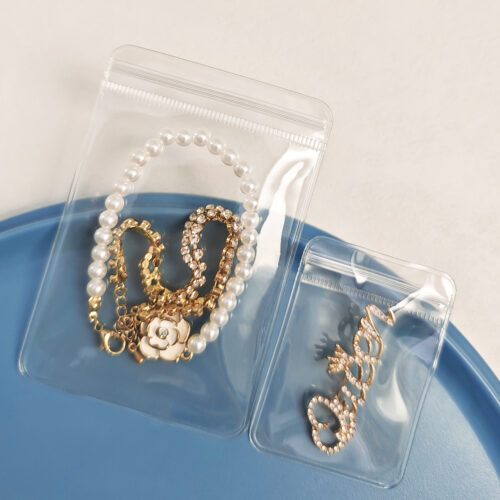
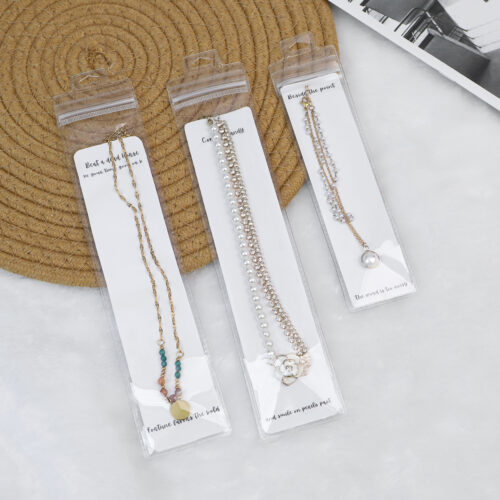
Custom & Wholesale Sourcing
Overseas manufacturers typically set MOQs between 300 و 1,000 قطعات, with unit pricing around $0.20–$3 depending on size, gauge, and print complexity. Before placing a bulk order:
- Request a pre-production sample to check seam strength and zipper action
- Ask for ISO 9001 or REACH documentation
- Confirm lead time — most factories quote 10–20 days after art approval
- Clarify what’s customizable: dimensions, gauge, رنگ, finish, and logo printing (silk-screen for small runs, offset for larger ones)
سوالات متداول
Is a PVC ziplock bag the same as a Ziploc bag?
خیر. Most branded “Ziploc” bags are made of polyethylene, not PVC. PVC ziplock bags are a separate product line typically used for retail, cosmetic, and collectible packaging.
Can I use a PVC ziplock bag for food?
Only if it’s explicitly labeled food-grade and phthalate-free. Otherwise, choose a PE or PP bag instead.
Are PVC ziplock bags recyclable?
Rarely through household recycling. They carry resin code 3 and need specialized facilities most municipalities don’t have.
What thickness should I buy?
Light gauge (1.5–4 mil) for cards and jewelry; heavier gauge (12 mil and up) for structured, reusable pouches.
How is PVC different from EVA or TPU bags?
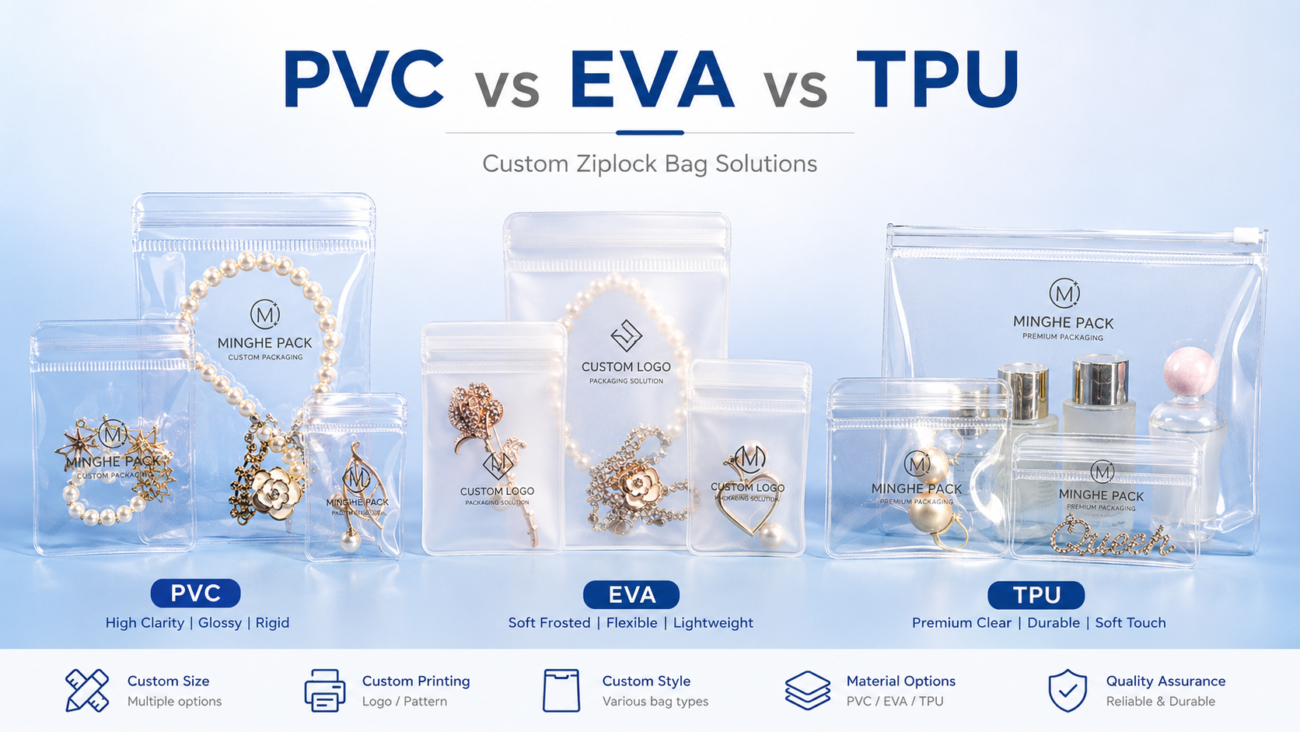
EVA and TPU are common PVC alternatives: EVA is softer and generally more eco-friendly, while TPU is more elastic and tear-resistant. Both typically cost more than standard PVC.