(+035) 527-1710-70
 google@gmail.com
 Elige una dirección

respuesta rapida: Una bolsa ziplock de PVC es flexible, Bolsa transparente hecha de película de cloruro de polivinilo con cierre a presión., control deslizante, o cierre de cremallera de doble vía. es resistente al agua, durable, y fácil de personalizar, lo que lo convierte en una opción común para joyería, productos cosméticos, documentos, y embalaje al por menor, aunque no es la mejor opción para el almacenamiento de alimentos o el reciclaje en la acera.
¿Qué es una bolsa ziplock de PVC??
Una bolsa ziplock de PVC es una bolsa resellable hecha de cloruro de polivinilo. (CLORURO DE POLIVINILO) película en lugar de polietileno (educación física) utilizado en la mayoría de los hogares “Ziploc”-bolsas de estilo. La película de PVC se mezcla con plastificantes para mantenerse suave y flexible., lo que le da a estas bolsas su brillo, Aspecto muy claro y un poco más estructurado que el PE fino con el mismo peso.. Ese cuerpo extra es la razón por la que el PVC aparece con tanta frecuencia en el comercio minorista, productos cosméticos, y envases coleccionables en lugar del almacenamiento diario de alimentos.
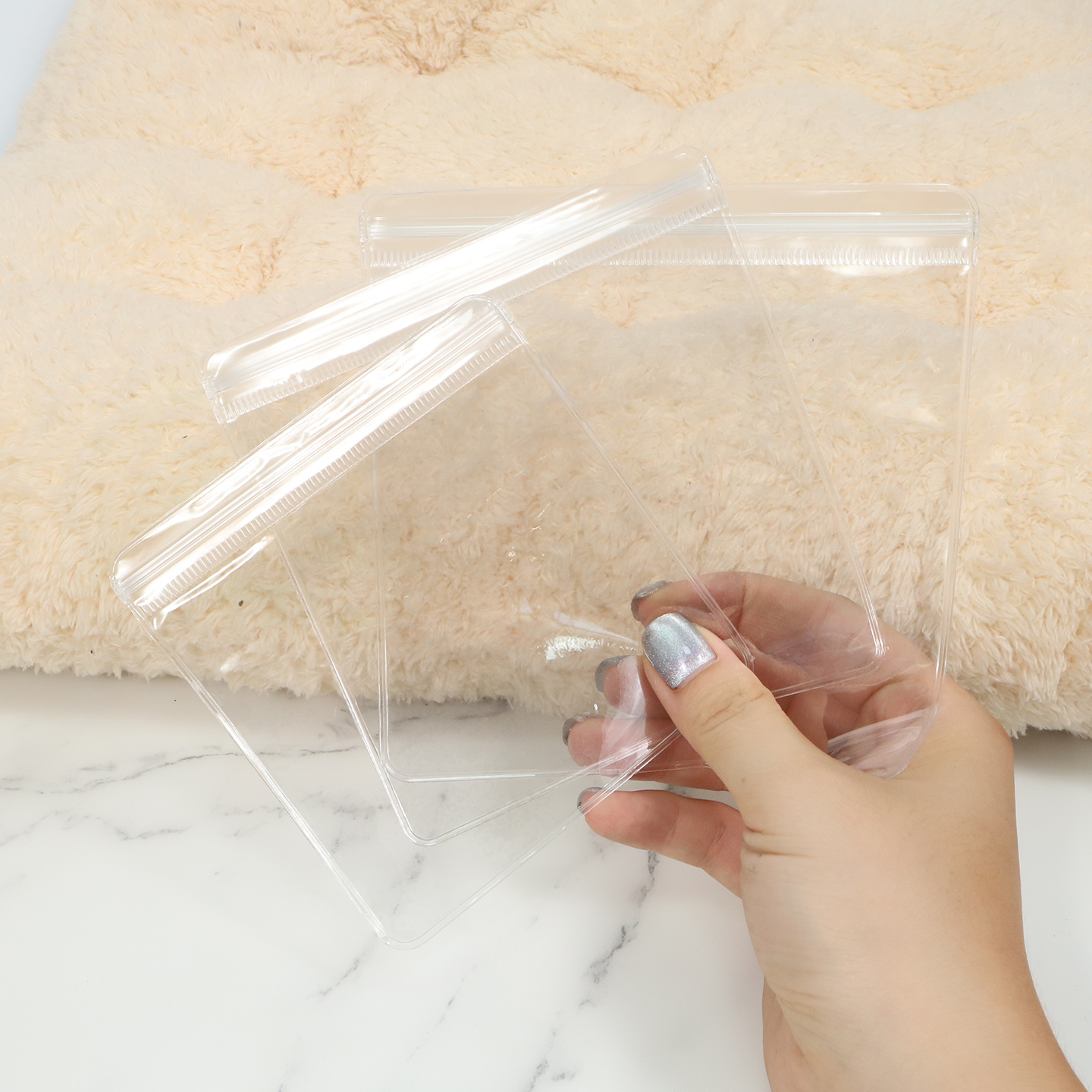
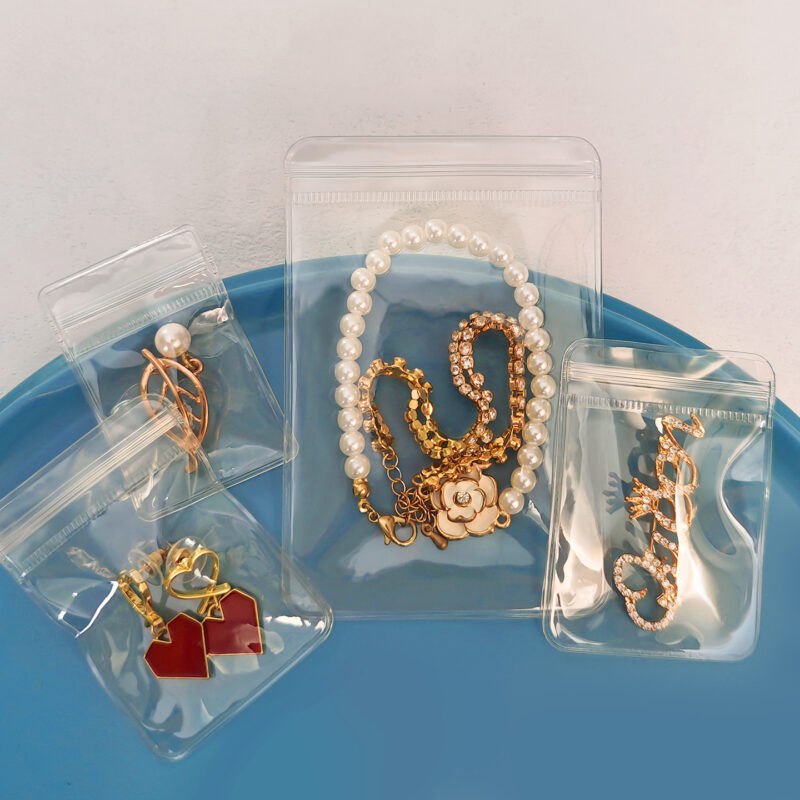
Bolsas Ziplock de PVC transparente vacías
Tipos de cierre de bolsas Ziplock de PVC
Los cierres generalmente vienen en tres tipos.:
- Presione para cerrar (sello de pellizco) - más simple y más barato
- Cremallera deslizante — se desliza para abrir y cerrar, bueno para uso frecuente
- Cremallera de doble vía — sello reforzado para contenidos más pesados o voluminosos
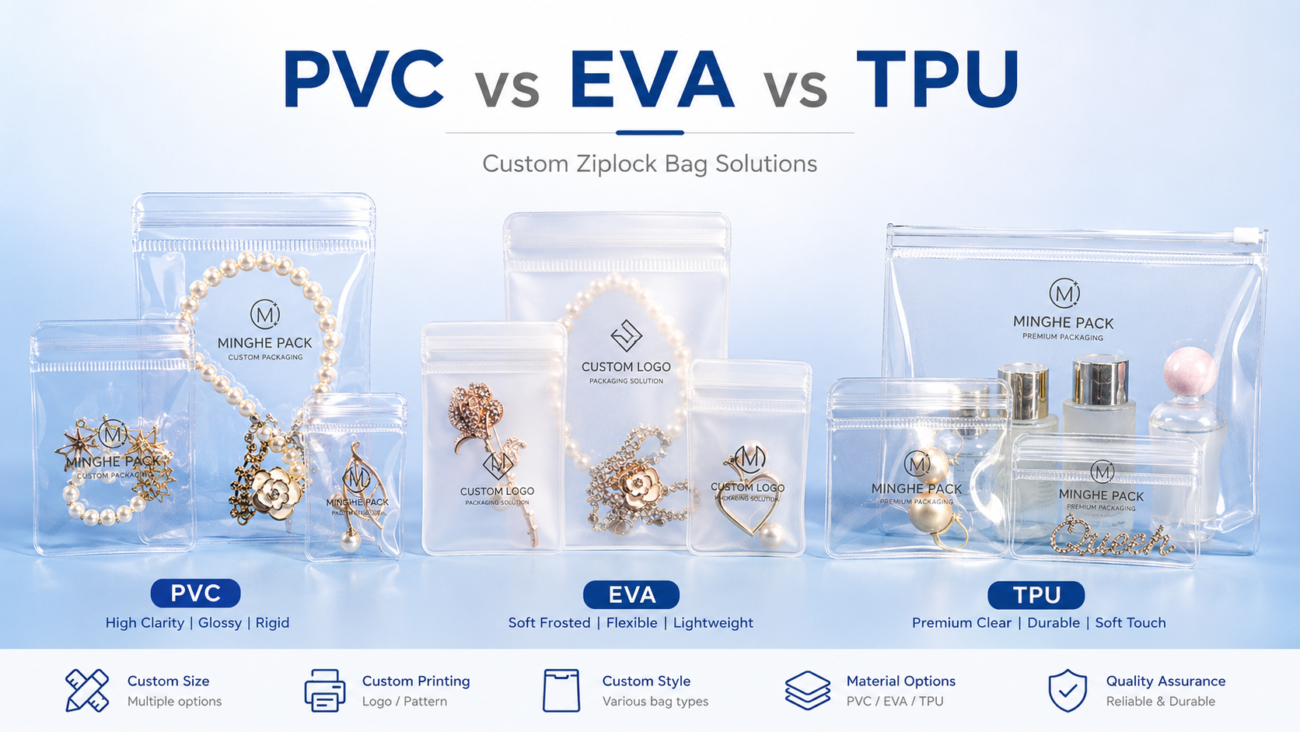
PVC versus. educación física frente a. Bolsas Ziplock de PP
| Característica | CLORURO DE POLIVINILO | educación física (PEBD) | PÁGINAS |
|---|---|---|---|
| Claridad | Alto brillo, muy claro | Claro, ligeramente confuso | Excelente, lustroso |
| Flexibilidad | Suave, flexible | muy suave, elástico | Más rígido |
| Rendimiento en frío | Justo | Excelente (apto para congelador) | Pobre, frágil cuando hace frío |
| Tolerancia al calor | Bajo, se suaviza fácilmente | Bajo | Bien |
| Norma para uso alimentario | No | Sí | Sí |
| Reciclaje en la acera | Extraño (código 3) | Limitado (código 4) | Limitado (código 5) |
| Uso típico | Cosmético, joyas, bolsas al por menor | Almacenamiento de alimentos, cierre zip general | exhibición de comida, bolsas al por menor |
Llevar: elige educación física para comer, PP cuando la resistencia al calor importa, y PVC cuando la claridad, estructura, y el bajo costo superan el respeto al medio ambiente.
Usos comunes de las bolsas Ziplock de PVC
- Joyas, monedas, y almacenamiento de tarjetas coleccionables
- Productos cosméticos, artículos de aseo, y bolsas organizadoras de viaje
- Documentos, papelería, y fundas de identificación
- Embalajes minoristas y promocionales., incluido el cumplimiento de la seguridad de la bolsa transparente
- Cajas de relojes y protección de pequeños aparatos electrónicos.
- Suministros para manualidades y organización de piezas pequeñas.
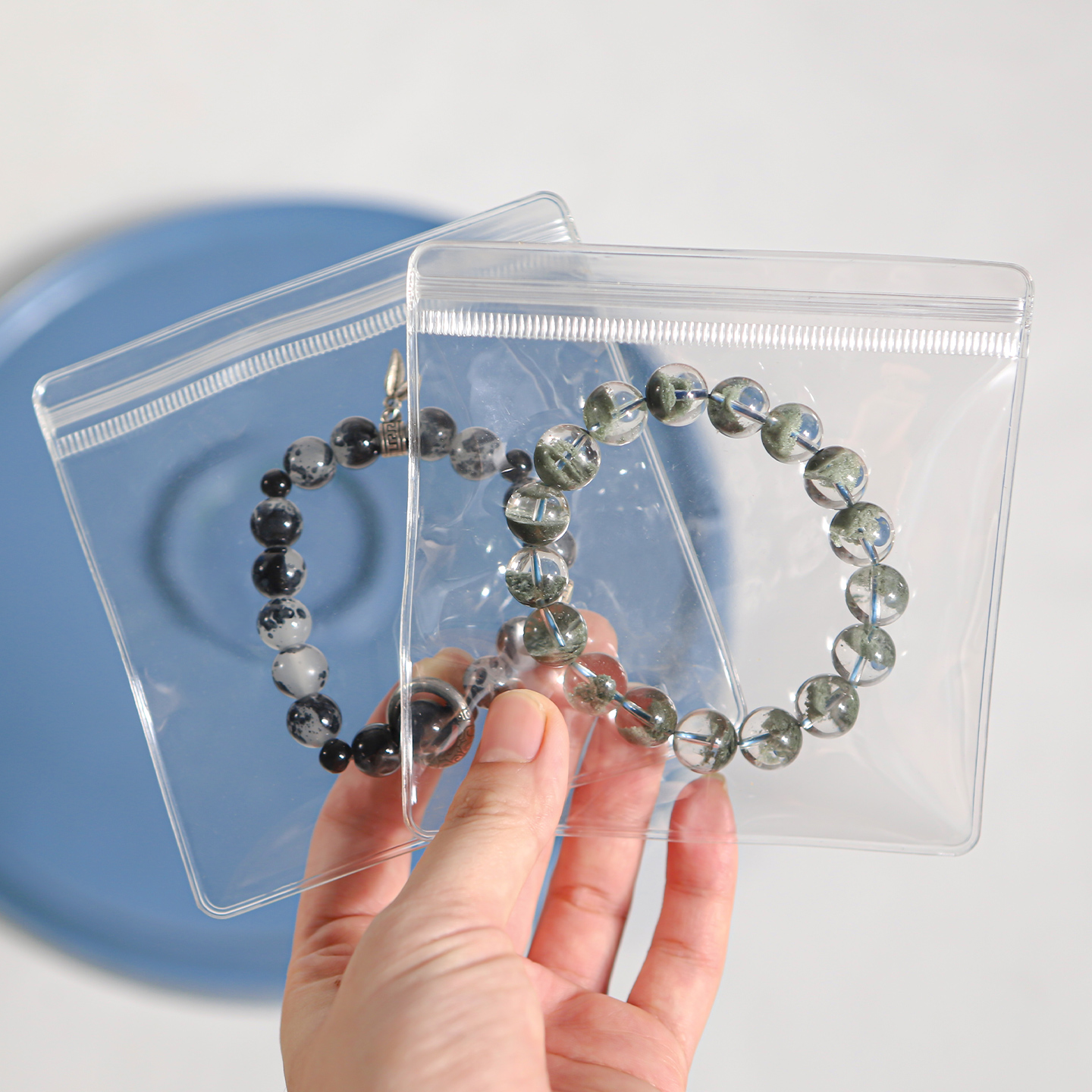
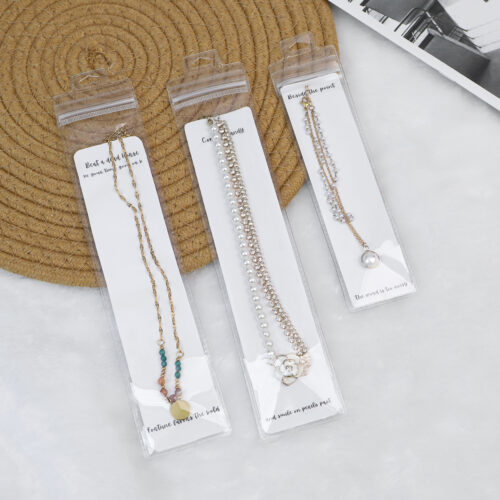
Bolsas Ziplock de PVC transparente para embalaje de pulseras
Grosor de las bolsas Ziplock de PVC & Guía de tallas
El espesor se mide en mils. (1 mil = 0.0254 milímetros) o milímetros. Combínelo con lo que contiene la bolsa y con qué brusquedad se manipulará..
| Indicador | Aprox.. espesor | Lo mejor para |
|---|---|---|
| Luz | 0.04–0,1 milímetros (≈1,5–4 mil) | Tarjetas, sellos, joyas, papeleo ligero |
| Estándar | 0.1–0,3 milímetros (≈4–12 mil) | Bolsas minoristas generales, papelería |
| Trabajo pesado | 0.3–0,8 milímetros (≈12–31 mil) | Bolsas de cosméticos estructuradas, reutilización repetida |
Consejo de tallas: agregar sobre 0.5 en (1.3 centímetro) al ancho del artículo para un cierre de sello a presión, o hasta 1.5 en un control deslizante, para que el contenido despeje la pista de la cremallera.
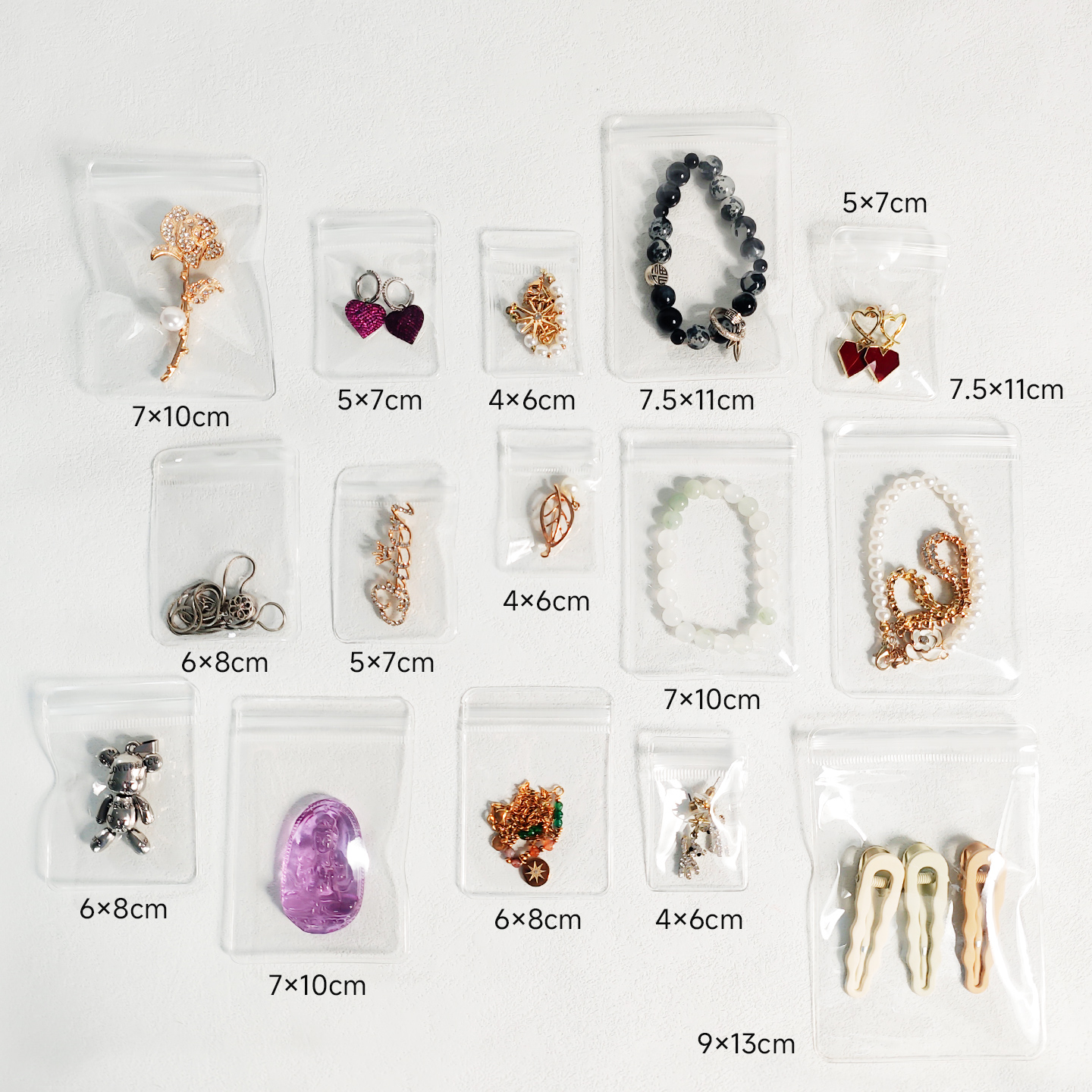
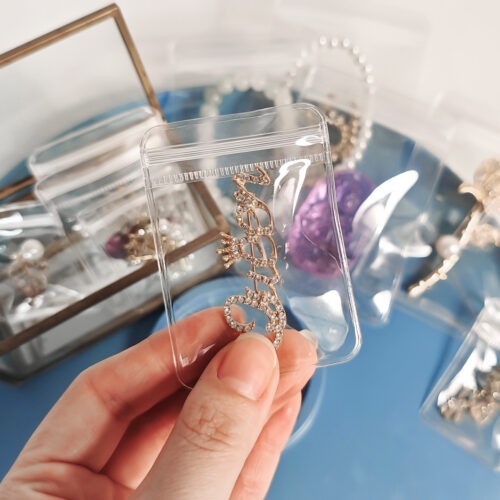
Guía de tamaños de bolsas Ziplock de PVC para embalaje de joyería
Pros y contras de la bolsa Ziplock de PVC
| Ventajas | Contras |
|---|---|
| Totalmente impermeable y a prueba de humedad | No biodegradable; baja tasa de reciclaje |
| Claro como el cristal: contenidos visibles de un vistazo | Puede contener plastificantes de ftalato. |
| Durable, resiste el desgarro y la abrasión | Puede amarillear o endurecerse con la exposición a los rayos UV o al calor. |
| Se limpia fácilmente | Notable “plastico nuevo” huele cuando está fresco |
| Barato para producir a escala | Se raya más fácilmente que la tela tejida. |
| Altamente personalizable (tamaño, color, imprimir, indicador) | No es ideal para el contacto directo con alimentos. |
¿Es seguro el PVC?? Contacto con alimentos & Reciclaje
El PVC flexible estándar generalmente es no recomendado para contacto directo con alimentos a menos que esté específicamente certificado como apto para uso alimentario y libre de ftalatos. Actualmente, la FDA autoriza solo nueve ftalatos específicos para uso en contacto con alimentos., y la mayoría de las bolsas de PVC de uso diario no se prueban según ese estándar: el PE o el PP siguen siendo los valores más seguros para el almacenamiento de alimentos..
En eliminación, El PVC lleva código de reciclaje #3. La mayoría de los programas en la acera no lo aceptan debido a su contenido de cloro y al equipo especializado necesario para procesarlo por separado.. Si la sostenibilidad es una prioridad, pregunte a los proveedores sobre formulaciones sin ftalatos, o comparar EVA o TPU, Ambos son generalmente más fáciles de reciclar..
Cómo elegir el bolso adecuado
- Haga coincidir el grosor con el contenido — los artículos afilados o pesados necesitan un recuento de milésimas más alto
- Elige el cierre — sello a presión para uso ocasional, deslizador o doble vía para apertura frecuente
- Confirmar el final - claro, escarchado, holográfico, o impreso
- Consultar documentación — Informes de prueba REACH o SGS, o certificación libre de ftalatos, si la bolsa tocará la piel o la comida
- Tamaño con liquidación — medir el producto real, luego agregue un margen para la pista de la cremallera
Costumbre & Abastecimiento mayorista
Los fabricantes extranjeros suelen establecer MOQ entre 300 y 1,000 piezas, con un precio unitario de entre $0,20 y $3, según el tamaño, indicador, y complejidad de impresión. Antes de realizar un pedido al por mayor:
- Solicite una muestra de preproducción para comprobar la resistencia de la costura y la acción de la cremallera.
- Preguntar por ISO 9001 o documentación REACH
- Confirme el plazo de entrega: la mayoría de las fábricas cotizan entre 10 y 20 días después de la aprobación del arte.
- Aclare qué es personalizable: dimensiones, indicador, color, finalizar, e impresión de logotipos (serigrafía para tiradas pequeñas, compensado para los más grandes)
Preguntas frecuentes
¿Es lo mismo una bolsa ziplock de PVC que una bolsa Ziploc??
No. Más marca “Ziploc” Las bolsas están hechas de polietileno., no PVC. Las bolsas ziplock de PVC son una línea de productos independiente que normalmente se utiliza para el comercio minorista., cosmético, y embalajes coleccionables.
¿Puedo usar una bolsa ziplock de PVC para comida??
Solo si está etiquetado explícitamente como apto para uso alimentario y sin ftalatos.. De lo contrario, elija una bolsa de PE o PP en su lugar.
¿Son reciclables las bolsas ziplock de PVC??
Rara vez a través del reciclaje doméstico.. Llevan código de resina 3 y necesitan instalaciones especializadas que la mayoría de los municipios no tienen.
¿Qué espesor debo comprar??
indicador de luz (1.5–4 millones) para tarjetas y joyas; calibre más pesado (12 mil y más) para estructurado, bolsas reutilizables.
¿En qué se diferencia el PVC de las bolsas de EVA o TPU??
EVA y TPU son alternativas comunes al PVC: EVA es más suave y, en general, más ecológica., mientras que el TPU es más elástico y resistente al desgarro. Ambos suelen costar más que el PVC estándar..