 (+035) 527-1710-70
 google@gmail.com
 Escolha um endereço

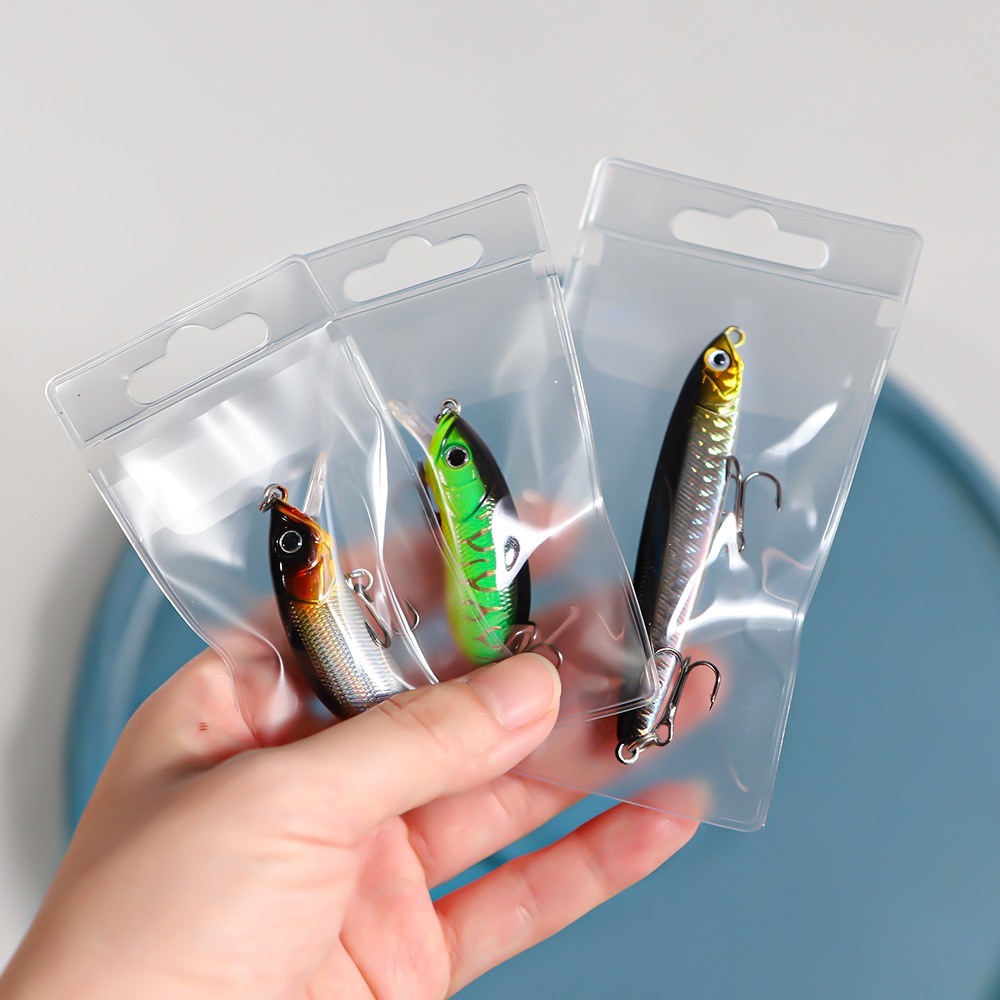
When choosing the right Fishing Lure Packaging Bags, qual material e espessura realmente protegem seu produto?For lures with exposed hooks, use 4–7 mil clear PVC vinyl — it’s stiffer than PE at the same thickness, so it resists a hook point instead of just flexing around it. For soft plastic baits with no sharp edges, a 2–3 mil PE or PVC bag with a good moisture seal is enough. Hardware-heavy lures (ganchos, blades, split rings) also need a VCI liner or coating to stop rust in sealed storage.
Everything below explains why, with the numbers and trade-offs a packaging buyer actually needs before placing an order.
The Core Mistake: Treating “Lure Packaging” as One Product
Soft plastic worms and treble-hook crankbaits have almost nothing in common as packaging problems. One needs a scent and moisture barrier. The other needs to survive a sharp metal point bouncing around inside a shipping carton for days. Buying one bag style for an entire product line is the single most common reason brands end up with returns from punctured packaging or rusted hooks on the shelf.
The fix is matching film material e grossura to what’s actually inside the bag — not defaulting to whatever the factory quotes fastest.
PVC Ziplock Bags vs. PE Ziplock Bags: Side-by-Side
| PVC Ziplock Bag | PE Ziplock Bag | |
|---|---|---|
| Clareza | Glass-clear, strong shelf presence | Slightly hazy |
| Puncture resistance (equal mil) | Higher — rigid film resists a point load | Lower — soft film flexes and lets the point migrate through |
| Cold weather (below 32°F / 0°C) | Can go brittle | Stays flexible |
| Reciclabilidade | Limitado (resin code 3) | Wide acceptance (resin code 4, PEBD) |
| Melhor para | Hooks, jigs, crankbaits, blister-pack backing | Soft baits, non-sharp bulk items, cold-storage inventory |
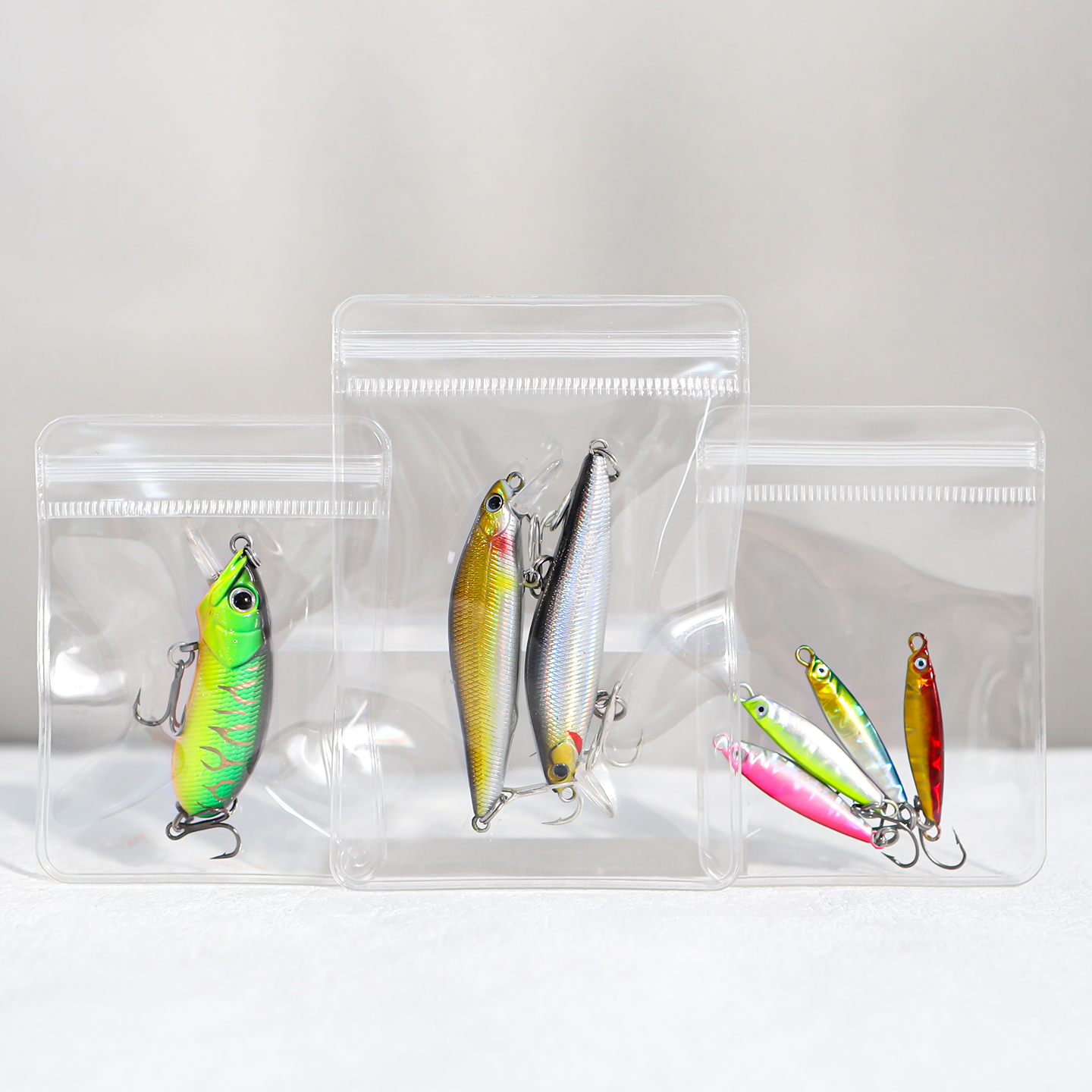
Rigid PVC film offers excellent glass-like clarity and holds its shape much better than standard PE film.
PVC pros: better clarity for retail display, holds shape under pressure, best-in-class puncture resistance per mil. PVC cons: lower recyclability, can crack in cold shipping conditions, facing regulatory pushback in some markets (more on that below).
PE pros: flexes instead of cracking in the cold, recycles easily, generally lower cost at heavier gauges. PE cons: needs roughly 6 mil or more to match what 4–5 mil PVC does against a hook point — so the cost advantage often disappears once you size up enough to get equivalent protection.
A common assumption is that any “thick enough” poly bag is hook-safe. It isn’t. A hook point puts all its force on a single tiny contact spot, and standard LDPE can still stretch and give way at that spot even at 3–4 mil, especially once the bag starts moving around in transit.
Mil Thickness by Lure Type
| Lure / Bait Type | Recommended Spec | Por que |
|---|---|---|
| Soft plastic worms, senkos | 2–3 mil, PE or PVC | No sharp points — priority is odor and moisture control |
| Single-hook jigs, spinnerbaits | 3–4 milhões, PVC preferred | Moderate puncture risk; PVC holds its shape at this gauge better than PE does |
| Treble-hook crankbaits, topwater plugs | 4–6 mil PVC | High puncture risk from multiple hook points during handling |
| Bulk hooks and terminal tackle | 6–7 mil clear PVC vinyl | Repeated handling, concentrated points — this is the standard gauge for dedicated hook sleeves |
For reference, a typical kitchen ziplock bag runs about 1.5 mil PE — nowhere near enough for anything with a hook.
Do Hooks and Hardware Need Rust Protection?
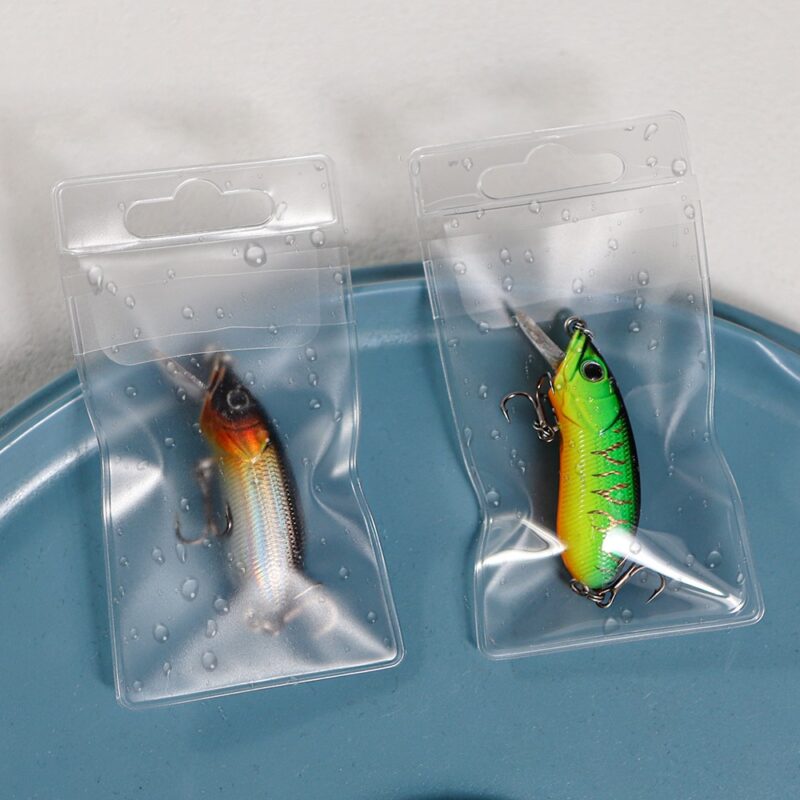
A solid moisture seal is critical to prevent trapped humidity from corroding expensive treble hooks and metal blades.
Sim, but only if there’s actual metal in the bag. Sealed packaging traps humidity, and trapped humidity corrodes exposed steel, plated hooks, split rings, and metal blade spinners over time — even indoors.
The fix is a VCI (vapor corrosion inhibitor) film or liner. It releases a vapor that forms a protective molecular layer directly on the metal surface, which is the same principle industrial rust-prevention brands use for long-term steel storage. It’s worth the added cost specifically for:
- Bulk hooks and terminal tackle
- Treble-hook crankbaits
- Spinnerbaits and bladed lures
- Anything shipped or stored for extended periods before sale
Skip it for soft plastic baits — there’s no metal to protect, so it’s pure added cost with zero functional benefit.
Certifications to Ask For Before a Bulk Order
A supplier that can’t produce these on request is a red flag, not a minor gap:
- ALCANÇAR — confirms the resin avoids restricted chemicals for EU sale
- RoHS — restricts heavy metals like lead and cadmium in the plastic
- FDA compliance — required if the bag will touch any food-grade bait attractant or scent
- EN71 — increasingly requested by retailers that treat lures as toy-adjacent products
Beyond paperwork, the three failure points that separate a reliable factory from a cheap one are seal integrity (does the zipper actually hold?), dust-proof performance in storage, and clean, consistent edge-pressing so bags don’t split at the seam.
When PVC Is the Wrong Choice
PVC’s clarity and rigidity don’t make it the right default everywhere. Skip it if:
- You’re marketing the product as biodegradable or eco-conscious
- Storage or shipping regularly hits sub-freezing temperatures
- You’re selling into a jurisdiction actively restricting PVC — some EU states and California’s SB 54 packaging rules are targeting PVC specifically, separate from general plastics rules
In those cases, Educação Física, PP, or a paper-laminate hybrid is the more defensible choice, even though you give up some shelf clarity to get there.
How These Bags Get Made
A custom lure bag moves through five stages: resin sourcing, blown film extrusion, surface printing, bag or pouch forming, and final packing. Factories that keep all five steps in-house — rather than farming pieces out to subcontractors — tend to hold tighter, more consistent specs across a reorder, which matters once you’re running the same bag at volume every quarter. If you only need a single prototype run, a smaller local converter with lower minimums will usually get you a sample faster than a vertically integrated factory built for volume.
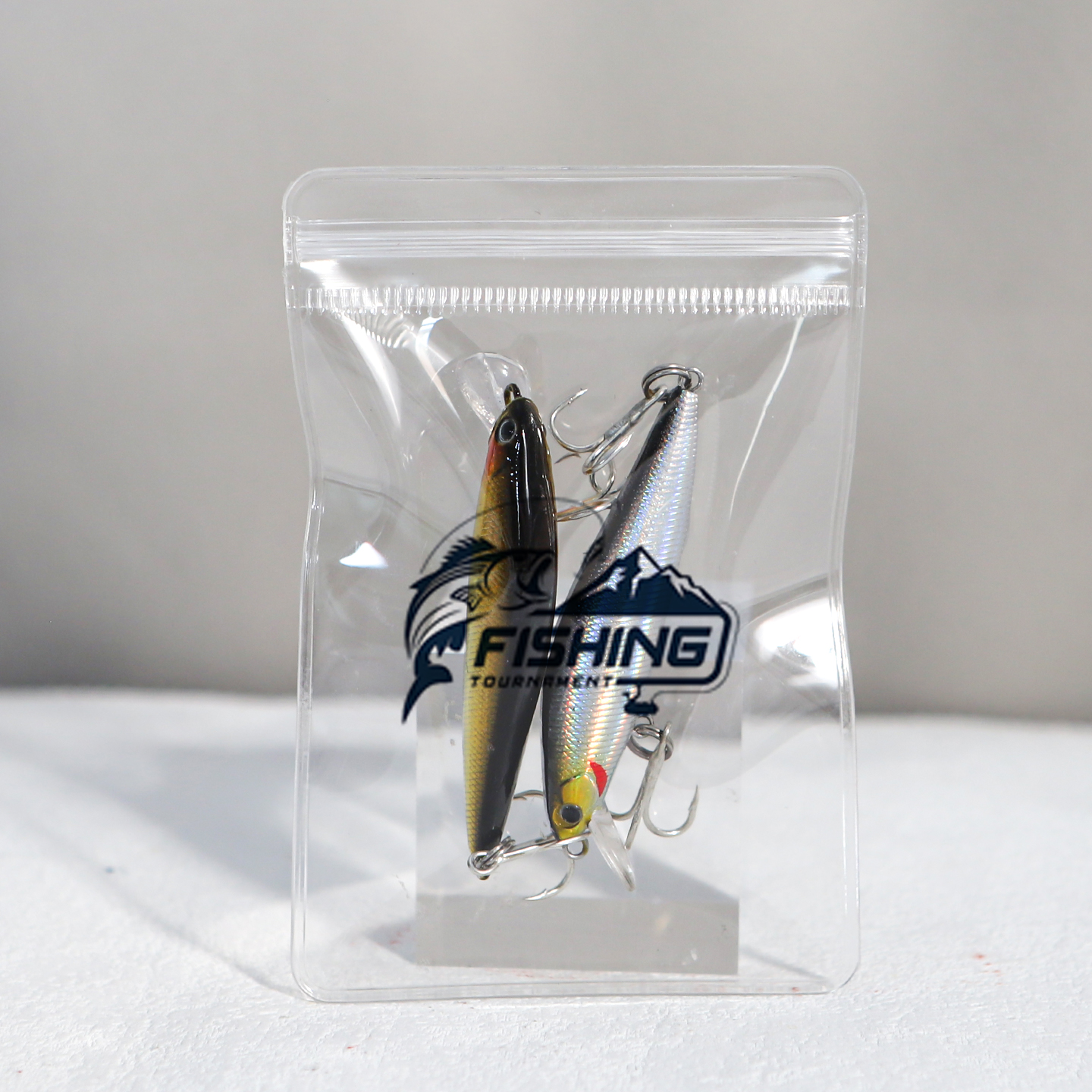
Keeping blown film extrusion, forming, and custom surface printing in-house ensures consistent quality across your entire product line.
Perguntas frequentes
Is PVC or PE better for fishing lure packaging?
PVC wins on clarity and puncture resistance at equal thickness; PE wins on cold-weather flexibility and recyclability. Retail-facing hook and hard-bait packs generally do better in PVC; bulk cold-storage of soft baits generally does better in PE.
What mil thickness stops a hook from puncturing the bag?
Thickness alone won’t do it — stiffness matters as much as gauge. That’s why dedicated hook packaging runs 6–7 mil clear PVC rather than PE at the same thickness. PE can work, but usually needs to be 6 mil or heavier to hold up the same way.
Do soft plastic baits need heavy-duty packaging?
Não. A 2–3 mil bag with a solid seal is typically enough, since there’s no hard point trying to work through the film from the inside.
Can one factory produce both rigid PVC bags and soft pouches?
Sim, if the factory runs its own extrusion and forming lines rather than outsourcing steps. That in-house setup is what keeps material specs and print quality consistent across a full product line.
What should I ask a supplier for before ordering in bulk?
At minimum, REACH and RoHS test reports, plus FDA documentation if the bag contacts any bait attractant. Ask about sealing and edge-pressing consistency too — those are the areas where budget suppliers most often cut corners.