 (+035) 527-1710-70
 google@gmail.com
 Escolha um endereço

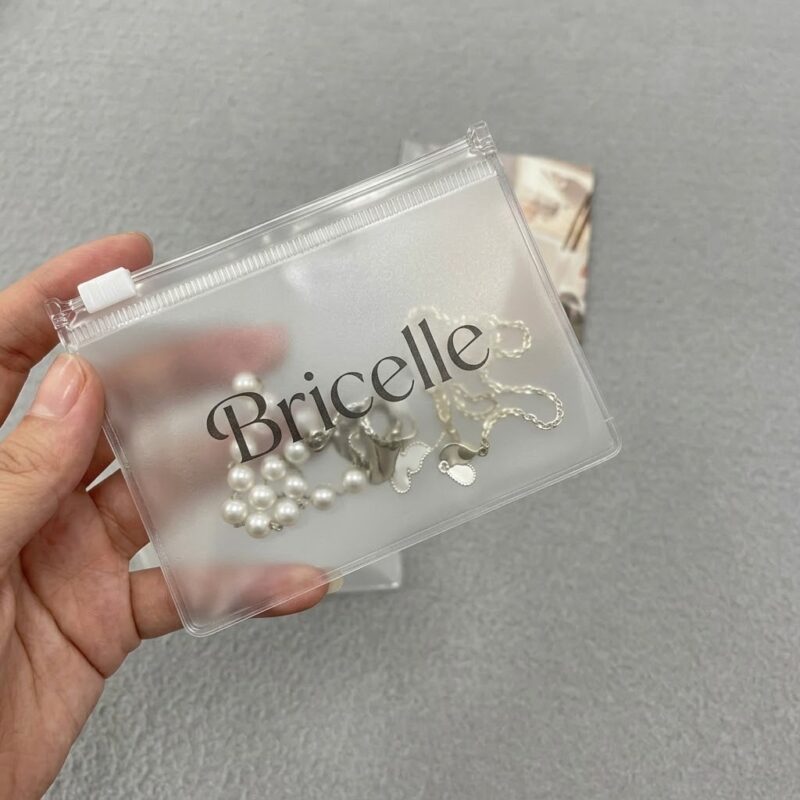
Resposta rápida: PVC bags can yellow, smell, and crack, but each failure traces to a specific formulation or storage cause. Yellowing comes from heat and UV breaking down the polymer. Odor comes from plasticizer and residual volatiles. Cold cracking begins when temperatures approach the film’s brittleness point, often around -10°C to -20°C for standard flexible PVC.
Why Do PVC Bags Turn Yellow?
PVC bags turn yellow because heat and ultraviolet light strip hydrogen chloride from the polymer chain. The resulting conjugated double bonds (polyenes) absorb blue light, so the film appears yellow, then amber, then brown. Weathering methods such as ASTM G154 (UV fluorescent) and ISO 105-B02 (xenon-arc) are used to measure this, and ASTM E313 quantifies the result as a Yellowness Index.
Three variables decide how fast yellowing happens:
- Stabilizer package: Calcium-zinc and organotin systems absorb released HCl. Cheaper formulations use less stabilizer and discolor within months of window or sunlight exposure.
- Storage environment: Sustained temperatures above roughly 60°C, such as a parked car or a sunlit shelf, speed up degradation.
- Contact materials: Rubber, dyed fabrics, and some inks can transfer stain onto clear PVC and mimic yellowing.
Boundary: Stabilizers slow yellowing but cannot stop it. Clear PVC kept in direct sunlight for long periods is the wrong choice for archival storage.
Why Do PVC Bags Smell, and Is the Smell Harmful?
PVC bags smell mainly because plasticizers and residual processing volatiles slowly off-gas from the film. Flexible PVC often contains 30 para 40 parts of plasticizer per 100 parts of resin, which gives a large reservoir of odor-producing material. Low-odor products typically use DOTP or DINCH in place of older DEHP.
Odor intensity and toxicity are different questions. A strong smell indicates volatile content, not necessarily a regulated hazard. The legal thresholds sit elsewhere: EU REACH Annex XVII caps DEHP, PAD, BBP, and DIBP at 0.1% by weight in plasticized articles, and the U.S. CPSIA applies a 0.1% limit to specified phthalates in children’s products.
Boundary: Odor testing varies by buyer. A bag that passes phthalate limits can still smell strongly, so request a sniff-test sample before bulk ordering. Standard PVC zipper bags are not food-contact grade unless a supplier provides documentation under FDA 21 CFR 177 or EU Regulation 10/2011.
At What Temperature Do PVC Bags Crack?
Standard flexible PVC bags begin to stiffen near 0°C and can crack below roughly -10°C to -20°C, while cold-resistant formulations stay flexible to about -30°C or lower. Plasticizer type controls the result. ASTM D746 measures brittleness temperature by impact, and ASTM D1790 evaluates cold-crack resistance in sheeting.
| Formulation | Typical plasticizer | Aprox.. low-temp limit | Relative odor |
|---|---|---|---|
| Standard flexible PVC | DOP/DEHP, DINP | -10°C to -20°C | Medium–high |
| General-purpose phthalate-free | DOTP | -15°C to -25°C | Baixo-médio |
| Cold-resistant PVC | DOA or DOS blends | -30°C to -40°C | Médio |
Values are indicative ranges. Confirm against supplier test reports for each batch.
Thin film (under 0.15 milímetros) is also more prone to cracking at folds and zipper tracks, since stress concentrates at the seam.
Boundary: Standard PVC zipper bags should not go into freezers or winter outdoor shipping without a cold-crack test report.
How Do You Remove PVC Odor and Prevent Yellowing?
Airing is the most reliable odor fix: ventilate new PVC bags open for 24 para 48 hours away from sunlight. Then follow these steps:
- Place bags in a ventilated area, unstacked, at room temperature.
- Add activated charcoal or an open dish of baking soda in a sealed container for 2 para 3 days if odor persists.
- Wash with mild soapy water, then dry fully, which removes surface plasticizer film.
- Store flat, away from windows, heat sources, and rubber contact.
- Avoid stacking under heavy loads, which encourages plasticizer migration and tackiness.
Boundary: Solvents like acetone or alcohol-heavy cleaners can pull plasticizer out and make PVC harder and more brittle.
PVC versus. EP versus. EVA versus. TPU: Which Bag Fits Which Job?
PVC wins on clarity, stiffness, and low cost; PE and EVA win on cold flexibility and low odor.
| Material | Clareza | Cold flexibility | Odor | Custo | Melhor uso |
|---|---|---|---|---|---|
| PVC | Alto | Justo (formulation-dependent) | Médio | Baixo | Cosmético, papelaria, bedding packaging |
| PEBD | Médio | Excelente | Very low | Mais baixo | Freezer, food-adjacent |
| EVA/PEVA | Médio (fosco) | Very good | Baixo | Baixo-médio | Toiletry, bolsas de viagem |
| TPU | Alto | Very good | Baixo | Alto | Prêmio, outdoor, medical-adjacent |
PVC pros: crisp transparency, strong welds, rigid structure, low unit price.
PVC cons: yellowing risk, plasticizer odor, cold brittleness, recycling code 3 limits recycling options.
What Should Buyers Check Before Ordering PVC Zipper Bags?
Request four documents: a plasticizer declaration (DEHP-free if needed), REACH or CPSIA test reports, a cold-crack or ASTM D746 result, and a Yellowness Index after aging. Amostragem 5 para 10 pieces for odor and fold testing prevents costly bulk returns.
Perguntas frequentes
Is PVC or EVA better for a toiletry bag used in winter travel?
EVA is better for winter travel. EVA and PEVA films generally remain flexible to around -30°C, while standard PVC may stiffen near 0°C and crack below -10°C to -20°C. Cold-resistant PVC with adipate plasticizers narrows the gap but costs more and may still smell stronger.
Why did my clear PVC bag turn yellow in a drawer with no sunlight?
Yellowing in a dark drawer usually comes from plasticizer migration, contact with dyed fabrics or rubber, or a low-stabilizer formulation. Heat from nearby electronics can also accelerate dehydrochlorination. Moving bags to a cool shelf and keeping them away from rubber slows further discoloration.
Is the smell from a new PVC zipper bag toxic?
A strong smell does not prove toxicity, but it does indicate volatile compounds worth airing out. Compliance depends on phthalate content, which REACH limits to 0.1% for DEHP, PAD, BBP, and DIBP. Ask the supplier for a test report instead of relying on smell alone.
Can PVC zipper bags go in the freezer?
Standard PVC zipper bags should not go in the freezer. Plasticized PVC can become brittle at freezer temperatures near -18°C, and the zipper track often cracks first. LDPE freezer bags are the safer, cheaper choice.
How long do PVC bags last before yellowing or cracking?
Well-stabilized PVC bags kept indoors, cool, and out of sunlight often stay clear for 2 para 5 years. Outdoor sun, car interiors, or heavy stacking can cut that to months. Accelerated aging tests such as ASTM G154 give batch-specific estimates.