 (+035) 527-1710-70
 google@gmail.com
 Pilih alamat

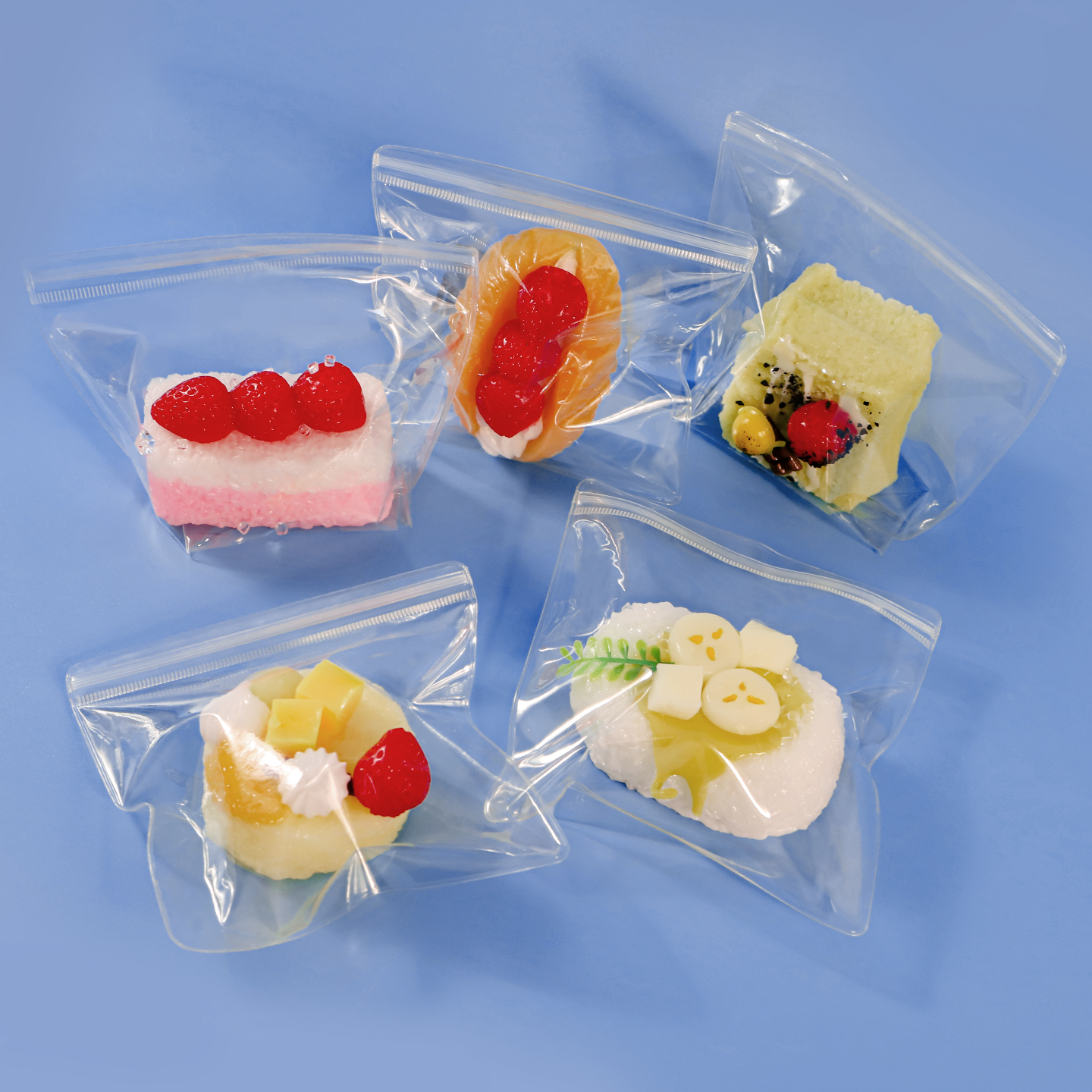
Sumber yang betul beg pembungkusan mainan licin adalah penting untuk melindungi produk anda semasa transit dan meningkatkan daya tarikan runcitnya.
Mainan licin — buih PU dan bentuk silikon yang melantun perlahan — memerlukan pembungkusan yang menyimpan minyak dan serabut dari permukaan sambil masih menunjukkan bentuk penuh mainan itu. Itu menolak karton lipat untuk kebanyakan SKU unit tunggal dan mengarahkan pembeli ke kantung filem yang boleh ditutup semula.. Dua bahan yang mendominasi kategori ini ialah PVC dan EVA, dan pilihan antara mereka bukan kosmetik - ia mengubah kejelasan, ketahanan cuaca sejuk, risiko pematuhan, dan kos seunit. Begini cara membuat panggilan itu dengan betul.
Pouch Ziplock PVC lwn EVA: Bersebelahan
| Faktor | Poket Ziplock PVC | Uncang Ziplock EVA |
|---|---|---|
| Kejelasan optik | seperti kaca, kejelasan tertinggi | tinggi, kilauan sedikit lebih lembut |
| Tingkah laku rantai sejuk | Boleh mengeras dan retak hampir beku | Kekal fleksibel melalui transit musim sejuk |
| Berat pada tolok yang sama | Standard | ~20% lebih ringan |
| Statik / habuk melekat | Sederhana | Lebih rendah — lebih tahan statik |
| Risiko Phthalate | Hadirkan melainkan diperakui dengan pemplastis bukan phthalate | Tiada secara lalai (ia adalah kopolimer, bukan damar plastik) |
| Kos pukal biasa | Lebih rendah | 10–20% lebih tinggi |
| Kesesuaian format terbaik | Kotak buta, gantung-jual, kad pengepala | runcit EU, storan boleh guna semula, unboxing premium |
| EU PPWR sesuai | Memerlukan perumusan semula untuk layak | Sesuai tanpa perumusan semula |
Mengapa Rantaian Sejuk Menjadi Faktor Penentu bagi Ramai Pembeli
Filem PVC tolok standard (0.10mm–0.18mm, julat yang biasanya digunakan untuk kantung licin) kehilangan fleksibiliti apabila suhu menurun, dan laporan pengangkutan biasanya menyebut keretakan atau kerapuhan apabila penghantaran hampir membeku untuk tempoh yang lama - risiko sebenar untuk pengangkutan laut musim sejuk, gudang yang tidak dipanaskan, atau taburan iklim utara. EVA tidak mempunyai mod kegagalan ini; fleksibilitinya bertahan dalam keadaan yang sama. Jika laluan penghantaran anda menyentuh iklim sejuk pada bila-bila masa antara kilang dan rak, itu sahaja boleh mengatasi kelebihan kos PVC.
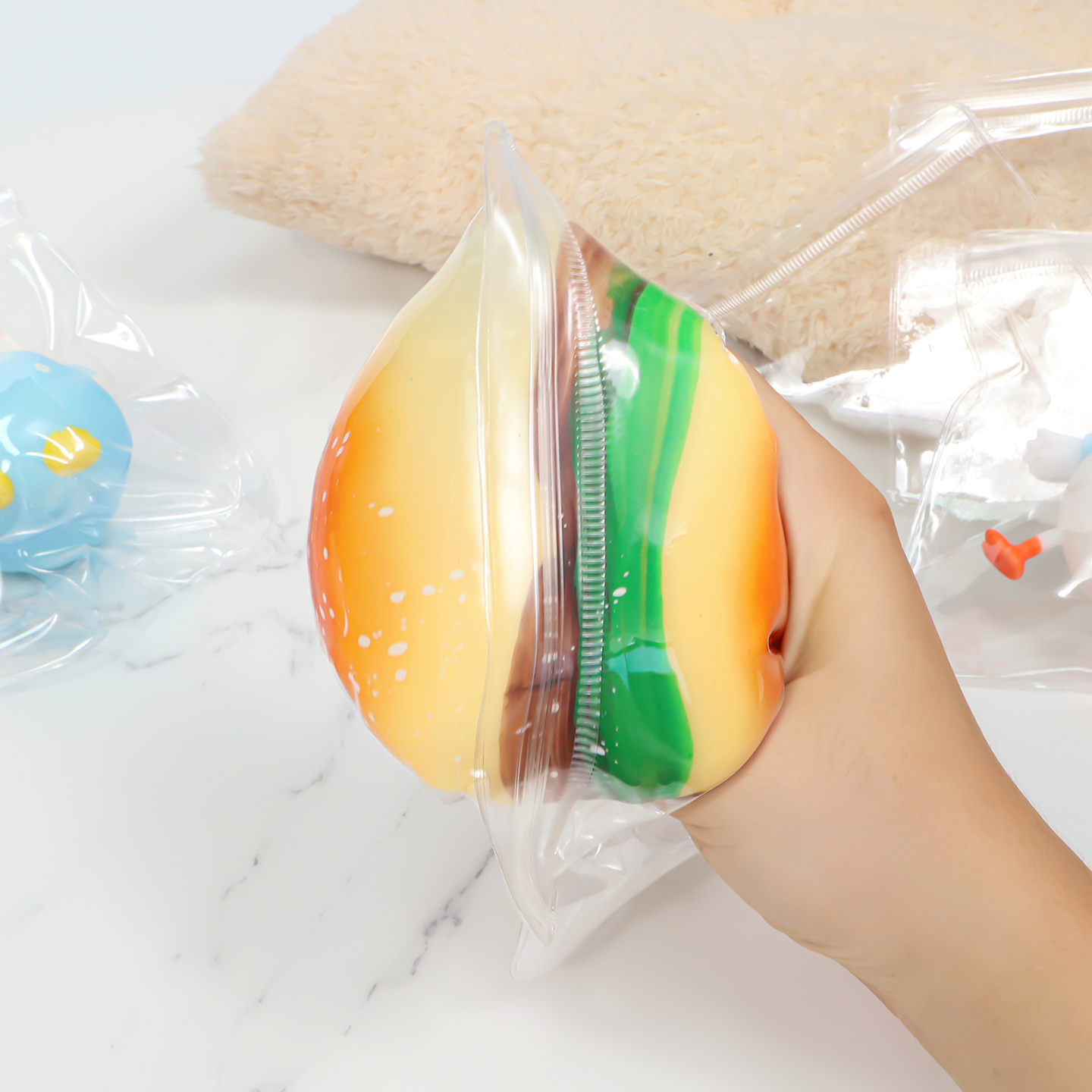
Filem fleksibel berkualiti tinggi seperti EVA tahan retak dan mengekalkan kekuatan pengedap walaupun di bawah pengendalian runcit yang ketat atau transit rantaian sejuk.
Pensijilan: Perkara yang Sebenarnya Terpakai pada Pouch Mainan Licin
Poket yang dipasarkan sebagai pembungkus penghantaran sekali sahaja biasanya terletak di luar skop ujian CPSIA untuk filem itu sendiri. Saat ia dipasarkan sebagai storan boleh guna semula, walaupun, ia menjadi satu “komponen yang boleh diakses” di bawah CPSIA — dan itu mengubah dokumentasi yang anda perlukan.
| Standard | Apa yang Dicakupinya | Berlaku Untuk |
|---|---|---|
| CPSIA / 16 Bahagian CFR 1307 | had 8 phthalates terkawal kepada 0.1% (1,000 ppm) — DEHP, DBP, BBP, DINP, DIBP, DPENP, KEMUDIAN, DCHP | ke AS, kantung simpanan boleh guna semula |
| ASTM F963 | Keselamatan mekanikal dan kimia AS untuk produk yang ditujukan untuk kanak-kanak 12 dan di bawah | Mainan/pembungkusan AS dijual sebagai komponen |
| EN71 | Kemudahbakaran EU dan had penghijrahan | Penghantaran ke EU |
| ISO 8124-1 | Bahaya mekanikal/fizikal | Relevan jika tarikan zip tegar terletak berhampiran label umur bawah 3 tahun |
Dua perkara yang patut diketahui sebelum anda memesan:
- EVA bebas phthalate oleh kimia, bukan dengan tuntutan pensijilan - ia adalah kopolimer, jadi tiada plasticizer untuk diuji di tempat pertama. Itu memberikan risiko pematuhan permulaan yang lebih rendah.
- PVC yang diperakui boleh melepasi setiap piawaian di atas, tetapi hanya dengan laporan makmal khusus kelompok menggunakan pemplastis bukan phthalate. Jeneral pembekal “gred makanan” atau “selamat untuk bayi” label ialah bukan sama seperti Sijil Produk Kanak-kanak — minta laporan ujian sebenar, bukan frasa pemasaran.
kos: Di mana Kelebihan PVC Sebenarnya Menunjukkan
PVC berjalan kira-kira 10–20% lebih murah daripada EVA pada tolok dan spesifikasi cetakan yang sama, terutamanya kerana filem EVA yang lebih lembut memperlahankan barisan pembuatan beg. Tetapi jurang itu tidak berkelakuan dengan cara yang sama pada setiap saiz pesanan:
| Jumlah Pesanan | Perkara yang Mendorong Kos |
|---|---|
| Bawah ~5,000 unit | Yuran peralatan dan persediaan mendominasi — jurang harga bahan hampir tidak penting |
| 5,000–50,000 unit | Jurang kos bahan menjadi jelas tetapi masih sederhana |
| Di atas ~50,000 unit | Kompaun penjimatan per unit PVC dengan ketara |
Percetakan digital tersuai, penjenamaan timbul, dan filem berbilang lapisan menambah kos pada kadar yang lebih kurang sama pada kedua-dua bahan — jadi tambahan tersebut tidak mengalihkan keputusan PVC/EVA sama ada.
PVC — Kebaikan dan Keburukan
Kebaikan
- Kos seunit terendah pada skala
- Kejelasan optik tertinggi, tiada potongan tingkap diperlukan
- Lipatan rangup di sepanjang trek zip — bagus untuk format hang-sell/header-card
Keburukan
- Boleh mengeras atau retak dalam keadaan rantaian sejuk
- Memerlukan laporan makmal khusus kelompok untuk mengosongkan had phthalate
- Lebih lemah untuk PPWR EU tanpa perumusan semula
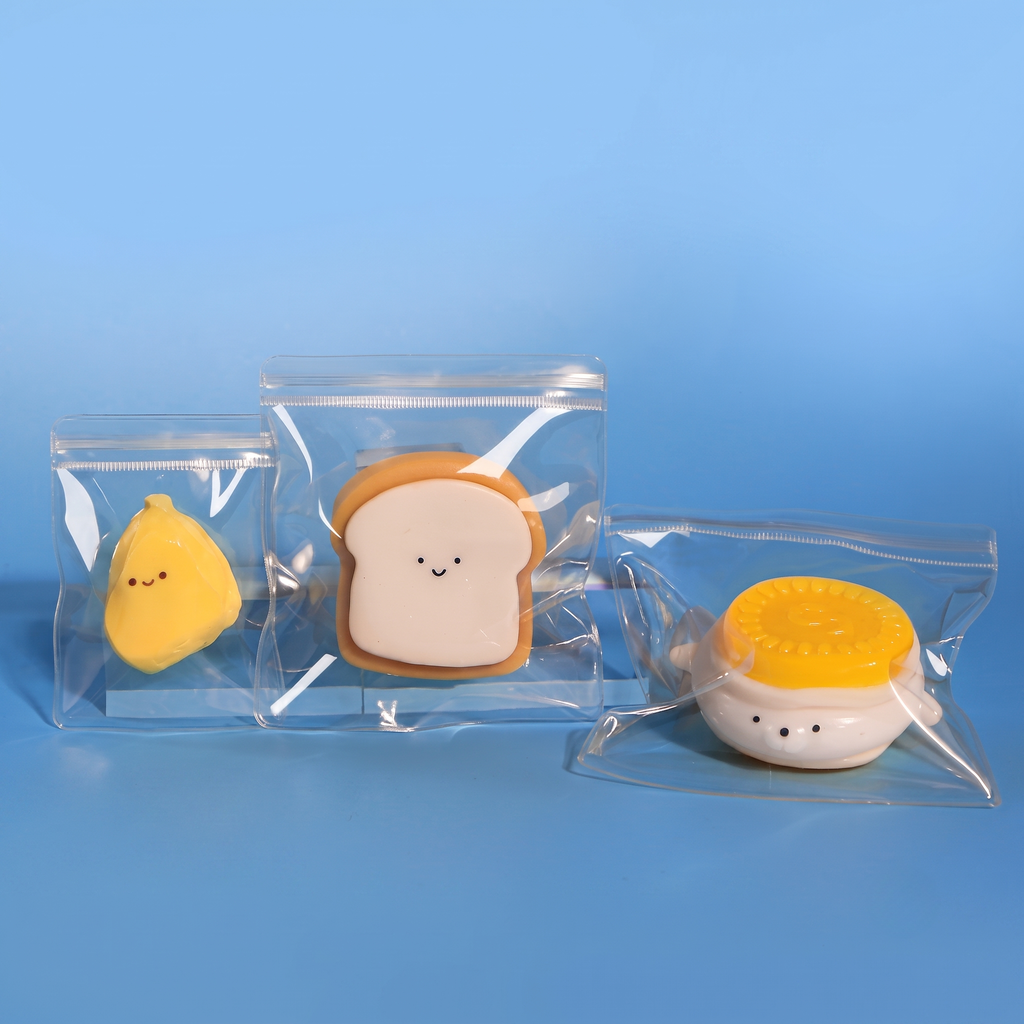
Poket PVC menawarkan kejelasan optik tertinggi, menyediakan kemasan seperti kaca yang memaparkan mainan licin dengan sempurna tanpa memerlukan potongan tingkap.
EVA — Kebaikan dan Keburukan
Kebaikan
- Kekal fleksibel melalui pengangkutan musim sejuk dan penyimpanan sejuk
- Bebas phthalate secara lalai — overhed pematuhan yang lebih rendah
- Tentang 20% lebih ringan pada tolok yang sama; lebih baik menahan statik dan habuk
- sesuai PPWR EU tanpa merumuskan semula filem itu
Keburukan
- 10–20% lebih mahal daripada PVC pada spesifikasi yang sama
- Kilauan yang lebih lembut sedikit daripada kejelasan seperti kaca PVC
- Kelajuan talian yang lebih perlahan semasa membuat beg (kos sampingan kilang, bukan sebelah pembeli — tetapi ia sesuai dengan harga)
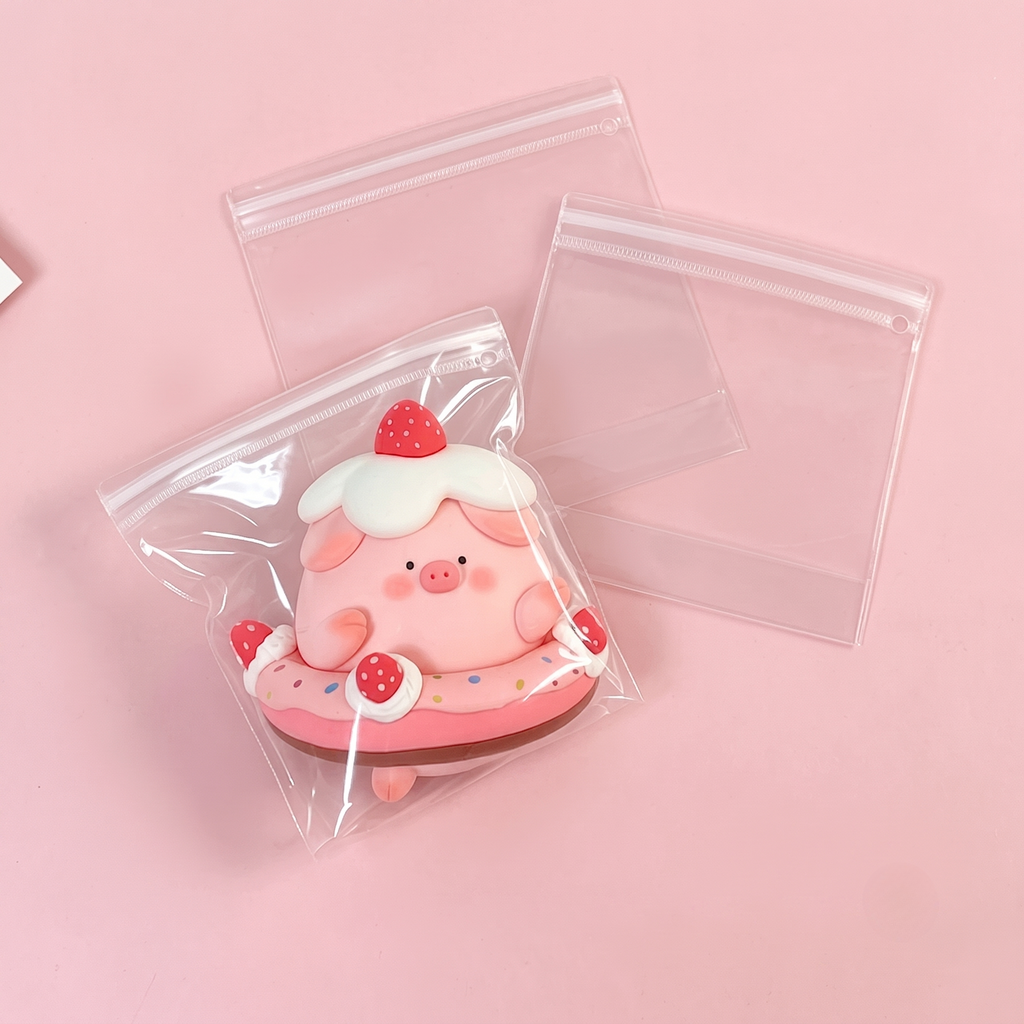
Kantung EVA mempunyai kilauan yang lebih lembut dan bebas phthalate secara lalai, menjadikannya pilihan pilihan untuk penghantaran ke EU.
Tiga Soalan untuk Menyelesaikan Keputusan
- Adakah mana-mana bahagian penghantaran melalui penyimpanan sejuk atau pengangkutan musim sejuk? → Jika ya, EVA kurus.
- Adakah pasaran destinasi EU, atau adakah jenama pembeli kurus “boleh guna semula/eko”? → Jika ya, EVA kurus.
- Adakah ini volum tinggi (50,000+), sensitif kos, larian domestik? → Jika ya, PVC kurus.
Jika anda menjawab “ya” kepada lebih daripada satu dan mereka bercanggah, perintah percubaan kecil dalam kedua-dua bahan sebelum melakukan kumpulan pengeluaran penuh — jurang harga pada volum rendah adalah cukup kecil sehingga kos ujian kurang daripada pesanan pukal yang salah.
Apabila Pouch Bukan Pembungkusan Yang Tepat Sama sekali
Beg ziplock — dalam mana-mana bahan — berhenti menjadi muat sekali:
- Squishy melebihi kira-kira 500g atau angka sebesar tapak tangan, yang menekankan trek zip di bawah pengendalian runcit berulang
- Ia adalah pek berbilang, set hadiah, atau edisi pengumpul — ini memerlukan kotak tegar atau kad lepuh untuk kekuatan susun, kerana kantung sahaja tidak menambah satu pun
- Penghantaran adalah pengangkutan laut jarak jauh melalui pegangan kelembapan tinggi — kantung satu lapisan bukanlah penghalang kelembapan penuh sepanjang transit selama sebulan dan memerlukan bahan pengering atau karton luar
Dalam kes ini, kantung berfungsi paling baik sebagai pembalut utama, dengan kotak atau karton yang mengendalikan perlindungan pukal.
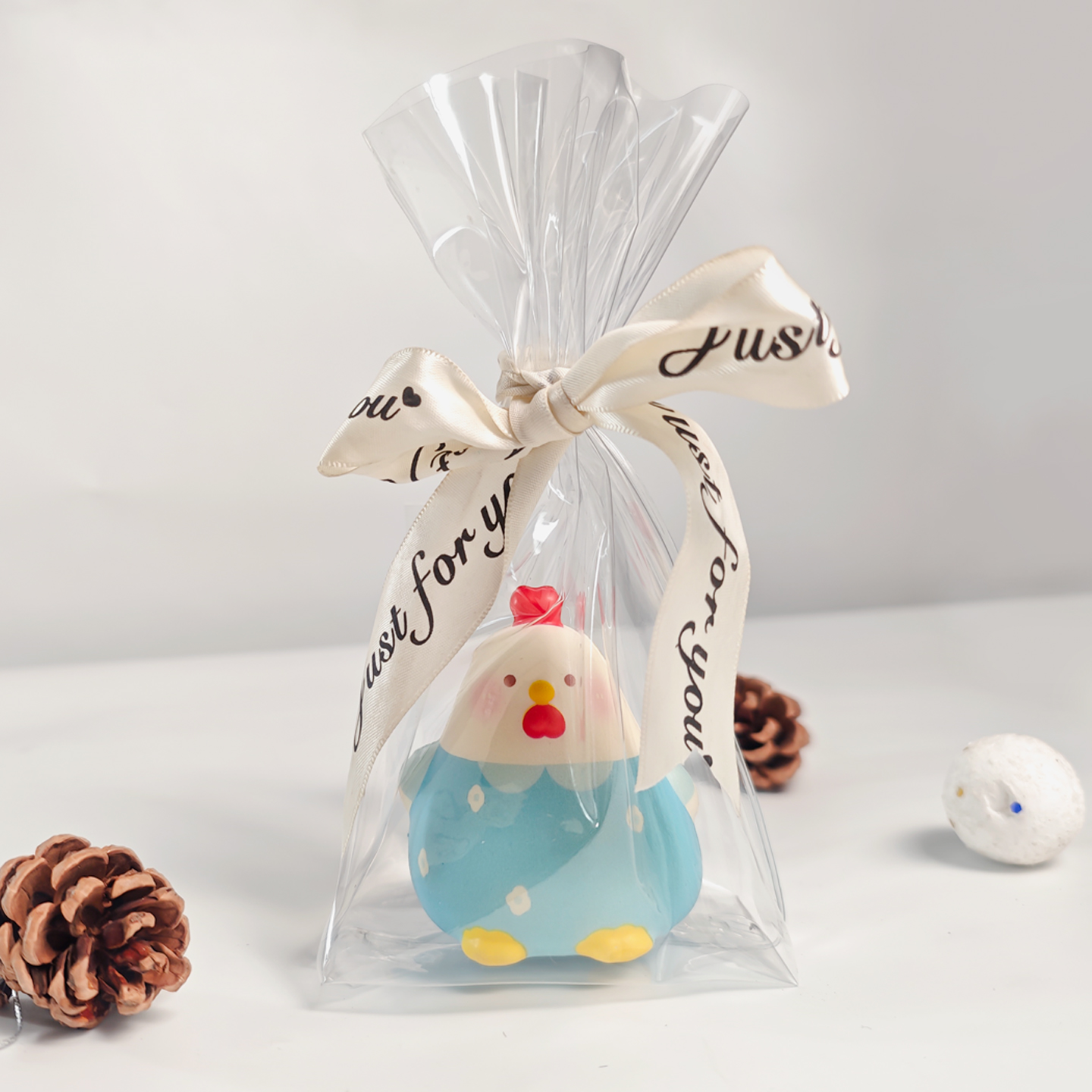
Untuk SKU unit tunggal premium atau set hadiah, beg jernih berbuih yang dipadankan dengan reben tersuai boleh meningkatkan pengalaman unboxing.
Soalan Lazim
Adakah PVC atau EVA lebih baik untuk pembungkusan mainan licin?
EVA menang untuk penghantaran rantaian sejuk dan pesanan terikat EU; PVC menang untuk volum tinggi, larian domestik yang sensitif kos. Kedua-duanya tidak lebih baik secara universal — padankan bahan dengan laluan penghantaran dan peraturan pasaran sasaran anda, bukan keutamaan jenama.
Adakah pembungkusan squishy memerlukan pensijilan CPSIA atau EN71?
Hanya jika ia dipasarkan sebagai storan boleh guna semula dan bukannya pembungkus sekali sahaja — pada ketika itu ia dikira sebagai komponen yang boleh diakses di bawah CPSIA 0.1% had phthalate. EN71 terpakai secara selari untuk penghantaran EU. Seorang jeneral “bebas phthalate” label bukan pengganti untuk laporan ujian khusus kelompok.
Berapakah kos pembungkusan squishy tersuai setiap 1,000 unit?
Ia bergantung terutamanya pada bahan, tolok, dan kaedah cetakan. PVC biasanya berjalan 10–20% lebih murah daripada EVA pada spesifikasi yang sama. Bawah ~5,000 unit, yuran persediaan lebih penting daripada pilihan bahan; melebihi ~50,000 unit, jurang kos bahan menjadi faktor yang lebih besar.
Bolehkah satu pembekal menghasilkan kedua-dua versi PVC dan EVA bagi kantung yang sama?
ya, jika kilang menjalankan rangkaian filem blown-nya sendiri dan bukannya membeli filem siap daripada pihak ketiga — persediaan itu membenarkan satu pesanan pembelian bertukar antara PVC, EVA, TPU, PE, PP, atau RRJP tanpa menambah vendor kedua. Berbaloi untuk mengesahkan: EVA kadangkala membawa kuantiti pesanan minimum yang lebih tinggi daripada PVC di kilang yang sama.