 (+035) 527-1710-70
 google@gmail.com
 Choose an address

A qualified custom plastic packaging bag manufacturer in China can be screened in under two weeks by checking four things: business license type, material certifications, MOQ per substrate, and third-party inspection availability. Most Alibaba Trade Assurance disputes involving flexible packaging trace back to skipping one of these four checks before the deposit was sent. This guide breaks the vetting process into 12 checks, grouped by risk, so a first-time OEM buyer can qualify a PE, PP, PVC, EVA, or TPU bag factory within a single sourcing cycle.
What Are the 12 Checks to Run Before You Order?
- Manufacturer status vs. trading company
- Registered business scope matches the product
- Current certifications (ISO 9001, ISO 14001, BRCGS, REACH, FDA)
- Resin traceability — virgin vs. recycled
- MOQ by material and bag type
- Lead time by material
- In-house printing methods
- QC system and AQL level
- Export documentation and Incoterms
- OEM and ODM development capability
- Sustainability and compliance claims
- Independent verification before payment
What’s the Real Difference Between PE, PP, PVC, EVA, and TPU Bags?
Material choice decides cost and certification path more than factory choice does. PE film — made from LDPE, HDPE, or LLDPE resin — is the lowest-cost option and the only one of the five directly covered by FDA 21 CFR 177.1520 for food contact. PP, as BOPP film or woven fabric, adds tensile strength and print clarity, making it standard for woven sacks and retail shopping bags. PVC sheet is fully transparent and welds into rigid shapes, but it is not accepted in curbside recycling and often needs phthalate-limit documentation under REACH Annex XVII or CPSIA for children’s products. EVA and TPU sit at the premium end: EVA thermoforms into rigid molded cases, while TPU film resists abrasion, hydrolysis, and cold-crack better than the other four materials — the reason waterproof pouches specify it.
| Material | Form | Standout property | Common products | Recyclability | Cost vs. PE |
|---|---|---|---|---|---|
| PE (LDPE/HDPE/LLDPE) | Film, 20–200 microns | Heat-sealable, FDA 21 CFR 177.1520 | T-shirt bags, mailers, food bags | Mono-material, code #2/#4 | 1x |
| PP (BOPP/woven) | Film or woven sack | High tensile strength, clarity | Woven sacks, shopping bags | Code #5, facility-dependent | 1.1–1.3x |
| PVC | Sheet, 0.15–0.5mm | Transparent, welds into rigid shapes | Cosmetic bags, stationery cases | Not curbside recyclable | 1.2–1.5x |
| EVA | Foam/sheet, 0.3–2mm | Cushioning, thermoformable | Molded toiletry/tool cases | Limited/niche | 1.5–2.5x |
| TPU | Film, 0.1–0.6mm | Elastic, hydrolysis-resistant | Waterproof pouches, wearables | Specialty streams only | 2–4x |
Is a Trading Company the Same Risk as a Manufacturer?
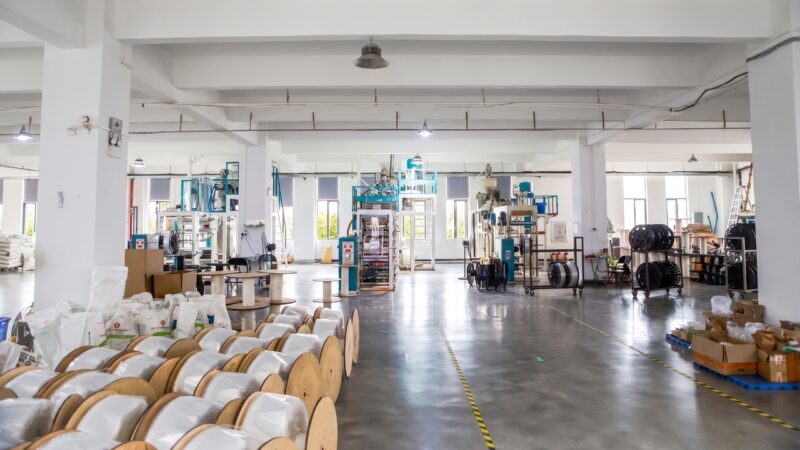
No — a trading company subcontracts production to a factory it doesn’t control, which adds a markup and removes the buyer’s ability to audit the actual line. China’s National Enterprise Credit Information Publicity System lists “生产” (manufacturing) separately from “贸易” (trading) in the registered business scope; a license showing only trading cannot legally invoice for self-produced goods. Request the license number, then ask for a live video call showing the extrusion, lamination, or welding line producing the exact bag quoted. A supplier that stalls on both requests is most likely reselling capacity from an unnamed third factory.
Which Certifications Actually Matter for a Plastic Bag Order?
Certification needs change by end market and contact type, not by factory size. ISO 9001:2015 confirms a documented quality system and is close to baseline for any export factory. Any recycled-content claim — “30% PCR” or “ocean-bound plastic” — needs a Global Recycled Standard (GRS) transaction certificate tied to the specific PO, since GRS is chain-of-custody based, not a company-wide badge.
| Certification | Confirms | Typically required by |
|---|---|---|
| ISO 9001:2015 | Quality management system | Nearly all export buyers |
| ISO 14001:2015 | Environmental management system | EU/UK retail buyers |
| BRCGS | Food-contact packaging safety | Supermarket and food-brand buyers |
| REACH (EC) 1907/2006 | Restricted substances in resin | EU/UK importers |
| FDA 21 CFR 177.1520 | PE/PP food-contact compliance | US food and beverage buyers |
| GRS transaction certificate | Recycled-content chain of custody | Brands making “recycled” claims |
What MOQ and Lead Time Should You Expect by Material?
MOQ and lead time scale with tooling complexity, not order value. Printed PE or PP film bags commonly carry an MOQ of 3,000–10,000 pieces per design; molded EVA cases and die-cut TPU pouches can start as low as 500–1,000 pieces because the real constraint is mold cost, not resin volume.
| Material / bag type | Typical MOQ | Sample lead time | Mass production lead time |
|---|---|---|---|
| Printed PE/PP film bag | 3,000–10,000 pcs | 3–7 days | 7–20 days |
| PP woven sack | 5,000–20,000 pcs | 5–10 days | 10–25 days |
| PVC welded bag | 1,000–5,000 pcs | 5–10 days | 10–20 days |
| Molded EVA case | 500–1,000 pcs | 10–20 days | 15–35 days |
| Die-cut TPU pouch | 500–2,000 pcs | 10–20 days | 15–30 days |
A quote listing identical MOQ and lead time across all five materials signals a broker averaging generic figures rather than a factory pricing per material.
How Should QC and Trade Terms Be Confirmed Before Paying a Deposit?
QC and trade terms should be confirmed in writing before the deposit, not after. Ask which AQL (Acceptable Quality Limit) applies — 2.5 is standard for cosmetic defects on printed film, 1.5 for functional defects like seal strength or zipper pull — and whether inspection is inline, pre-shipment, or both. Confirm whether pricing is FOB, CIF, or DDP; EXW-only pricing with no named port usually means the factory has not exported directly before. A short third-party inspection through SGS, Intertek, or Bureau Veritas before the balance payment costs a small fraction of order value and catches most of the defect categories a buyer would otherwise find only after the container lands.
When Does This 12-Check Process Not Apply?
This checklist verifies production capability and paperwork, not labor practices — it does not replace a social compliance audit such as SMETA or WRAP that large retail buyers require separately. Orders under roughly 300–500 pieces, typical for a crowdfunding launch, usually fall below any OEM factory’s minimum and are better filled from a wholesaler’s stock design than a custom mold run. Medical-contact or pharmaceutical packaging needs clearance beyond this scope, such as ISO 13485 for the quality system, which a general plastic bag OEM checklist does not cover.
FAQ
Is it cheaper to order PVC bags or EVA bags for a cosmetics brand?
PVC bags cost less than EVA bags for the same job in nearly every case. A welded PVC sheet bag runs roughly 1.2–1.5x the cost of a comparable PE bag, while a molded EVA case runs 1.5–2.5x because EVA requires thermoforming and a hard mold before production starts. PVC suits flat or gusseted cosmetic pouches; EVA suits rigid, self-standing cases like brush rolls or compact organizers. Choose PVC for budget-conscious flat packaging and EVA only when the product needs a molded structural shape.
What MOQ should I expect from a Chinese plastic bag factory?
MOQ depends on the material and whether a mold is required, not on factory size alone. Printed PE or PP film bags typically start at 3,000–10,000 pieces per design, while molded EVA cases or die-cut TPU pouches can start as low as 500–1,000 pieces since the mold cost, not the material run, sets the floor. A quote below 500 pieces for a printed film bag usually means the factory is repackaging an existing stock design. Ask for MOQ broken out by material before comparing quotes across factories.
How do I verify a plastic bag manufacturer is not just a trading company?
Cross-check the business license’s registered scope on China’s National Enterprise Credit Information Publicity System, since only a scope containing “生产” (manufacturing) permits self-produced goods invoicing. Request a live video call showing the extrusion, lamination, or welding line making the exact bag style quoted, not a generic office tour. A manufacturer typically confirms a specific time slot within a day or two; a trading company tends to delay this request repeatedly. This single check resolves most manufacturer-vs-trader disputes before a deposit is sent.
Which material is best for a waterproof phone pouch — TPU or PVC?
TPU outperforms PVC for a waterproof phone pouch on every property except price. TPU film resists hydrolysis, abrasion, and cold-cracking at temperatures where PVC turns brittle, and TPU welds form a more reliable seal for IPX-rated pouches. PVC still works for a splash-resistant, non-submersible pouch at roughly half TPU’s material cost. Specify TPU whenever the product claims a specific IPX waterproof rating; PVC is sufficient for basic weather resistance only.
How long does it take to get a custom OEM plastic bag sample from China?
A first physical sample typically takes 3–10 days after artwork and spec approval, depending on the material. PE and PP film samples are fastest at 3–7 days since no mold is involved. EVA and TPU samples that require a new die or mold take 10–20 days because tooling has to be cut before the first sample runs. Build tooling lead time into the launch timeline separately from sample lead time whenever the design uses EVA or TPU.