 (+035) 527-1710-70
 google@gmail.com
 Choose an address

What This Guide Answers
Small jewelry brands tend to ask the same handful of questions before placing their first jewelry packaging bags order. This guide answers them in the order they usually come up:
- Should I use PVC or EVA bags for jewelry?
- Do plastic bags actually cause tarnish?
- What size bag fits a ring, earrings, or a necklace?
- How thick should the bag be?
- Do anti-tarnish bags work, and are they worth paying for?
- Can I get my logo printed without ordering tens of thousands of units?
- Which manufacturer setup actually controls quality?
Should You Use PVC or EVA Bags for Jewelry Packaging?
EVA suits jewelry packaging better than standard PVC for brands selling sterling silver or gold-plated pieces. EVA (ethylene vinyl acetate) is a chlorine-free copolymer, so it avoids the plasticizer additives — phthalates such as DEHP and DBP — that are restricted in consumer articles under the EU’s REACH Regulation (EC 1907/2006), Annex XVII, and it doesn’t develop the faint solvent-like odor some low-grade PVC film retains after sealing. PVC still makes sense in one specific case: costume or fashion-jewelry lines where per-unit cost outweighs material feel, since flexible PVC film typically runs 10–20% cheaper than EVA at the same gauge.
PVC — pros: lower cost, higher optical clarity, stiffer hand-feel that holds shape on a shelf.
PVC — cons: plasticizer off-gas can dull plated finishes over months of sealed storage; REACH-restricted in some EU end uses.
EVA — pros: chlorine-free, softer/matte-frosted texture options, no plasticizer odor.
EVA — cons: costs more; slightly lower optical clarity than PVC at the same thickness.
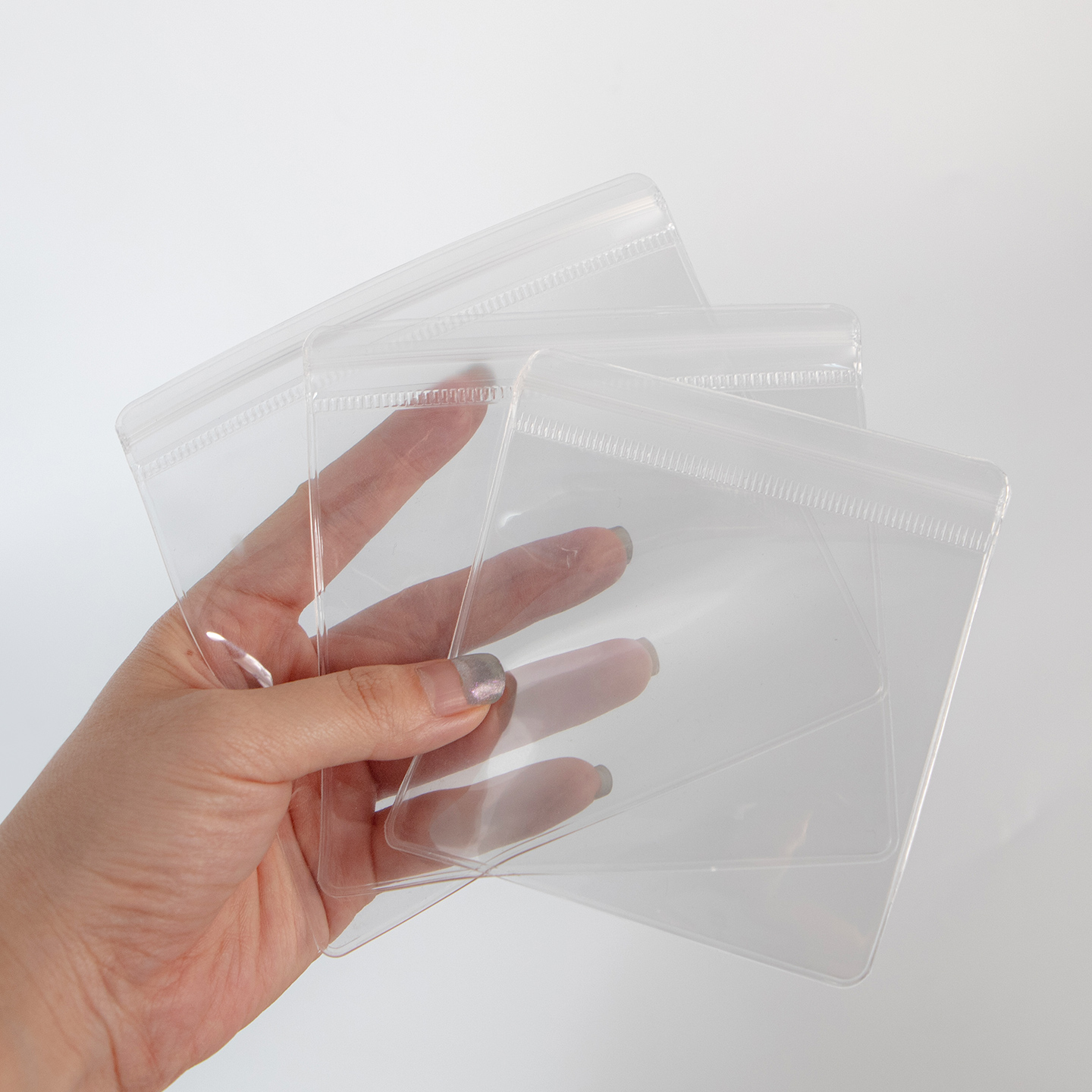
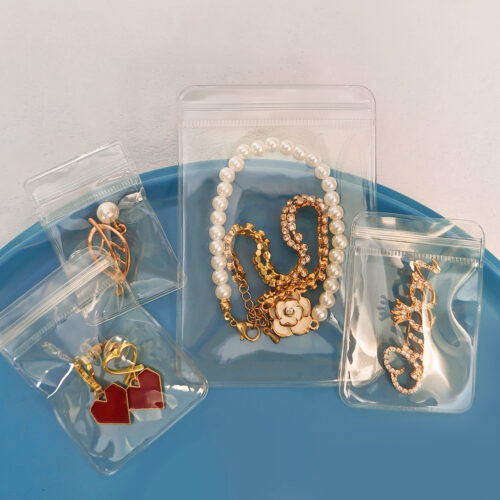
Clear eva jewelry bags make products visible while keeping small pieces separated and organized.
Neither material is food-contact packaging — despite looking like clear food pouches, standard PVC/EVA jewelry bags are not certified for direct food contact and shouldn’t be marketed that way.
Do Plastic Ziplock Bags Actually Cause Jewelry to Tarnish?
Tarnish comes from airborne sulfur compounds reacting with silver, not from the bag material itself. A properly sealed PVC or EVA bag actually slows tarnish compared to open-air storage, because it limits air exchange around the metal. The bag becomes a problem only when it traps humidity — jewelry packed while damp, or stored where condensation forms, tarnishes faster inside the bag than outside it. For brands shipping to humid regions (Florida, Southeast Asia, the Gulf Coast), pairing a standard bag with a silica gel packet or an anti-tarnish strip solves this; bag material alone doesn’t.
What Size Bag Fits Rings, Earrings, Necklaces and Bracelets?
| Jewelry Type | Bag Size (cm) | Bag Size (in) |
|---|---|---|
| Single ring | 5 x 7 | 2 x 2.75 |
| Stud/small earrings | 6 x 8 | 2.4 x 3.1 |
| Drop earrings/pendant | 7 x 10 | 2.75 x 4 |
| Chain necklace (folded) | 8 x 12 | 3.1 x 4.7 |
| Bracelet | 10 x 15 | 4 x 6 |
| Layered set (2–3 pieces) | 15 x 18 | 6 x 7 |
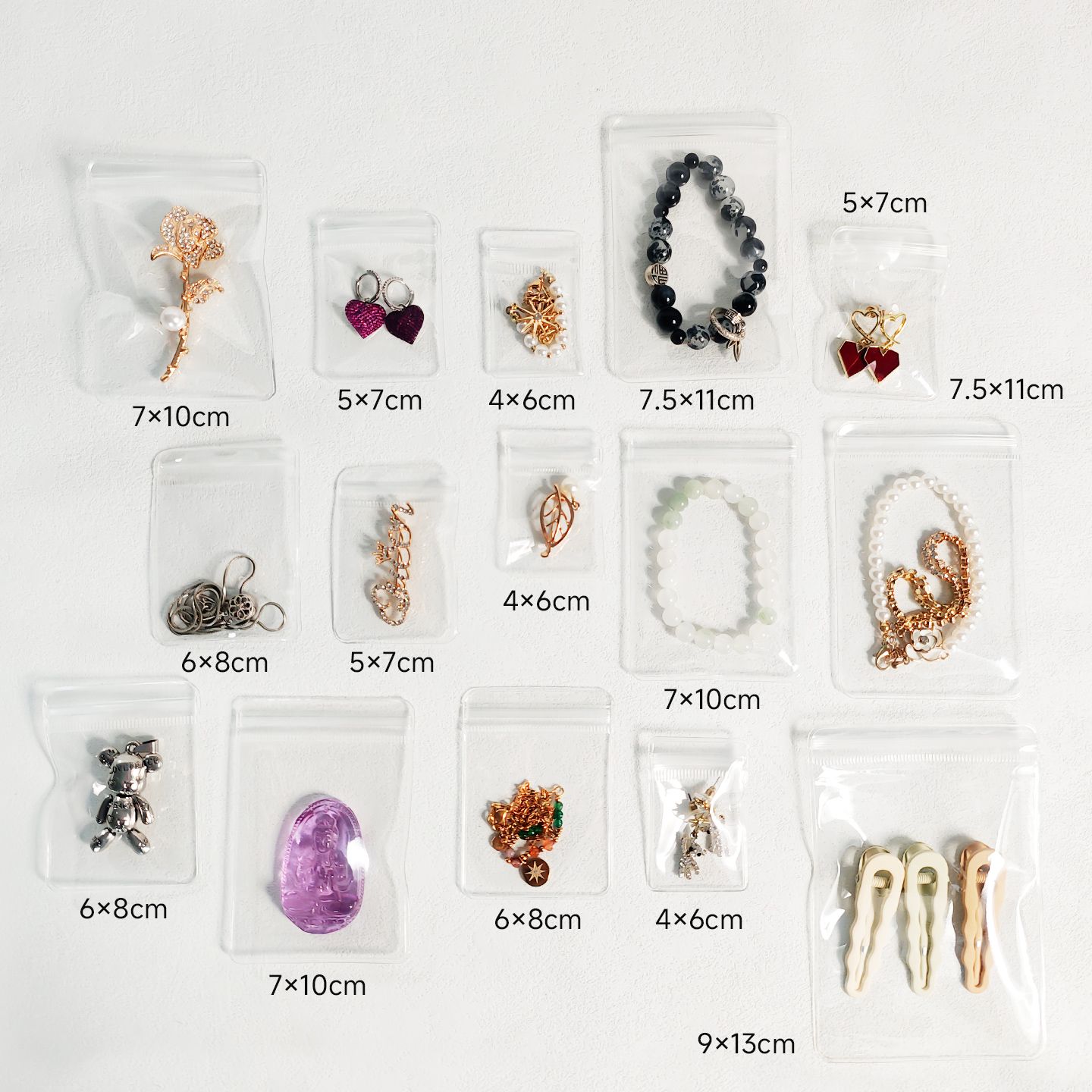
Common jewelry bag sizes for earrings, pendants, rings, bracelets and other small accessories.
These sizes assume a 3-side-seal flat ziplock with roughly 1cm of header space above the zipper track for a hang-hole punch. Brands using a stand-up pouch instead of a flat bag should add 1.5–2cm to the width to account for the bottom gusset.
How Thick Should a Jewelry Packaging Bag Be?
0.20mm to 0.40mm (roughly 8–16 mil) covers most small-jewelry ziplock bags without feeling flimsy or adding unnecessary shipping weight. Film thinner than 0.10mm tends to show zipper-track stress-whitening within a few open-close cycles, which reads as low quality regardless of what’s inside. Film above 0.30mm is typically reserved for reusable travel jewelry pouches meant for dozens of trips, since it roughly doubles material cost per bag for durability most single-use retail packaging doesn’t need.
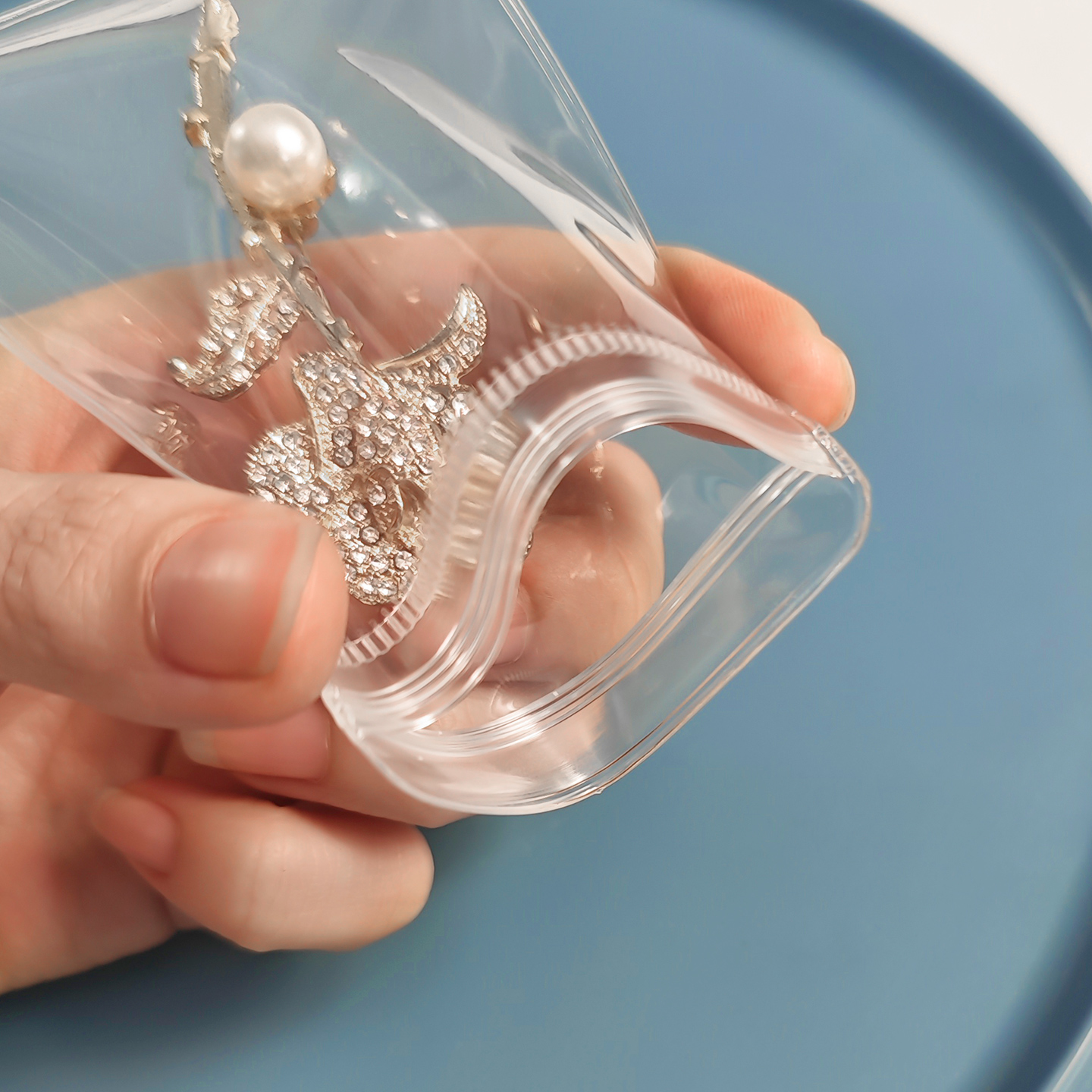
A consistent zipper track and clean edge seal help the bag withstand repeated opening and closing.
How Do Anti-Tarnish Jewelry Bags Work, and Are They Worth the Extra Cost?
Anti-tarnish bags work by embedding a corrosion inhibitor — either compounded into the film or added as an inserted paper strip — that absorbs sulfur and moisture before it reaches the metal. Intercept Technology packaging, one of the more recognized names in this category, does this by compounding copper particles into the polymer itself. For sterling silver priced above roughly $30, the anti-tarnish upgrade (commonly adding $0.02–0.05 per bag) is worth it, since a single tarnish-related return usually costs more than the packaging premium across the whole batch. For gold-plated or stainless-steel pieces, which don’t tarnish the same way, this upgrade is unnecessary spend.
Can a Small Brand Get Custom Logo Bags Without a Huge MOQ?
Yes, but the print method sets the minimum. Plate-based gravure printing, which gives the cleanest multi-color logo, usually requires a run of 5,000–10,000 pieces per design to justify the plate cost. Digital printing or single-color stamping brings that minimum down to 500–1,000 pieces on many production lines, at a per-unit premium of roughly 15–30% over plate-printed pricing. Brands ordering under 500 units are usually better served by stock clear bags plus a printed sticker seal — the sticker carries the branding while the bag itself stays a generic, restockable SKU.Brands can also customize the closure-strip color to coordinate with their visual identity, product collection or seasonal packaging.
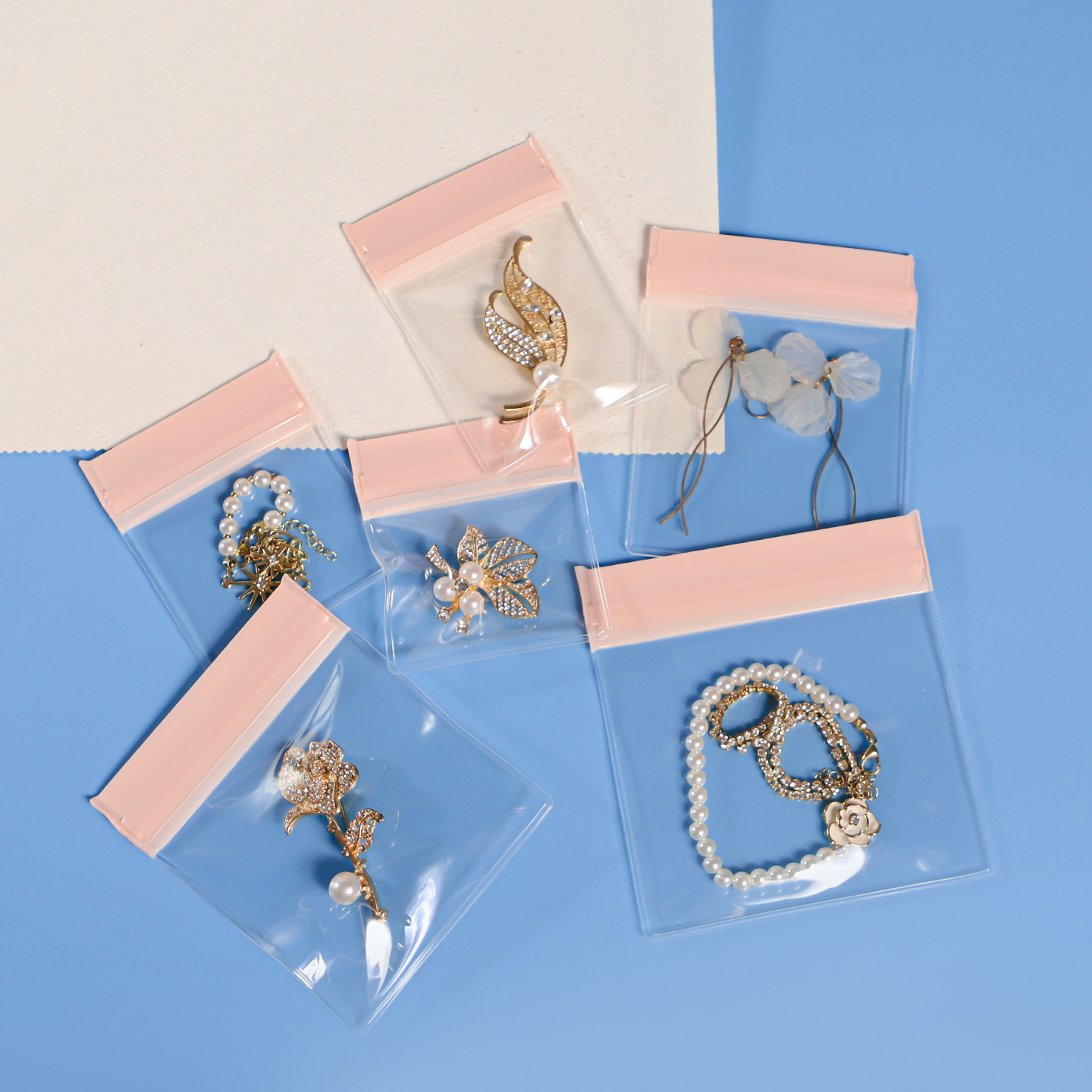
Colored closure strips provide an additional way to coordinate jewelry packaging with a brand identity.
PVC vs EVA vs TPU: Which Material for Which Use Case?
| Material | Clarity | Feel | Best For | Avoid For |
|---|---|---|---|---|
| PVC | High | Stiffer, glossy | Costume jewelry, budget lines | Long-term sealed storage of plated metal |
| EVA | Medium-high | Soft, matte or frosted | Sterling silver, gift packaging | Cases needing rigid structure |
| TPU | High | Very flexible, fully waterproof | Jewelry bundled with beach/waterproof accessories | Standard dry retail packaging (cost premium not justified) |
How Should You Choose a Manufacturer for Custom Jewelry Bags?
Look for a supplier that controls the full chain — raw resin, blown film, printing, and bag-sealing — in one facility, rather than outsourcing printing to a separate vendor; the handoff between disconnected print and bag-making shops is where color mismatch and misaligned zipper tracks usually originate. Guangdong Minghe Packing Industrial Co., Ltd, for example, runs raw material through blown film, printing, and bag-making to finished packaging under one operation, with 20 years running that model — the kind of vertical setup worth confirming with any prospective supplier. Ask specifically about edge-seal consistency (a wavy or loose seal edge is the most common defect in low-cost ziplock bags) and whether custom shapes or cut sizes are produced in-house or subcontracted out.
Bottom Line: What Should Your Brand Order?
- Selling sterling silver above $30: EVA bag + anti-tarnish insert, 0.40–0.60mm, digital-printed logo if under 1,000 units.
- Selling costume/fashion jewelry under $15: PVC bag, standard clarity, sticker-branded if under 500 units.
- Selling jewelry alongside water-exposed accessories: TPU pouch; skip anti-tarnish, since it doesn’t apply to non-silver metals.
One thought on “Jewelry Packaging Bags: The Purchase Guide for Small Jewelry Brands (Materials, Sizes & Anti-Tarnish Tips)”