 (+035) 527-1710-70
 google@gmail.com
 Chọn một địa chỉ

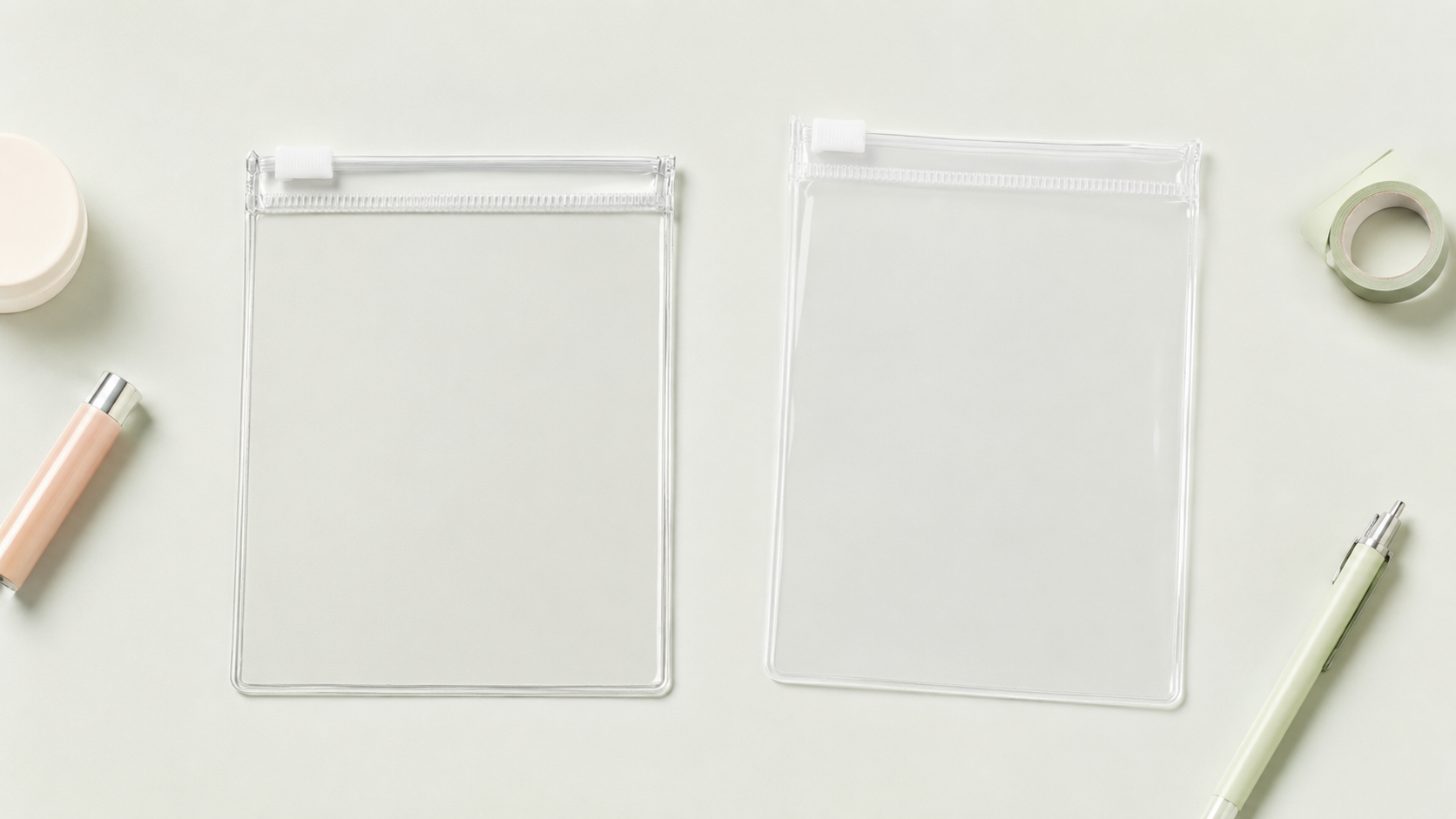
Trả lời nhanh: Túi dây kéo PVC và EVA phục vụ các nhu cầu đóng gói khác nhau. Túi dây kéo PVC được sử dụng chủ yếu cho mỹ phẩm, văn phòng phẩm, trang sức, quà tặng, và bao bì trưng bày bán lẻ, nơi cứng nhắc, bức tường có độ rõ nét cao tăng gấp đôi khi trưng bày sản phẩm. Túi dây kéo EVA được sử dụng chủ yếu để đựng đồ mềm hơn, vật dụng mang theo hàng ngày - hộp bút chì của trẻ em, túi trang điểm, và ống bảo vệ cho các thiết bị điện tử nhỏ - nơi không độc hại, cảm giác đệm quan trọng hơn độ cứng. Cả hai vật liệu đều không phải là màng tiếp xúc trực tiếp với thực phẩm tiêu chuẩn; vai trò đó thường thuộc về PE hoặc OPP.
Những điểm chính trong nháy mắt:
- Độ trong và cấu trúc của PVC khiến nó trở thành vật liệu mặc định cho bao bì trưng bày bán lẻ: mỹ phẩm, thủ công/đồ trang sức, bộ quà tặng, mặt hàng khuyến mãi
- EVA mềm mại, cảm giác không độc hại khiến nó trở thành sản phẩm mặc định cho văn phòng phẩm dành cho trẻ em, túi đựng đồ trang điểm du lịch, và bảo vệ điện tử
- Túi đựng điện thoại chống nước thật (Xếp hạng IPX8) được làm từ màng PVC hoặc TPU với các đường nối hàn RF - không phải xốp EVA
- Cả túi dây kéo PVC và EVA đều không phải là lựa chọn tiêu chuẩn để đóng gói thực phẩm trực tiếp; PE và OPP đảm nhận vai trò đó
- Đối với bao bì may mặc, EVA là lựa chọn trình bày cao cấp cho áo phông có thương hiệu, đồ lót, đồ bơi, quần áo năng động, khăn quàng cổ, tất và quần áo trẻ em. PE là sự lựa chọn nhẹ hơn và tiết kiệm hơn cho việc đóng gói thương mại điện tử số lượng lớn, trong khi PVC chủ yếu được chọn khi cần độ rõ nét tối đa và màn hình bán lẻ có cấu trúc hơn.
Người mua nghiên cứu chủ đề này thường hỏi một trong sáu câu hỏi cụ thể:
- Những sản phẩm nào thực sự được đóng gói trong túi dây kéo PVC?
- Những sản phẩm thực sự được đóng gói trong túi dây kéo EVA?
- Các thương hiệu mỹ phẩm sử dụng túi PVC hay EVA - và tại sao?
- Túi PVC hay EVA thực sự được sử dụng cho túi đựng điện thoại chống nước?
- Túi dây kéo PVC hoặc EVA có thể dùng để đóng gói thực phẩm không??
- Khi nào thương hiệu nên tránh hoàn toàn bao bì PVC hoặc EVA?
Các phần bên dưới trả lời trực tiếp từng phần.
Những sản phẩm thực sự được đóng gói trong túi dây kéo PVC?
Túi dây kéo PVC được sử dụng thường xuyên nhất để đựng mỹ phẩm, văn phòng phẩm, mặt hàng thủ công và đồ trang sức, và bộ quà tặng - những hạng mục mà chiếc túi cứng nhắc, bức tường có độ rõ nét cao đóng vai trò là một phần của màn hình bán lẻ. Một màng PVC 4–12 mil giữ nguyên hình dạng trên kệ và hiển thị sản phẩm xuyên qua tường mà không cần miếng dán cửa sổ in, đó là một lý do khiến các nhà cung cấp bộ quà tặng và đồ thủ công thường chọn PVC thay vì màng OPP hoặc PE rẻ hơn để nâng cao chất lượng sản phẩm.
Các ứng dụng phổ biến của túi dây kéo PVC trong thế giới thực:
- Túi du lịch đựng mỹ phẩm và đồ vệ sinh cá nhân
- Nhà tổ chức văn phòng phẩm, hộp đựng bút chì, và túi cung cấp thủ công
- Bao bì đồ trang sức và đồ thủ công nhỏ
- Bộ quà tặng và bao bì sản phẩm khuyến mãi
- Trưng bày bán lẻ đồ chơi nhỏ, phụ kiện điện tử, và phần cứng
- Bao bì may mặc cho đồ gấp - tất, đồ lót, quần áo nhỏ — nơi có bức tường trong suốt hiển thị sản phẩm mà không cần mở gói
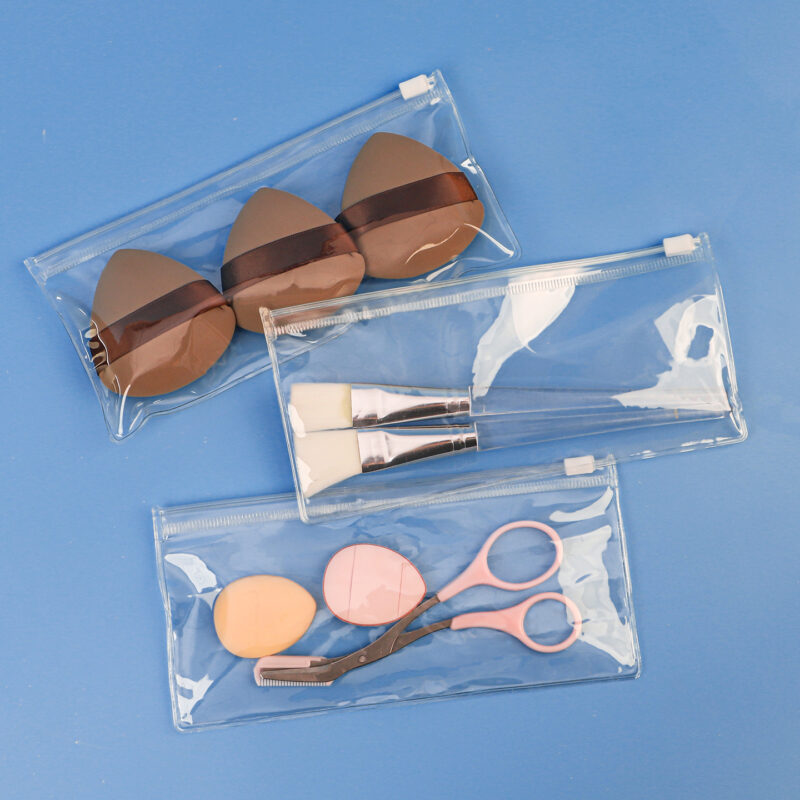
Cấu trúc PVC trong suốt giữ cho các mặt hàng được đóng gói có thể nhìn thấy được trong khi thanh trượt đóng hỗ trợ đóng mở lặp đi lặp lại.
Những sản phẩm thực sự được đóng gói trong túi dây kéo EVA?
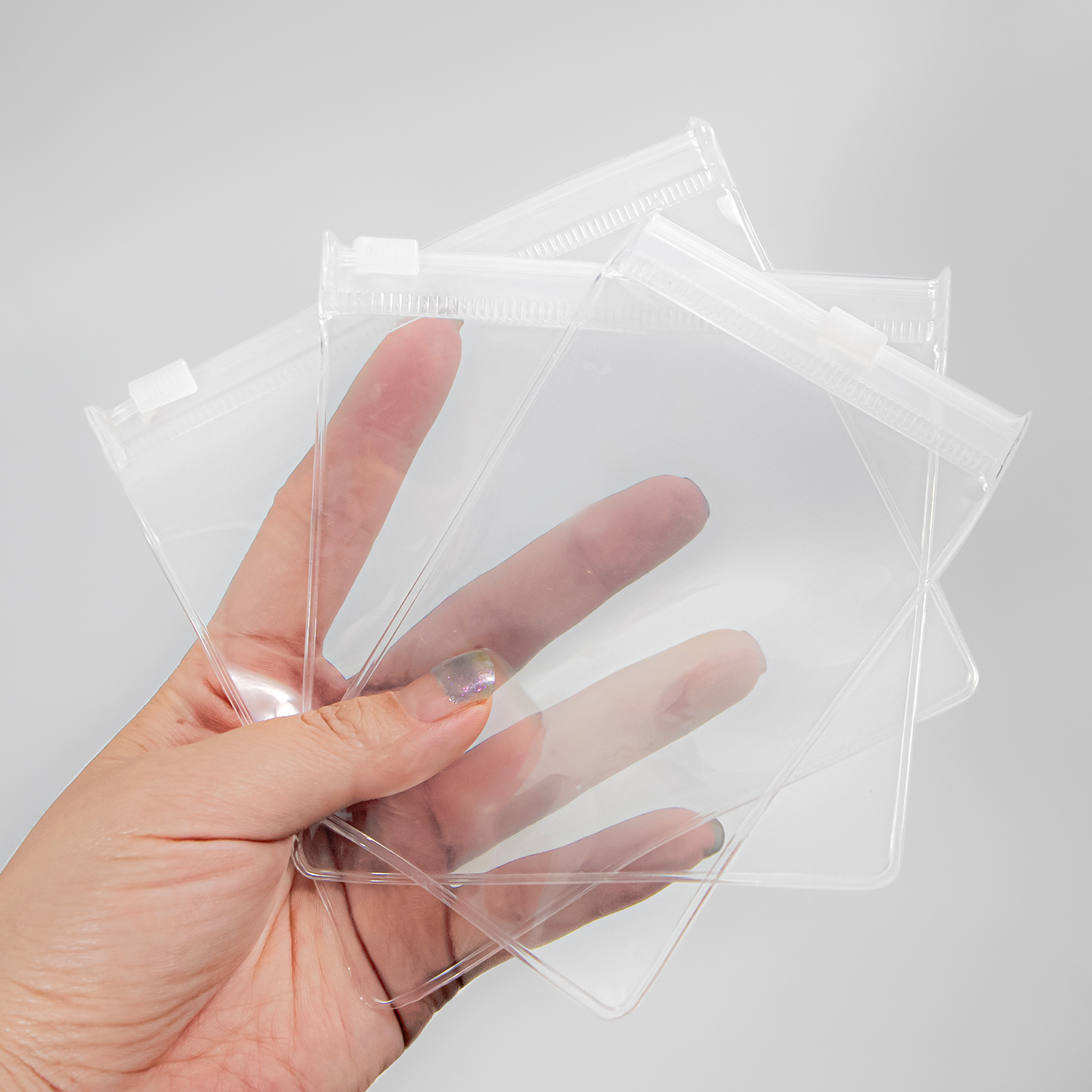
Túi dây kéo EVA rõ ràng có màng linh hoạt, các cạnh hàn phẳng và thanh trượt có thể tái sử dụng.
Túi dây kéo EVA được sử dụng chủ yếu ở những nơi có chất liệu mềm., đệm, cảm giác không độc hại quan trọng hơn độ cứng của kệ — hộp bút chì dành cho trẻ em, túi đựng đồ trang điểm du lịch, và ống bảo vệ cho các thiết bị điện tử nhỏ. EVA được sản xuất không sử dụng chất hóa dẻo dùng trong PVC dẻo, đó là một lý do tại sao những người bán đồ dùng học tập và sản phẩm dành cho trẻ em thường liệt kê nó là sự lựa chọn chất liệu an toàn hơn cho các vật dụng mà trẻ em xử lý hàng ngày.
Các ứng dụng phổ biến của túi dây kéo EVA trong thế giới thực:
- Hộp đựng bút chì trẻ em và hộp đựng văn phòng phẩm trường học
- Túi du lịch đựng mỹ phẩm và đồ trang điểm có bề mặt mềm mại
- Hộp bảo vệ cho tai nghe, máy ảnh nhỏ, và loa di động
- Túi đựng phụ kiện thể thao, tập gym
- Túi tặng quà khuyến mại với chi phí thấp hơn so với hộp đựng đúc
- Bao bì may mặc cao cấp cho áo phông, đồ lót, đồ bơi, quần áo năng động, khăn quàng cổ, tất và quần áo trẻ em. Túi đựng quần áo mang nhãn hiệu có thể tái sử dụng được làm bằng màng EVA trong hoặc mờ, màu sắc tùy chỉnh, in logo và khóa kéo trượt.
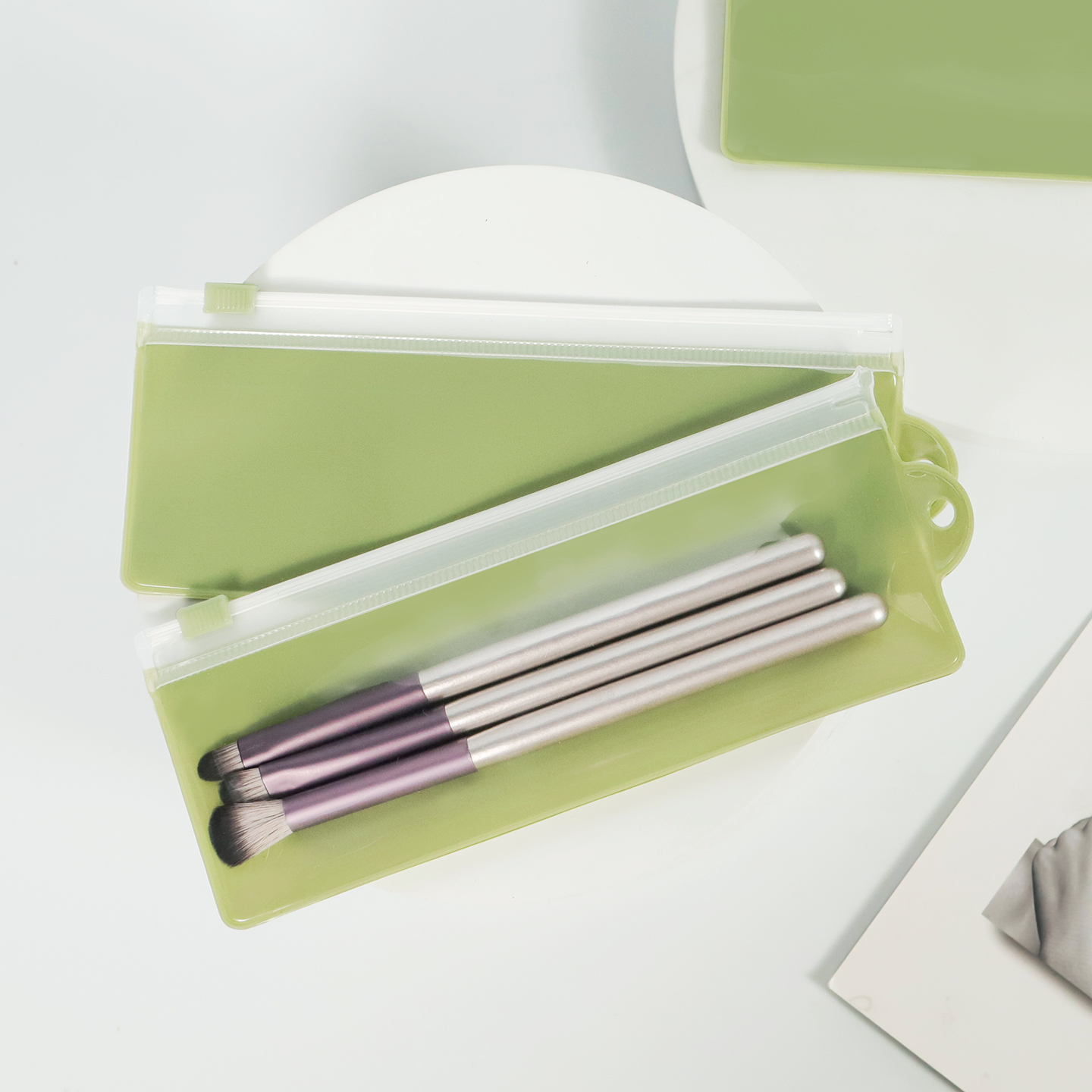
Túi khóa kéo trượt EVA màu cung cấp khả năng lưu trữ linh hoạt cho cọ trang điểm và các phụ kiện làm đẹp hàng ngày.
Các thương hiệu mỹ phẩm có sử dụng túi PVC hoặc EVA không - và tại sao?
Cả hai, nhưng đối với những công việc khác nhau trong cùng một dòng sản phẩm. PVC là vật liệu được lựa chọn cho rõ ràng, túi mỹ phẩm có cấu trúc nhằm mục đích được nhìn thấy - bộ quà tặng, trưng bày bán lẻ, và bao bì cao cấp nơi sản phẩm cần được hiển thị trên kệ. EVA là chất liệu được lựa chọn cho phần mềm, túi đựng đồ trang điểm mang theo hàng ngày dùng để chạm và đóng gói — bộ dụng cụ du lịch, chèn hộp đăng ký, và những người tổ chức hàng ngày.
| Nhân tố | Túi mỹ phẩm PVC | Túi mỹ phẩm EVA |
|---|---|---|
| Nhìn | Thông thoáng, cứng nhắc, tỏa sáng như thủy tinh | Mờ, sự chạm nhẹ, cảm giác giống như vải |
| sử dụng điển hình | Bộ quà tặng, kệ trưng bày bán lẻ | Túi du lịch, bộ dụng cụ mang theo hàng ngày |
| Cảm thấy | Có cấu trúc, giữ hình dạng của nó | Mềm mại, hơi đệm |
| Mức giá | Từ trung bình đến cao cấp | Thấp đến trung bình |
Túi PVC hoặc EVA có thực sự được sử dụng cho túi đựng điện thoại chống nước không?
Màng PVC và TPU - không phải EVA - là những vật liệu thực sự được sử dụng trong túi đựng điện thoại chống nước được xếp hạng IPX8 được bán để bơi lội, chèo thuyền, và sử dụng bãi biển. Những túi này thường được chế tạo từ màng dày khoảng 0,15–0,18 mm với hàn RF (hàn tần số vô tuyến) đường nối, một phương pháp thi công tạo ra mối nối kín nước liên tục; EVA là vật liệu xốp và không tạo thành đường may kín nước tương tự ở đường nối. Công ty TNHH Công nghiệp Bao bì Quảng Đông Minghe, Công ty TNHH. sản xuất túi chống nước điện thoại di động bằng PVC và TPU vì lý do này, bên cạnh các dòng túi dây kéo PVC và EVA riêng biệt được chế tạo để chống thấm nước, ứng dụng dành cho bán lẻ.
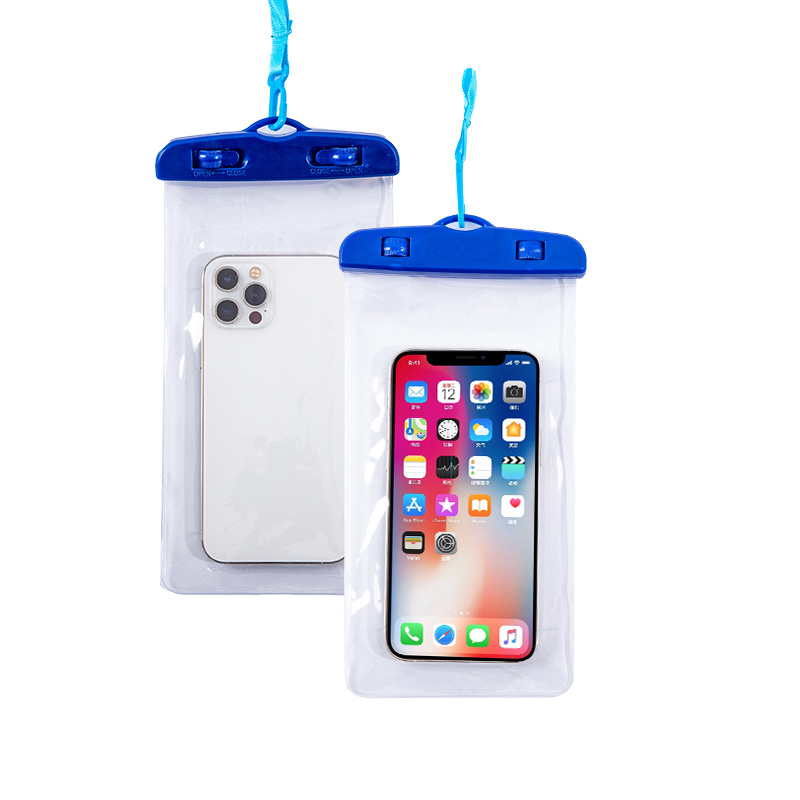
Túi đựng điện thoại chống thấm nước bằng nhựa PVC thường kết hợp thân phim trong suốt, khóa trên và dây treo.
Túi dây kéo PVC hoặc EVA có thể được sử dụng để đóng gói thực phẩm?
Không phải là sự lựa chọn tiêu chuẩn. Màng PE và OPP là những vật liệu mặc định để tiếp xúc trực tiếp với thực phẩm vì chúng là loại màng được chế tạo và thử nghiệm phổ biến nhất. FDA 21 CFR 177.1520, trong khi túi dây kéo PVC và EVA được sản xuất chủ yếu để bán lẻ, văn phòng phẩm, và bao bì chăm sóc cá nhân thay vì tiếp xúc với thực phẩm. Túi PVC hoặc EVA dành cho thực phẩm trước tiên cần được xác minh công thức màng cụ thể để đảm bảo tuân thủ khi tiếp xúc với thực phẩm - việc xác minh đó không tự động chỉ vì túi có khóa kéo.
Khi nào một thương hiệu nên tránh hoàn toàn bao bì PVC hoặc EVA?
Ba kịch bản yêu cầu một vật liệu khác nhau. Sản phẩm dạng bột mịn cần có dây kéo đôi hoặc cấu trúc dạng màng khác, vì các hạt lỏng lẻo làm kẹt một rãnh đơn tiêu chuẩn bất kể màng là PVC hay EVA. Bao bì tiệt trùng hoặc hấp tiệt trùng ở nhiệt độ cao cần có màng chịu nhiệt, vì PVC và EVA tiêu chuẩn làm mềm tốt dưới nhiệt độ khử trùng. Và các sản phẩm chống thấm nước thực sự cần có PVC hoặc TPU với các đường nối được hàn bằng RF - túi EVA tiêu chuẩn sẽ không giữ được lớp kín nước dưới nước.
PVC so với. EVA: Sơ lược về các trường hợp sử dụng bao bì thực tế
| Trường hợp sử dụng | Vật liệu thực sự được sử dụng | Tại sao |
|---|---|---|
| Trưng bày bộ quà tặng mỹ phẩm | PVC | Sự rõ ràng và độ cứng bán sản phẩm trên kệ |
| Túi đựng đồ trang điểm mang theo hàng ngày | EVA | Cảm ứng mềm mại, không độc hại, nhẹ |
| Hộp bút chì trẻ em | EVA | Không độc hại, đệm, chi phí thấp |
| Bao bì thủ công hoặc đồ trang sức | PVC | Bức tường rõ ràng hiển thị mục mà không cần mở |
| Túi đựng điện thoại chống nước | PVC hoặc TPU | Đường may hàn RF giữ kín nước |
| Bảo vệ thiết bị điện tử nhỏ | EVA | Đệm bọt hấp thụ tác động |
| Bao bì may mặc (vớ, đồ lót) | PVC hoặc EVA | PVC:Hiển thị sản phẩm gấp qua một bức tường rõ ràng EVA:Mềm mại, màng dẻo tạo ra sự trình bày cao cấp hơn so với túi PE tiêu chuẩn |
| Bao bì thực phẩm trực tiếp | PE hoặc LÊN (không phải PVC/EVA) | Công thức màng tiếp xúc thực phẩm tiêu chuẩn FDA |
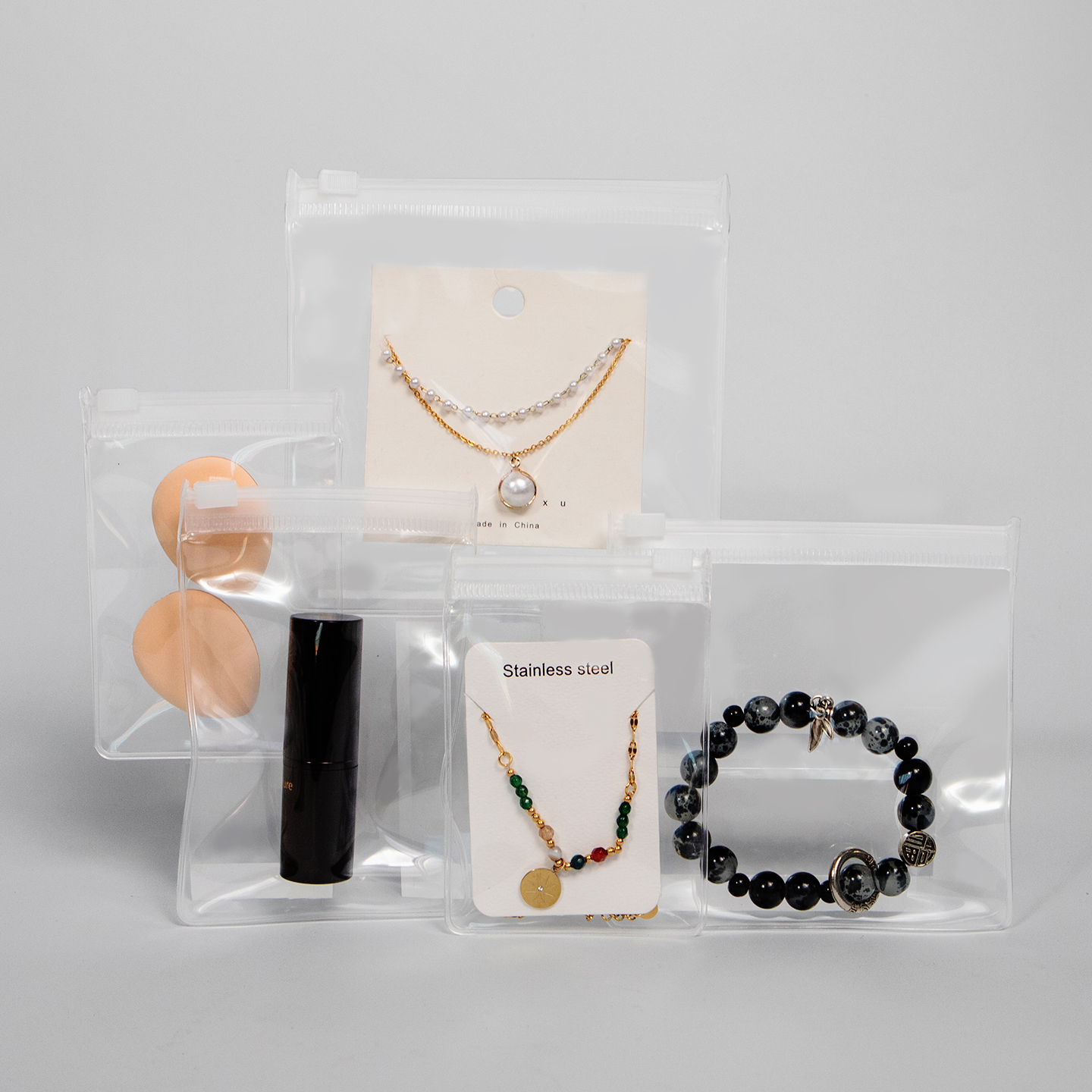
Kích thước túi khác nhau có thể được sử dụng cho mỹ phẩm, dây chuyền, bông tai, vòng tay và các mặt hàng bán lẻ nhỏ khác.
Bạn có thể tìm nguồn cả túi dây kéo PVC và EVA cho các ứng dụng này ở đâu?
Công ty TNHH Công nghiệp Bao bì Quảng Đông Minghe, Công ty TNHH. sản xuất nhựa PVC, EVA, TPU, Thể dục, PP, và túi dây kéo OPP từ một dây chuyền sản xuất — nhựa thô, phim thổi, in ấn, làm túi, và đóng gói thành phẩm — có trụ sở tại Quảng Đông, Trung Quốc, với 20 năm trong danh mục. Kích thước tiêu chuẩn vận chuyển từ kho; kích thước tùy chỉnh, hình dạng, biểu tượng, màu sắc, và sự khéo léo được thực hiện theo đơn đặt hàng trên cả hai vật liệu, bọc túi đựng mỹ phẩm, nhà tổ chức văn phòng phẩm, bao bì may mặc, và túi đựng điện thoại chống nước PVC/TPU của cùng một nhà máy. Bao bì tiếp xúc trực tiếp với thực phẩm và bao bì chống trẻ em được chứng nhận nằm ngoài bộ vật liệu này và yêu cầu phải có phim và thử nghiệm được xác minh riêng.
Dòng dưới cùng: Túi nào phù hợp với sản phẩm nào?
- Sử dụng PVC cho mỹ phẩm, trang sức, quà tặng, và bất kỳ sản phẩm nào tự bán thông qua, trưng bày bán lẻ cứng nhắc
- Sử dụng EVA cho đồ dùng trẻ em, túi đựng đồ trang điểm mang theo hàng ngày, bao bì quần áo cao cấp và bảo vệ mềm cho thiết bị điện tử nhỏ
- Sử dụng PVC hoặc TPU với các đường nối hàn RF cho bất cứ thứ gì cần thực sự không thấm nước
- Thay vào đó hãy sử dụng PE hoặc OPP cho bao bì tiếp xúc trực tiếp với thực phẩm
Câu hỏi thường gặp (có thể nhúng)
Q: Sự khác biệt thực sự giữa túi dây kéo PVC và EVA trong sử dụng thực tế là gì?
MỘT: Túi dây kéo PVC được sử dụng ở nơi bán sản phẩm trong suốt và độ cứng của kệ - mỹ phẩm, trang sức, bộ quà tặng - trong khi túi dây kéo EVA được sử dụng ở nơi mềm, không độc hại, cảm giác đệm quan trọng hơn, chẳng hạn như hộp bút chì của trẻ em và túi đựng đồ trang điểm mang theo hàng ngày. Màng PVC chạy 4–12 mil và giữ hình dạng cứng; EVA vẫn linh hoạt và có đệm nhẹ ở độ dày tương tự. Sự lựa chọn trong thực tế phụ thuộc vào việc chiếc túi cần trông có cấu trúc trên kệ hay cảm giác mềm mại khi sử dụng hàng ngày.
Q: Túi dây kéo PVC có thực sự tốt cho bao bì mỹ phẩm không??
MỘT: Đúng, Túi dây kéo PVC được sử dụng rộng rãi để đóng gói mỹ phẩm và đồ dùng vệ sinh đặc biệt vì tính rõ ràng, màng cứng hiển thị sản phẩm mà không cần mở túi. Điều này đặc biệt hiệu quả đối với bộ quà tặng và trưng bày bán lẻ, nơi khả năng hiển thị hỗ trợ việc bán hàng. Thay vào đó, túi đựng đồ trang điểm du lịch mang theo hàng ngày thường sử dụng EVA hơn, vì túi mềm sẽ thoải mái hơn khi đóng gói và mang theo.
Q: Túi EVA có thể dùng làm túi đựng điện thoại chống nước được không??
MỘT: Không phải để bảo vệ khi ngâm nước chính hãng — túi đựng điện thoại chống nước thực sự được xếp hạng IPX8 được làm từ màng PVC hoặc TPU với các đường nối hàn RF, không phải bọt xốp EVA. EVA là vật liệu xốp không tạo thành mối nối kín nước liên tục giống như màng PVC hoặc TPU hàn ở đường may. Một thương hiệu cần một chiếc túi đựng điện thoại chống nước thực sự nên chỉ định cấu trúc PVC hoặc TPU, không phải tiêu chuẩn EVA.
Q: Túi dây kéo PVC hoặc EVA có an toàn thực phẩm không??
MỘT: Cả hai đều không phải là vật liệu tiêu chuẩn để tiếp xúc trực tiếp với thực phẩm - màng PE và OPP là những lựa chọn mặc định vì chúng được chế tạo và thử nghiệm phổ biến nhất theo FDA 21 CFR 177.1520. Túi dây kéo PVC và EVA được sản xuất chủ yếu để bán lẻ, văn phòng phẩm, và bao bì chăm sóc cá nhân thay vì tiếp xúc với thực phẩm. Việc sử dụng một trong hai loại cho bao bì thực phẩm trước tiên đòi hỏi phải xác minh sự tuân thủ khi tiếp xúc với thực phẩm của màng cụ thể đó, vì chỉ khóa kéo thôi thì không làm cho túi an toàn với thực phẩm.
Q: Các thương hiệu may mặc sử dụng loại túi nào để đóng gói tất, đồ lót?
MỘT: Dành cho bản trình bày cao cấp, thường thì có. Túi dây kéo EVA phù hợp đựng áo thun hàng hiệu, đồ lót, đồ bơi, quần áo năng động, khăn quàng cổ, tất và các loại quần áo gấp khác vì chúng có thể mang lại cảm giác mềm mại hơn, bề ngoài rõ ràng hoặc mờ và đóng trượt có thể tái sử dụng. Túi đựng quần áo PE vẫn là lựa chọn tốt hơn khi chi phí đơn vị thấp, trọng lượng bao bì thấp và thực hiện khối lượng lớn là những ưu tiên chính. PVC vẫn có thể được sử dụng cho các loại quần áo gấp nhỏ khi cần độ trong suốt tối đa và cách trưng bày bán lẻ có cấu trúc chặt chẽ hơn. Nói một cách đơn giản, chọn EVA để có chất lượng trình bày cao cấp và khả năng tái sử dụng, PE để đóng gói số lượng lớn tiết kiệm, và PVC cho độ rõ nét hiển thị tối đa.