 (+035) 527-1710-70
 google@gmail.com
 एक पता चुनें

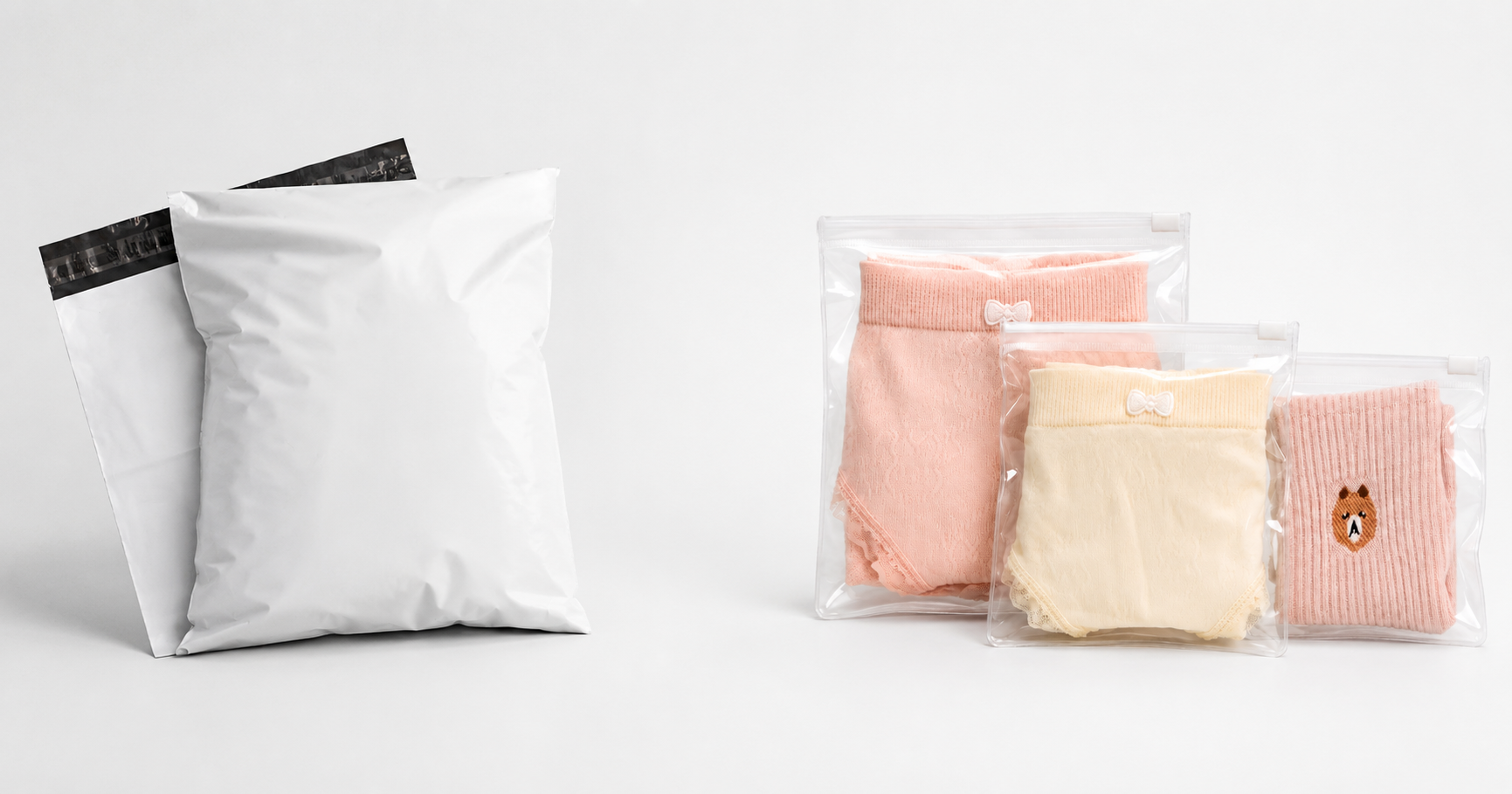
त्वरित जवाब: कपड़ों के पॉली मेलर बनाम ज़िपर बैग प्रतिस्पर्धी उत्पाद नहीं हैं - वे विभिन्न नौकरियों के लिए बनाए गए हैं. A poly mailer is a single-use, adhesive-sealed outer shipping envelope designed to survive one trip through a courier network. A zipper bag is a reusable, resealable inner bag designed to protect a folded garment before and after it reaches the customer. Most apparel brands that ship direct-to-consumer end up using both, not choosing one over the other.
Poly Mailer or Zipper Bag: What’s the Actual Difference?
| Poly Mailer | ज़िपर बैग | |
|---|---|---|
| समापन | Peel-and-seal adhesive strip | Slider or interlocking track |
| पुन: प्रयोज्य? | No — single use | Yes — hundreds of open/close cycles |
| विशिष्ट मोटाई | 1.5–2.5 mil polyethylene | 2–6 mil PVC, ईवा, or LDPE |
| Main job | Survive transit (belts, vans, weather) | Protect the garment in daily use |
| Where it lives | Discarded after unboxing | Often kept and reused by the customer |
| Water resistance | उच्च (sealed edges) | मध्यम (mechanical closure, not sealed) |
The short version: a poly mailer protects the parcel. A zipper bag protects the उत्पाद — including after the parcel is gone.
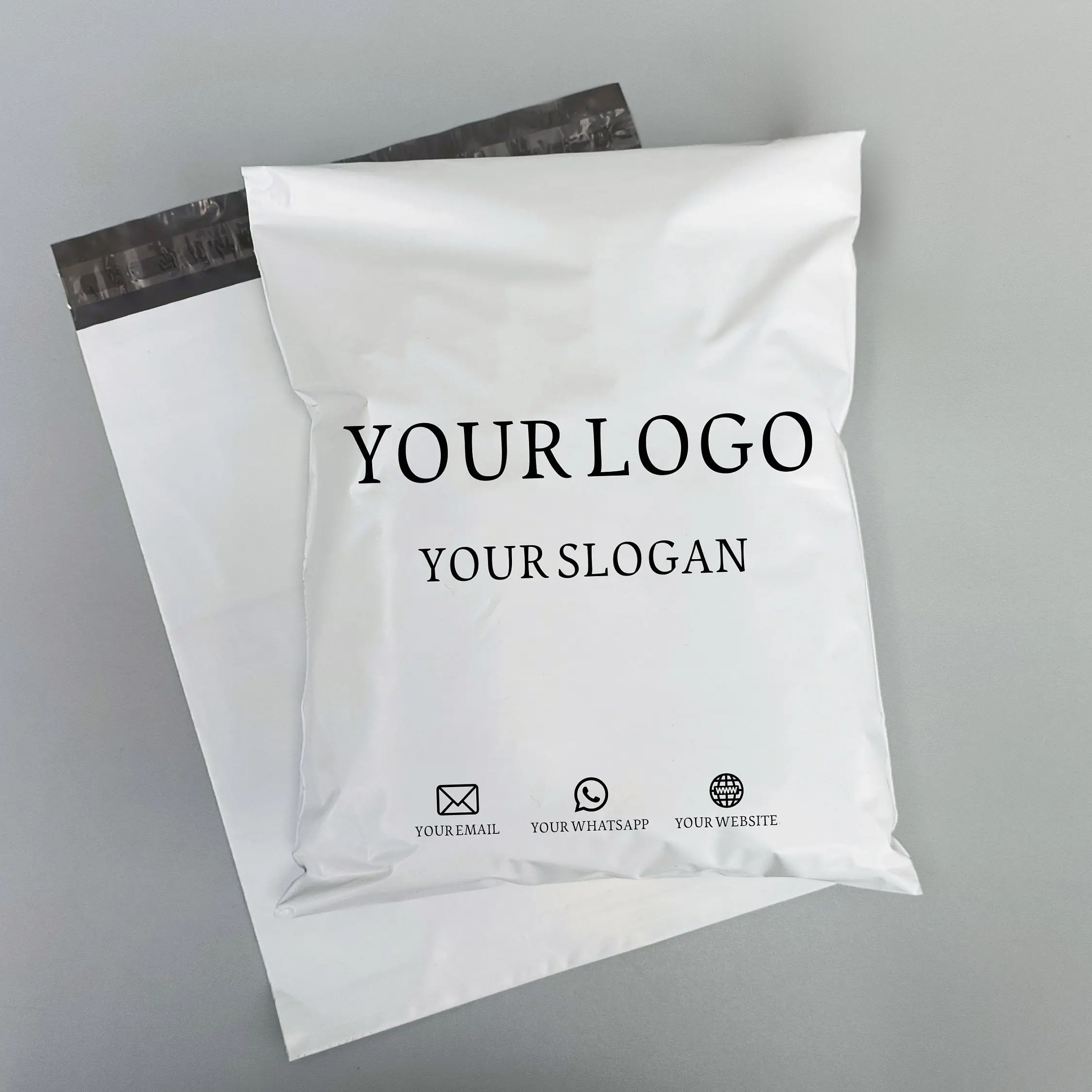
Adhesive-sealed poly mailers are commonly used as the outer shipping layer for clothing parcels.
Do You Need Both, or Just One?
Use both if you’re shipping through standard parcel carriers (USPS, FedEx, UPS, DHL, or regional equivalents). The typical setup: fold the garment into a zipper bag first, then place that bag inside a printed poly mailer for the outer shipment.For U.S. shipments, apparel brands should also review the [USPS packaging standards for soft goods](https://pe.usps.com/text/dmm300/601.htm), which require mailpieces to withstand normal transit and handling and specify secure closure methods for bags containing clothing and textiles.
- ✅ Zipper bag keeps the item dust-free, wrinkle-resistant, and presentable
- ✅ Poly mailer absorbs sorting-belt abrasion, नमी, and rough handling
- ✅ Customer gets a reusable bag as a small unboxing perk
Use a zipper bag alone if you’re not shipping through a courier belt system:
- Retail counter or in-store sales
- Trade show samples handed directly to buyers
- Subscription boxes going inside a separate rigid outer box
Skip the inner zipper bag entirely if:
- You’re shipping extremely high volumes on thin margins and the poly mailer alone is doing the protective job
- The item is bulky or rigid enough that a flat bag adds no benefit (see below)
Zipper Bag Thickness Guide for Apparel
मोटाई (measured in mil) is the main variable that determines whether a zipper bag survives one use or a hundred.
| उत्पाद का प्रकार | अनुशंसित मोटाई | क्यों |
|---|---|---|
| टी शर्ट, मोज़े, single light items | 2–3 mil | Enough structure without added cost |
| Multi-item bundles | 4 एमआईएल | Handles repeated stuffing/unstuffing |
| Sweaters, डेनिम, heavier textiles | 4–6 mil | Resists stretching and seal splitting |
| Below 2 एमआईएल | Not recommended | Zipper track tends to split after repeated home use |
| ऊपर 6 एमआईएल | Rarely worth it | Added material cost with no real performance gain for most apparel |
Rule of thumb: match thickness to how many times the bag will realistically be reopened, not just the weight of the item inside it.
पीवीसी बनाम. ईवीए बनाम. पीई: Which Zipper Bag Material Fits Your Brand?
The three most common zipper bag materials sit on a clear cost-and-performance ladder: PE is cheapest, PVC is mid-range, EVA is the premium option. The price gap reflects real material and manufacturing differences, not arbitrary markup.
| सामग्री | लागत | अनुभव करना & खत्म करना | के लिए सर्वोत्तम | recyclability |
|---|---|---|---|---|
| पीई (एलडीपीई) | निम्नतम | Flexible, clear or frosted | High-volume basics: tees, मोज़े, तौलिए | Recycling code #4 — accepted at store drop-off in many regions, rarely curbside |
| पीवीसी | मध्य | अकड़न, glass-clear, holds shape | Retail display, प्रसाधन सामग्री, gift sets — where budget outweighs eco-positioning | Limited — most curbside programs don’t accept it |
| ईवा | Highest | कोमल, मैट, जमा हुआ, quiet | Premium apparel, travel kits, unboxing-focused DTC brands | Better than PVC; foam-grade variants are reusable |
PE — Pros & दोष
- ✅ Lowest cost per unit
- ✅ Most broadly recyclable of the three
- ❌ Less rigid, less premium look and feel
- के लिए सर्वोत्तम: high-volume basics where cost-per-unit matters more than presentation
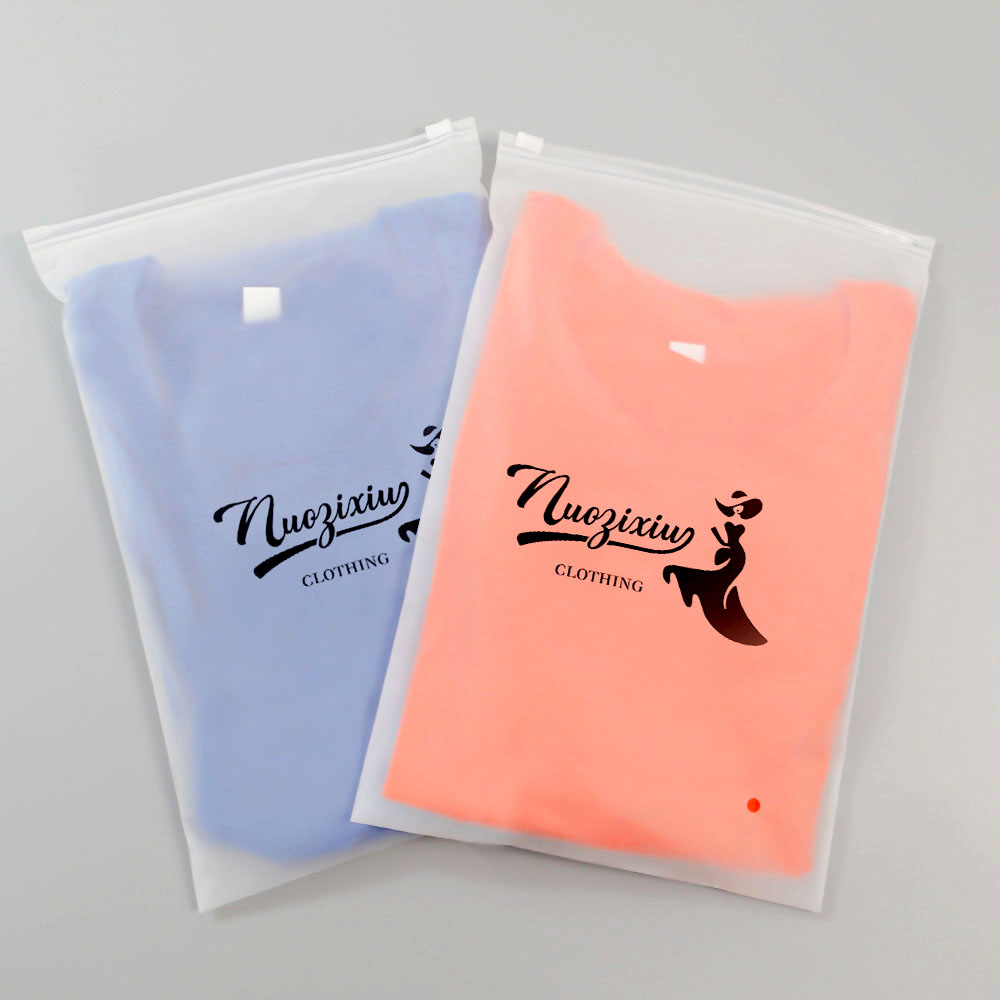
Frosted PE zipper bags offer economical garment protection with custom logo printing options.
PVC — Pros & दोष
- ✅ Fully transparent, कठोर, holds its shape well
- ✅ Strong waterproofing at a lower cost than EVA
- ❌ Limited recyclability; some retailers and regions restrict PVC packaging
- के लिए सर्वोत्तम: display-ready items like cosmetics or gift sets on a moderate budget
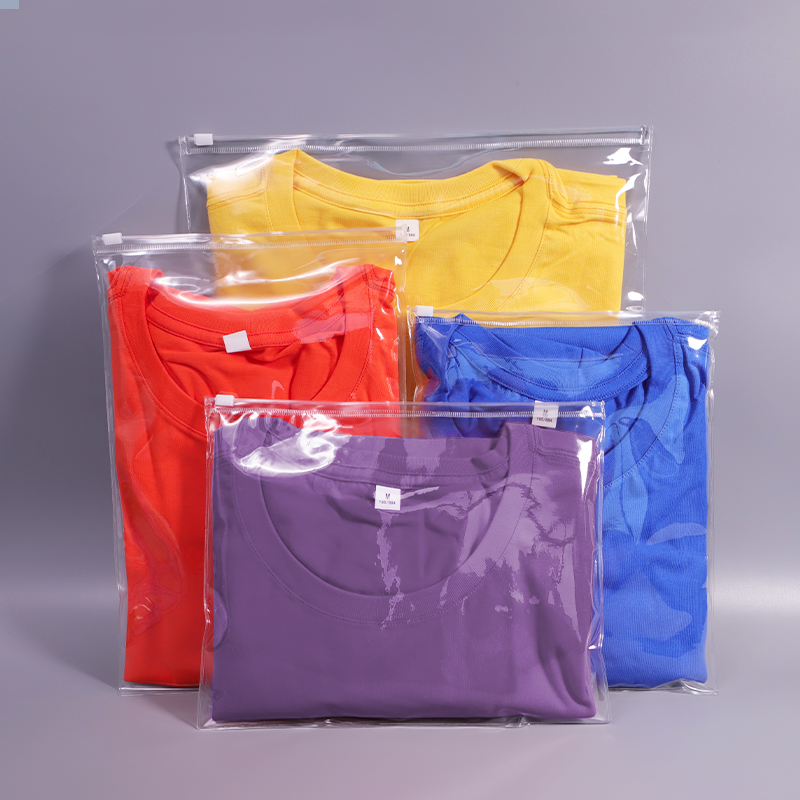
Clear PVC zipper bags provide structured presentation and high product visibility for folded apparel.
EVA — Pros & दोष
- ✅ Chlorine-free, more eco-positioned than PVC
- ✅ Soft, मैट “प्रीमियम अनबॉक्सिंग” feel — good for social-media-ready packaging
- ❌ Highest cost of the three
- के लिए सर्वोत्तम: DTC apparel and travel brands where the unboxing moment is part of the product
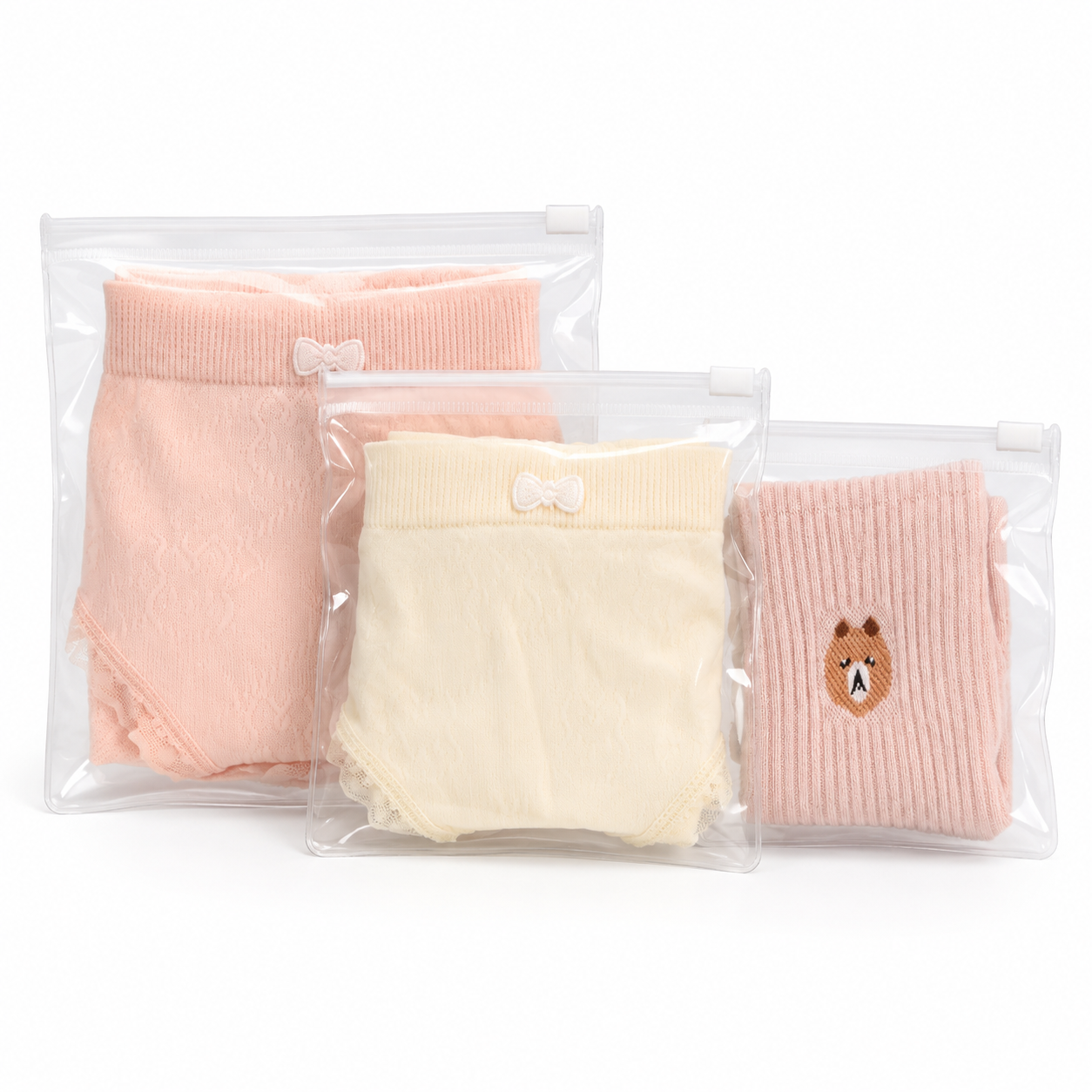
EVA zipper bags provide reusable and presentable packaging for underwear, knitwear and other premium garments.
Compliance note: if you sell into retailers or regions with PVC restrictions, default to PE or EVA — and confirm current local rules before finalizing your spec, since regulations shift by market.
When a Zipper Bag Should NOT Be Your Only Layer of Protection
| Scenario | Why a Zipper Bag Alone Falls Short | What to Use Instead |
|---|---|---|
| Standard parcel shipping (USPS/FedEx/etc.) | Mechanical closure isn’t adhesive-sealed and can work open in transit | Zipper bag + outer poly mailer |
| Bulky or rigid items (boots, structured coats, boxed accessories) | Flat bags don’t protect shape or corners | Box or reinforced mailer |
| PVC-restricted retail channels or regions | Compliance risk regardless of thickness | PE or EVA zipper bag |
Sourcing Custom Zipper Bags: What to Ask a Supplier
If you’re ordering custom-printed PVC, ईवा, or PE zipper bags — commonly manufactured in Guangdong, China — a few questions separate a smooth order from a costly mistake:
- MOQ: Custom printed zipper bags typically start at 1,000–5,000 pieces per size/design, varying by factory and print method. Smaller test runs are usually possible at a per-unit premium.
- Vertical integration: Factories that handle raw material, film extrusion, मुद्रण, and bag-making in-house (rather than outsourcing steps) generally offer faster turnaround and tighter quality control.
- प्रलेखन: एक जनरल “पर्यावरण के अनुकूल” या “compliant” claim on a product page isn’t the same as an order-specific certificate. Request REACH or RoHS documentation tied to your actual PO, not just a generic material data sheet.
- Physical sample first: Confirm gauge, ज़िपर शैली (स्लाइडर, standard interlock, or double-track), and finish against a real sample before committing to a bulk run — mil ratings can read differently in person than on a spec sheet.
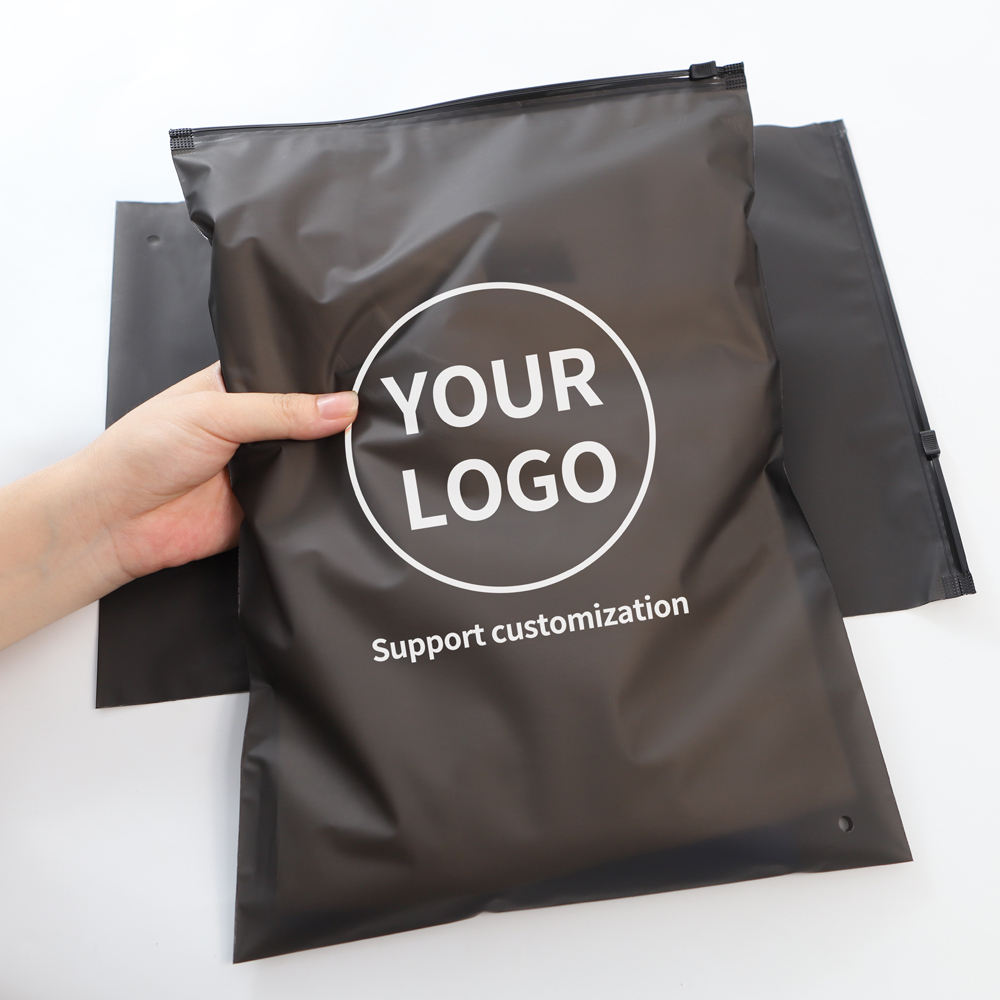
Custom PE zipper bags can be produced in different colors with branded logo printing for apparel packaging.
अक्सर पूछे जाने वाले प्रश्नों
Is a zipper bag or a poly mailer better for shipping T-shirts?
A poly mailer works better as the outer shipping layer, and a zipper bag works better as the inner layer — combining both outperforms using either alone for most T-shirt brands. Poly mailers seal with adhesive and resist tearing in transit, while zipper bags keep the folded shirt dust-free and let the customer reuse the bag at home. Brands shipping high volumes on tight margins sometimes skip the inner bag and use only a printed poly mailer to cut material cost per unit.
What mil thickness should I order for a custom clothing zipper bag?
Order 2–3 mil for single light garments and 4–6 mil for multi-item bundles or heavier textiles like denim and knitwear. Below 2 एमआईएल, the zipper track tends to split after repeated home use; ऊपर 6 एमआईएल, material cost rises without a matching increase in performance for most apparel. Confirm the exact gauge against a physical sample before committing to a bulk order.
Is PVC or EVA better for a premium unboxing experience, and which costs more?
EVA typically costs more than PVC, and it usually delivers the more premium feel — a soft, chlorine-free, frosted-matte finish that many apparel and travel brands prefer for social-media unboxing photos, versus PVC’s glass-clear, rigid presentation. PVC remains the better pick for brands wanting full transparency and stiffness at a lower material cost, such as a display-ready cosmetics case. Some brands run PVC for retail display SKUs and pay the EVA premium only on direct-to-consumer shipments meant to be photographed.
Can PE zipper bags go through standard recycling?
LDPE zipper bags carry recycling code #4 and are accepted in store drop-off programs — though not most curbside bins — in many regions, unlike standard PVC, which most municipal programs do not accept at all. Recyclability varies by country and even by city collection program, so a brand should print disposal instructions on the bag rather than assume universal curbside acceptance. PE remains the more broadly recyclable option among PVC, ईवा, and PE for garment packaging.
What’s the minimum order quantity for custom printed zipper bags from a China-based factory?
MOQs for custom printed PVC, ईवा, or PE zipper bags from Chinese manufacturers commonly start in the 1,000–5,000 piece range per size and design, though this varies by factory and print method. Guangdong Minghe supports full customization of shape, आकार, प्रतीक चिन्ह, रंग, and material as part of its production chain, so brands should request an MOQ and lead-time quote for their exact spec rather than relying on general industry ranges. Smaller test orders are typically possible at a per-unit cost premium compared to bulk production runs.