 (+035) 527-1710-70
 google@gmail.com
 Elige una dirección

Respuesta rápida
- Sí, EVA is food-safe — but only within regulatory limits: 21 CFR 177.1350 (U.S.) caps vinyl acetate at 50% by weight and n-hexane extractables at 2.6%; EU 10/2011 requires overall migration testing per EN 1186.
- Commercial food-grade EVA bags run 8%–30% VA content, well under the FDA ceiling.
- EVA needs no plasticizer to stay flexible — unlike PVC, which typically relies on DEHP, a Prop 65–listed reproductive toxicant.
- EVA is not microwave-safe, not sous-vide-safe, and not curbside-recyclable in most regions.
- The only real proof of compliance is a SKU-matched migration report from SGS, Intertek, Bureau Veritas, or TÜV — not an ISO 9001 certificate, not a resin datasheet.
What Makes EVA Different From PVC or PE?
EVA (ethylene-vinyl acetate) is a copolymer, not a single-resin plastic — its properties change with vinyl acetate (VA) content, which is why “is EVA safe” doesn’t have one answer without a percentage attached. Food-contact grades cluster at 8%–30% VA, far below the FDA’s 50% ceiling under 21 CFR 177.1350. Higher VA content lowers the film’s melting point and increases clarity and flexibility, which is why EVA heat-seals at lower temperatures than PE and resists cracking below 0°C without any added plasticizer.
For manufacturers, EVA is a resin swap, not a new process: Guangdong Minghe embalaje industrial Co., Limitado. runs EVA through the same blown-film-to-bag-making line used for PVC, TPU, educación física, PÁGINAS, and OPP.
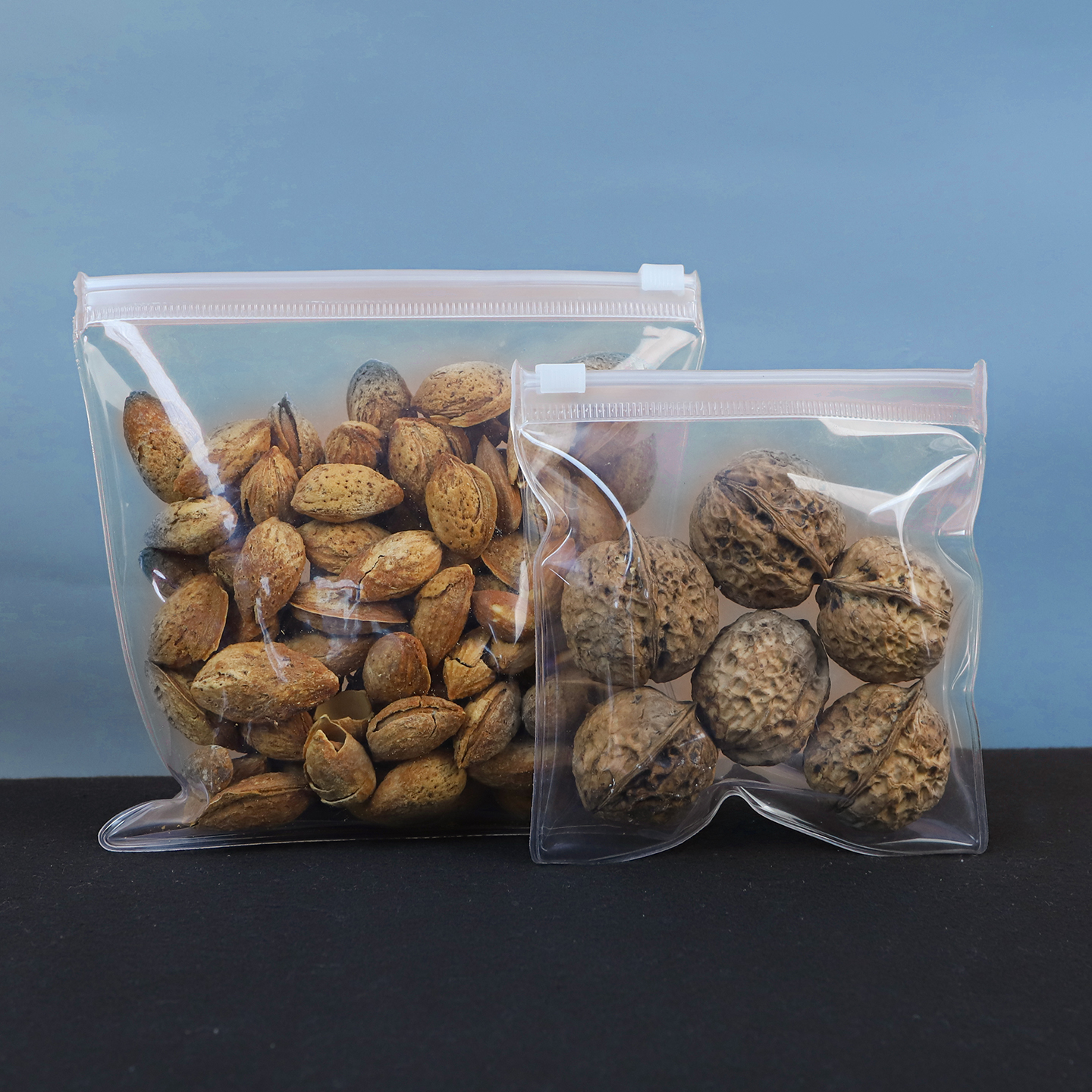
Higher vinyl acetate (VA) content gives EVA its natural clarity and cold-weather flexibility without relying on any added plasticizers.
What Do FDA and EU Rules Actually Require?
A bag cleared under U.S. rules is not automatically compliant in the EU — the two frameworks test different things.
| Regulation | Governing Body | What It Actually Requires |
|---|---|---|
| 21 CFR 177.1350 | U.S. FDA | Vinyl acetate ≤50% by weight; n-hexane extractables ≤2.6% by weight |
| EU 10/2011 | European Commission | Overall migration limit tested per EN 1186, matched to a food simulant |
| EU 1935/2004 | European Commission | Framework regulation covering all food contact materials |
| LFGB | Germany (BVL) | Separate national migration panel, often demanded on top of EU 10/2011 |
Brands selling into both the U.S. and EU need two separate test reports — an FDA pass under 21 CFR 177.1350 says nothing about EU 10/2011 overall migration compliance, and EU retailers frequently ask for LFGB testing even when EU 10/2011 paperwork already exists.
Which Certifications Actually Prove Food-Grade Status?
Only one document actually proves chemical safety — the rest prove process control:
- Migration test report (SGS, Intertek, Bureau Veritas, or TÜV) — tied to the exact film formulation, not a generic EVA resin datasheet. This is the document that matters.
- BRCGS Global Standard for Packaging Materials — required by most retail chains as a factory-level standard, not a per-SKU safety proof.
- ISO 9001:2015 — confirms the factory’s quality-management process is consistent. It does no confirm the bag is chemically safe for food.
A supplier that offers only an ISO 9001 certificate has proven nothing about extractable limits.
Does EVA Contain BPA or Phthalates?
No, and for a structural reason rather than a formulation choice. EVA gets its flexibility from the vinyl acetate comonomer ratio itself, so it never needed a plasticizer in the first place — unlike standard PVC, which typically relies on an added plasticizer such as DEHP (di-2-ethylhexyl phthalate) to reach comparable softness, and DEHP is listed under Propuesta de California 65 for reproductive toxicity. BPA is similarly not applicable: it’s a building block of polycarbonate and epoxy-resin chemistry, with no role in ethylene-vinyl acetate polymerization. EVA isn’t “BPA-free” the way some reformulated polycarbonate products are — there’s no BPA to remove.
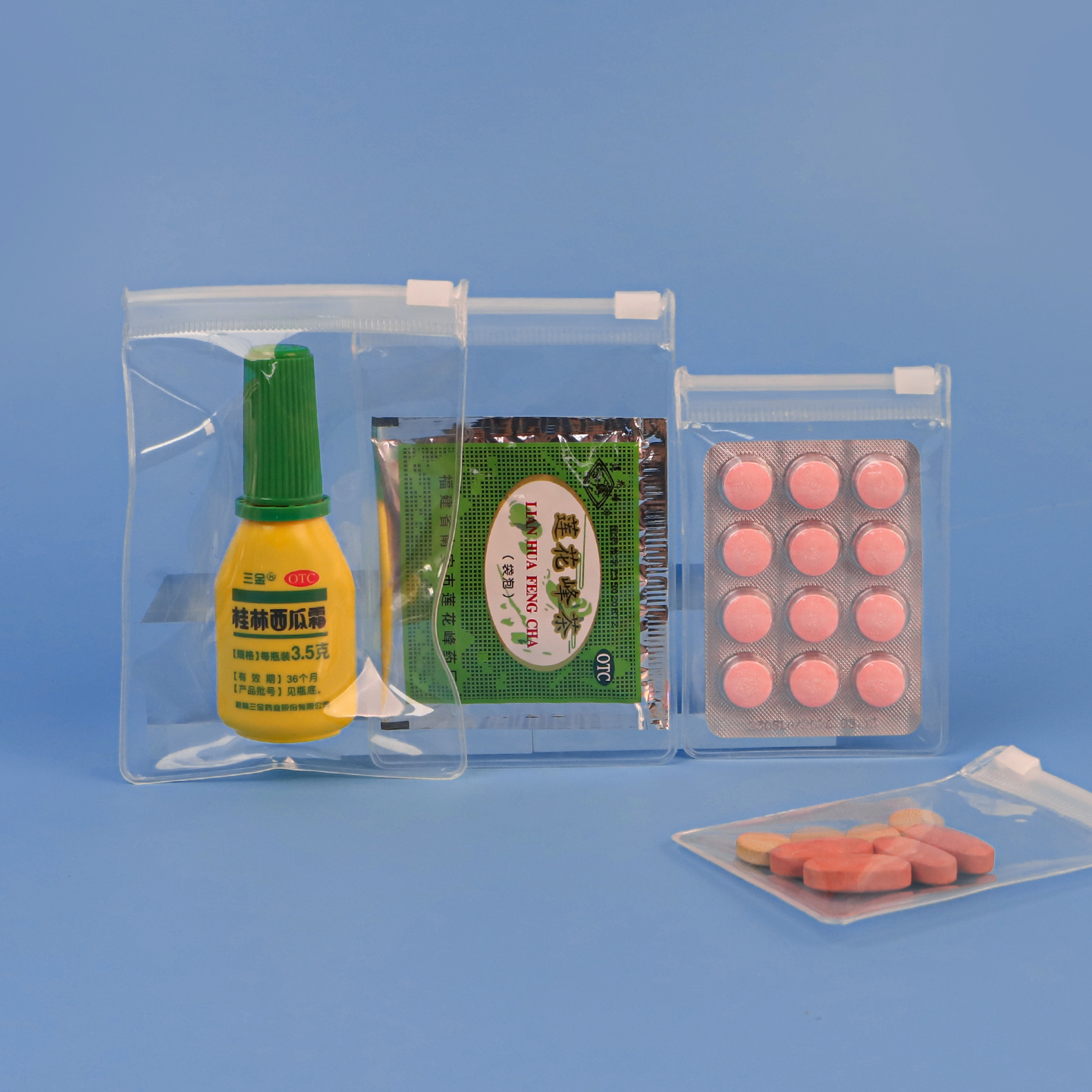
Because EVA is structurally free of BPA and toxic plasticizers like DEHP, it is a highly trusted material for sensitive applications, including pharmaceutical and dry food packaging.
EVA contra. PVC versus. educación física frente a. PÁGINAS: Which Material Is Actually Food-Safe?
| Material | Food Contact Status | Plasticizer Needed | Best Use Case |
|---|---|---|---|
| EVA | Compliant under 21 CFR 177.1350 / EU 10/2011 | No | Aperitivos, produce, productos secos, productos cosméticos, joyas |
| CLORURO DE POLIVINILO | Not recommended | Sí (often DEHP-type) | Stationery pouches, retail totes, industrial packaging |
| educación física (LDPE/LLDPE) | Compliant; most common food-bag resin | No | Sandwich bags, freezer bags, bread bags |
| PÁGINAS | Compliant; higher heat tolerance | No | Microwave-safe pouches, hot-fill packaging |
EVA for food packaging — pros and cons:
Ventajas:
- No plasticizer needed, so no DEHP/DINP migration risk to test around
- Seals at lower temperatures than PE, useful for thin, high-speed production lines
- Stays flexible and crack-resistant in cold storage (below 0°C)
- Reaches near-glass clarity without additives
Contras:
- Softens above roughly 60–70°C — not microwave or hot-fill rated
- Not accepted in most curbside PE/PET recycling streams
- Fat-heavy, long-duration storage needs an olive-oil-simulant migration report, not just a general FDA pass
Given this, Guangdong Minghe embalaje industrial Co., Limitado. routes food-contact zipper bag orders to EVA, educación física, or PP, and steers PVC requests toward non-food applications instead.
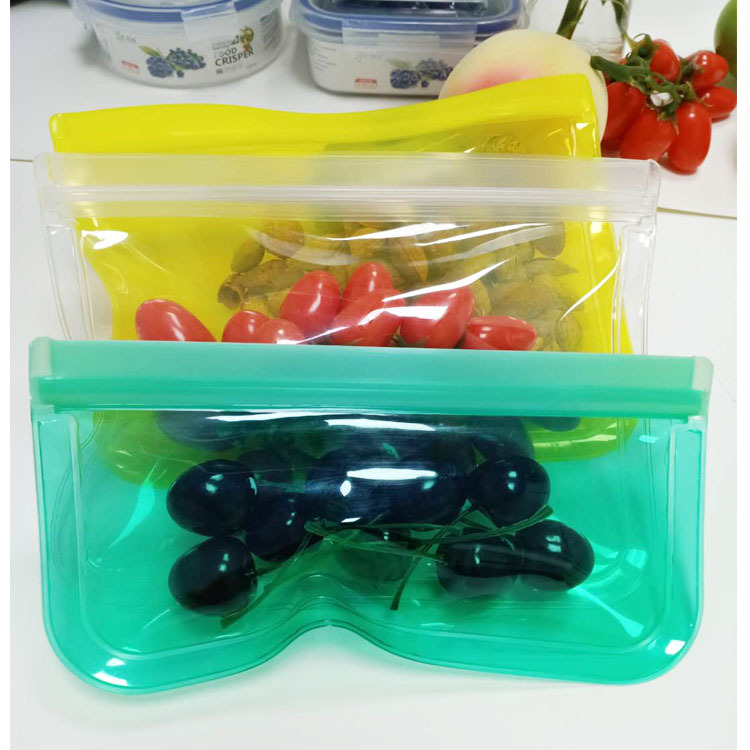
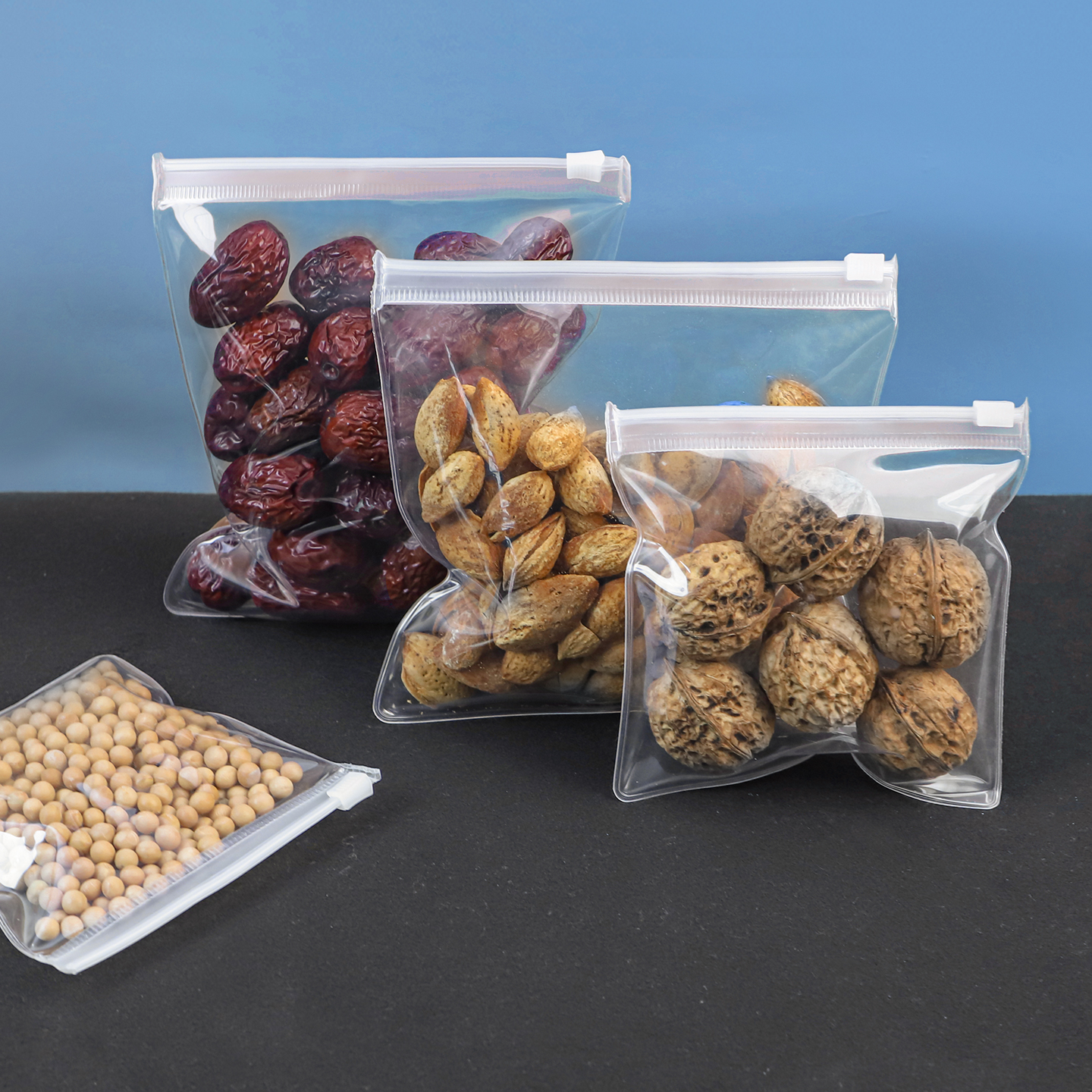
FDA and EU-compliant EVA bags are perfectly suited for fresh produce and daily snacks, offering a safer alternative to standard PVC.
When Should You Not Use an EVA Zip Bag for Food?
- Microwave reheating: EVA softens above ~60–70°C depending on VA content. Use PP, no eva, for microwave-rated packaging.
- Long-duration, high-fat storage: fat can accelerate extractable migration versus dry goods — check the olive-oil-simulant result specifically, not just the general FDA compliance line.
- Boiling water or sous vide: this is a separate product category (boiling-rated PE/nylon laminates), not EVA zip bags.
- Reciclaje en la acera: EVA isn’t accepted in most municipal PE/PET streams — position it as reusable, not recyclable.
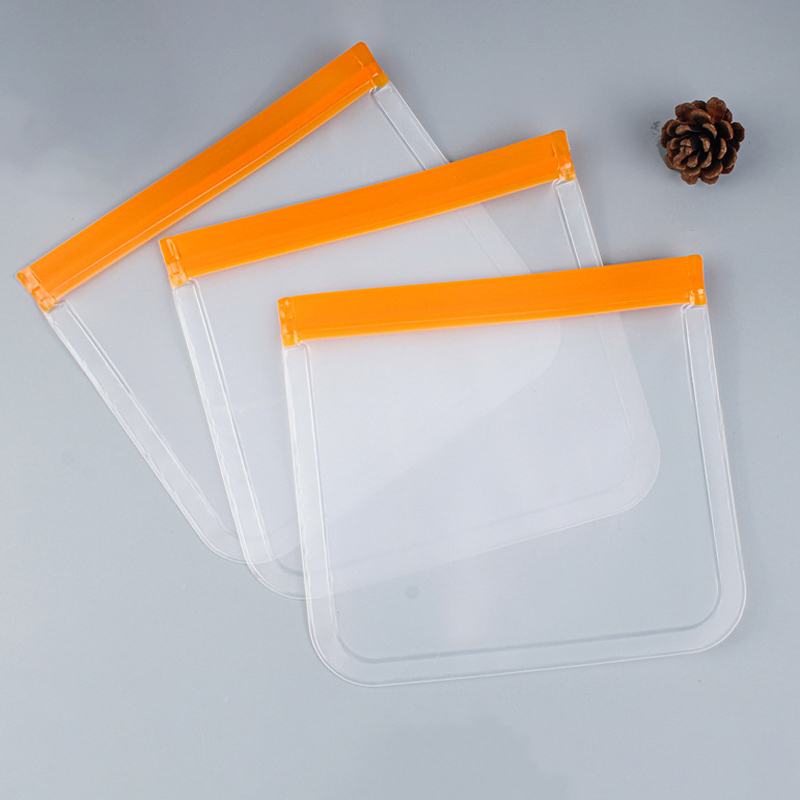
Because EVA is not widely accepted in curbside recycling streams, these bags are manufactured with durable seals to be washed and reused multiple times.
How to Verify a Supplier’s Food-Safety Claims
- Request the migration report matched to the exact SKU and film thickness — not a generic EVA resin datasheet.
- Confirm the testing lab (SGS, Intertek, Bureau Veritas, or TÜV) and the report date — most retail buyers require a report issued within the last 12 months.
- Match the food simulant used in testing (3% acetic acid, 10% ethanol, olive oil) to the actual food category you’re packing.
- Cross-check the stated vinyl acetate percentage against the 50% ceiling in 21 CFR 177.1350.
Preguntas frecuentes
Is EVA safer than PVC for food packaging?
Sí. EVA doesn’t require a phthalate plasticizer to stay flexible, while standard soft PVC typically does — usually DEHP, which is Prop 65–listed for reproductive toxicity. EVA reaches comparable flexibility through its vinyl acetate content alone, within the 50% ceiling set by 21 CFR 177.1350.
Can EVA ziplock bags go in the microwave?
No. EVA softens above roughly 60–70°C depending on VA content. PP is the resin rated for microwave reheating and hot-fill use; putting an EVA bag in the microwave causes film deformation rather than a chemical migration failure, but it’s still not the intended use.
Does EVA contain BPA?
No. BPA is used to make polycarbonate and epoxy resins and plays no role in ethylene-vinyl acetate polymerization. There’s no BPA to remove from EVA in the first place.
What certification actually proves an EVA zipper bag is food-grade?
A migration test report from SGS, Intertek, Bureau Veritas, or TÜV against 21 CFR 177.1350 or EU 10/2011 — not an ISO 9001 certificate. ISO 9001 confirms process consistency; only a migration report confirms the bag’s extractables stay within the regulatory limit (2.6% n-hexane extractables under the FDA rule).
Are EVA zipper bags recyclable?
Not in most standard municipal programs. EVA generally isn’t accepted in curbside PE/PET recycling streams, so in most regions it should be marketed as reusable rather than recyclable. Confirm local program acceptance directly before making a recyclability claim.