 (+035) 527-1710-70
 google@gmail.com
 Elige una dirección

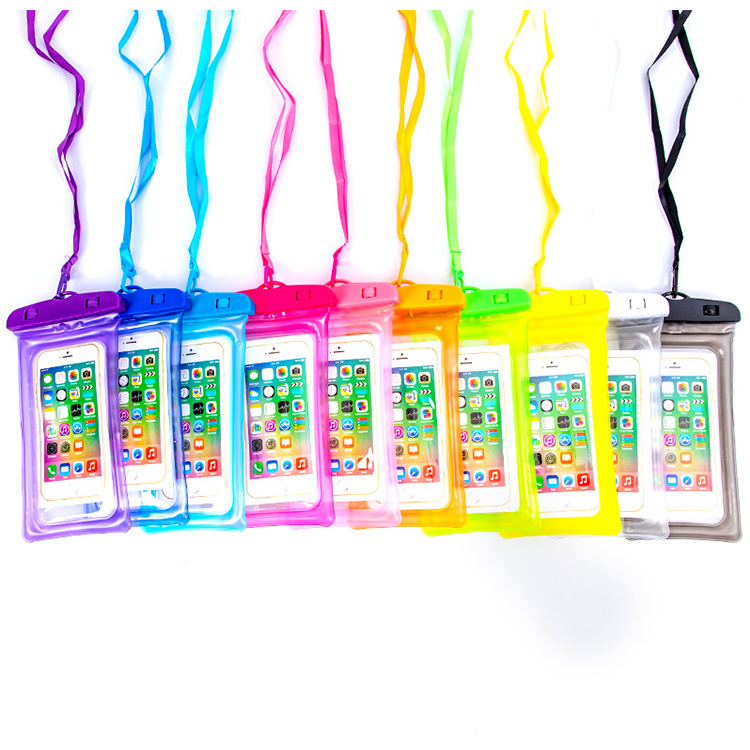
Las marcas de actividades al aire libre que compran fundas impermeables para teléfonos personalizadas suelen responder a las mismas cinco preguntas antes de escribir una orden de compra.:
- ¿El TPU o el PVC realmente mantienen el teléfono más seco durante una temporada completa de uso??
- Qué clasificación IP pertenece a la hoja de especificaciones: IPX7 o IPX8?
- ¿Se puede imprimir un logo sin debilitar el sello??
- ¿Cuál es la cantidad mínima real de pedido??
- ¿Qué situaciones dañarán un teléfono incluso con la funda sellada??
Las secciones siguientes responden cada una directamente.
¿Qué es una funda impermeable para teléfono y en qué se diferencia de una funda impermeable para teléfono??
Una funda impermeable para teléfono es flexible, Caja de película sellada en la que el teléfono se desliza y el usuario la sella.; Una funda impermeable para teléfono es una carcasa rígida o semirrígida en la que el teléfono permanece montado permanentemente.. Las bolsas funcionan con PVC de 0,15 mm a 0,4 mm, TPU, o película EVA y cuestan aproximadamente entre 0,15 y 2 dólares por unidad a granel, versus $ 8 a $ 40 por un estuche rígido con juntas. Las marcas de actividades al aire libre que regalan bolsas como artículos para eventos o accesorios de viaje prefieren las bolsas por su costo y ajuste universal.: Una bolsa de aproximadamente 17 cm x 10 cm cubre la mayoría de los modelos actuales de iPhone y Android., mientras que un estuche rígido debe moldearse por separado según el modelo de teléfono.
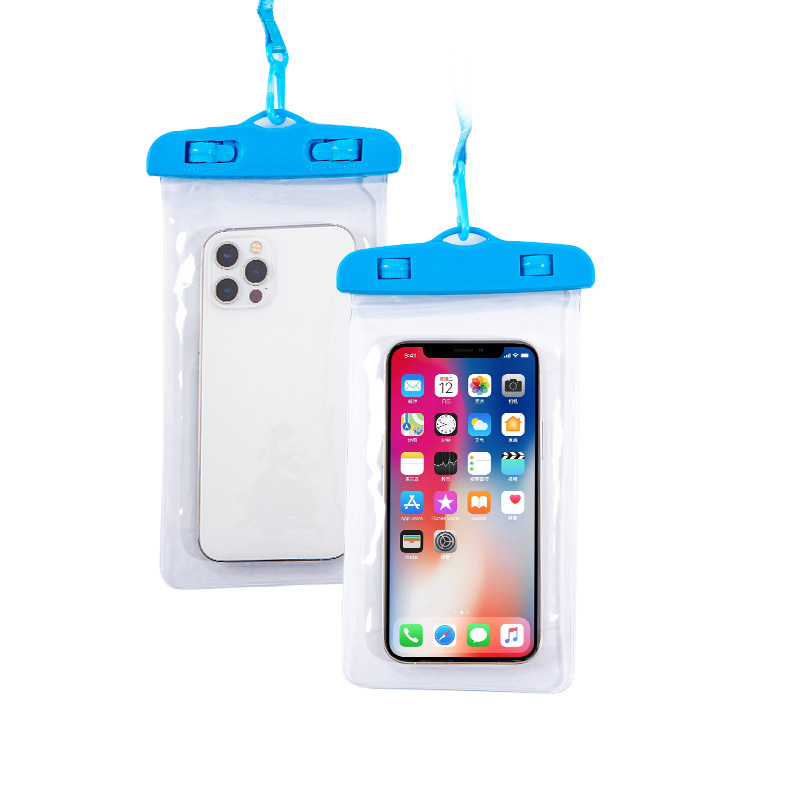
Una bolsa universal debe dejar suficiente espacio alrededor del teléfono y el área de cierre sin forzar el dispositivo contra las costuras soldadas..
¿Qué clasificación de IP debe especificar: IPX7 o IPX8??
El sistema de protección de ingreso está definido por IEC 60529. El Guía IEC para clasificaciones de protección de ingreso explica que los códigos IP clasifican la eficacia con la que un recinto resiste la intrusión de líquidos y objetos sólidos. IPX8 es la clasificación a especificar para cualquier cosa comercializada para nadar., kayak, o hacer snorkel; IPX7 solo cubre protección contra salpicaduras y lluvia. Según IEC 60529, IPX7 certifica inmersión temporal a 1 medidor para 30 minutos, mientras que IPX8 requiere que el fabricante defina y pruebe un escenario de inmersión más profunda, comúnmente validado en cualquier lugar desde 2 a 30 Metros dependiendo del protocolo propio de fábrica.. El comprador no puede verificar de forma independiente una reclamación de IPX8 sin un informe de prueba de lote coincidente de fábrica., por lo que debe tratarse como no confirmado hasta que se proporcione un certificado.
PVC vs TPU vs EVA: ¿Qué material debe usar una funda impermeable personalizada para teléfono??
La película de TPU mantiene la integridad del sello por más tiempo bajo uso repetido, mientras que la película de PVC cuesta menos por unidad y se adapta a tiradas promocionales cortas. La siguiente tabla compara los tres materiales comúnmente utilizados en la industria..
| Material | Costo unitario a granel | Flexibilidad en frío | Método de sellado | Reciclable | Mejor ajuste |
|---|---|---|---|---|---|
| CLORURO DE POLIVINILO | $0.15–$0,60 | Se endurece por debajo de 0°C | Película termosoldada | Limitado | Sorteos promocionales de una sola temporada |
| TPU | $0.40–$1,20 | Se mantiene flexible de -20 °C a -30 °C | Película termosoldada, soldadura más fuerte | Sí | Líneas de productos para exteriores para varias estaciones |
| EVA | $0.20–$0,70 | Moderado | Carcasa moldeada + cremallera (película no termosoldada) | Limitado | Estuches de almacenamiento rígidos, exteriores acolchados |
Las bolsas de PVC pierden precisión de sellado con el tiempo porque los plastificantes migran gradualmente fuera de la película., un mecanismo de degradación independiente del fallo de la costura. El TPU evita este problema porque el poliuretano termoplástico no depende de aditivos plastificantes para mantenerse flexible., Es por eso que el TPU es la recomendación predeterminada para las marcas que posicionan una bolsa como equipo duradero para actividades al aire libre en lugar de un accesorio de un solo viaje..
EVA juega un papel diferente al PVC o TPU: está moldeado en una carcasa rígida o semirrígida y se cierra con una cremallera, no formado en una película delgada y soldado térmicamente en una costura sellada. Esa construcción hace que los estuches de EVA salpiquen- y resistente a la lluvia, no clasificado para inmersión: un cierre de cremallera no cumple con el estándar de costura sellada que suponen las pruebas IPX7/IPX8. Las marcas que necesitan una verdadera bolsa sumergible deben especificar una película de PVC o TPU para la capa de sellado.; EVA es la decisión correcta cuando el producto es duradero, estuche de almacenamiento que se puede limpiar, o cuando se coloca en capas en el exterior de una bolsa de PVC/TPU como acolchado protector en lugar de como barrera contra el agua en sí..
¿Cómo se sella realmente una funda impermeable para teléfono??
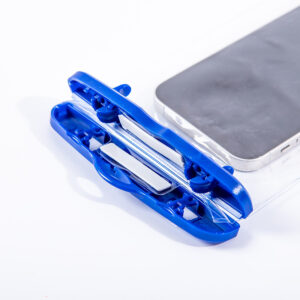
Los cierres de doble o triple bloqueo superan a un diseño simple de plegado y clip porque crean dos o tres puntos de sellado independientes en lugar de uno.. Las pruebas de guías de compra independientes muestran que los cierres que solo se pliegan pierden precisión de sellado después de aproximadamente 10 a 20 ciclos de apertura y cierre., mientras que los diseños de doble cierre con una hebilla secundaria mantienen la integridad durante muchos más ciclos en revisiones comparables. La construcción de la costura importa tanto como el cierre.: una costura perimetral termosoldada no tiene orificios para agujas ni espacios adhesivos que puedan aprovechar el agua, a diferencia de las costuras cosidas o pegadas. La soldadura por calor es un paso estándar en Guangdong Minghe Packing Industrial Co., Etapa de fabricación de bolsas de Ltd., ya que la fábrica maneja materia prima plástica, película soplada, impresión, y fabricación de bolsas en una sola cadena de producción en lugar de subcontratar el sellado.
-

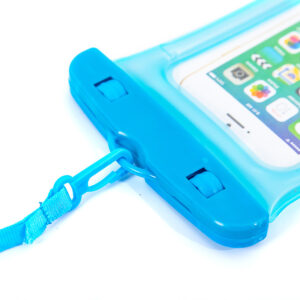
- El cierre superior rígido utiliza dos controles deslizantes para aplicar presión a través de la abertura de la bolsa..
-
- Los compradores deben inspeccionar las piezas de bloqueo internas., Superficies de sellado y alineación de la película antes de aprobar una muestra..
¿Qué tamaños y compatibilidad de teléfonos deben pedir las marcas de exteriores??
Un tamaño único de aproximadamente 17 cm x 10 cm a 21 cm x 10,5 cm se adapta a teléfonos de hasta aproximadamente 7 a 8 pulgadas en diagonal., que cubre los modelos insignia actuales de iPhone y Android con un estuche adjunto. Las marcas que venden a usuarios de tabletas necesitan un SKU de gran tamaño por separado: una funda diseñada para un teléfono de 7 a 8 pulgadas no sellará correctamente alrededor de una tableta o un teléfono con una carcasa inusualmente gruesa. 6.9 pulgadas, y forzar el ajuste tensiona la costura en el punto de cierre.
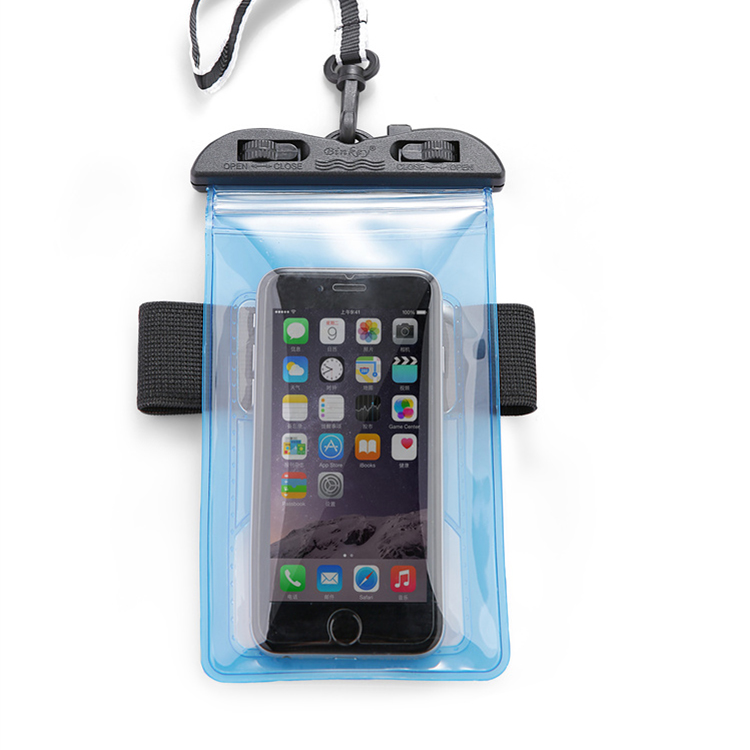
Cordones para el cuello, Los clips y los brazaletes ajustables ofrecen diferentes opciones de transporte para practicar senderismo., eventos y actividades generales al aire libre.
¿Se puede marcar una funda impermeable para teléfono con un logotipo personalizado??
Sí, los logotipos van en la hebilla., acollador, o una tarjeta impresa visible a través de la ventana transparente, no en la propia película sellada, ya que imprimir directamente sobre una línea de soldadura corre el riesgo de comprometer el sello. Asas con tampografía 1 o 2 logotipos de color en la hebilla; La marca a todo color generalmente se muestra en una tarjeta de respaldo impresa.. Guangdong Minghe embalaje industrial Co., Limitado. admite personalización en todas las formas, tamaño, color, material, y colocación del logotipo como parte de su proceso OEM estándar.
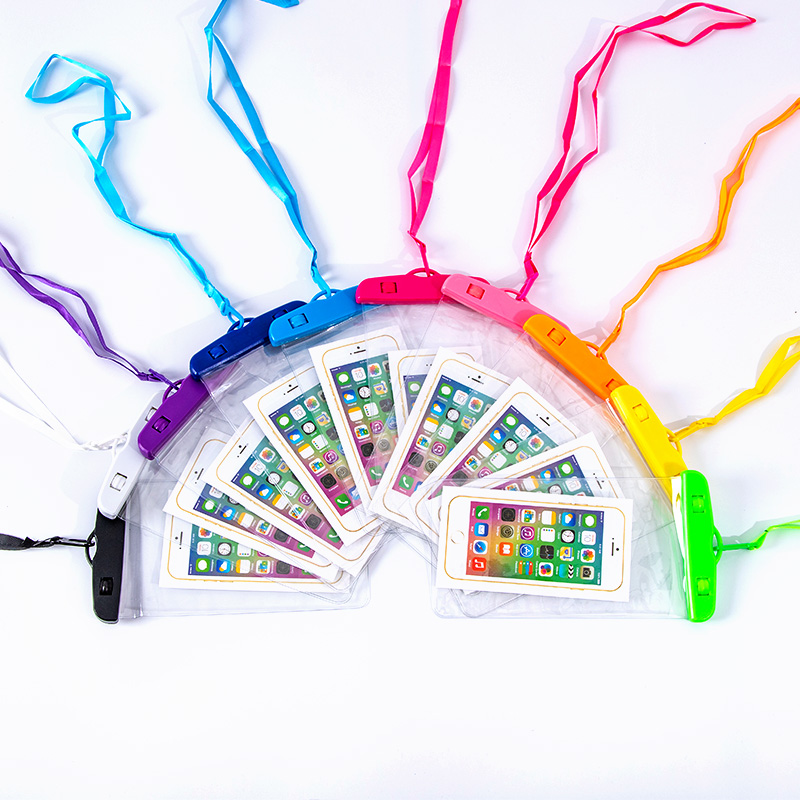
Colores de hebilla, colores de la bolsa, Se pueden seleccionar combinaciones de cordones y accesorios para diferentes programas de marcas para exteriores..
¿Cuál es la cantidad mínima de pedido para una funda impermeable para teléfono personalizada??
Los MOQ para fundas impermeables para teléfonos de marca personalizada en toda la industria generalmente varían desde 100 a 500 piezas, dependiendo de la elección del material y la complejidad de la impresión. Los cambios mínimos exactos con los requisitos de herramientas: una tampografía de un solo color en forma de bolsa estándar necesita una tirada más pequeña que un molde totalmente personalizado con impresión multicolor., por lo tanto, las marcas de actividades al aire libre deben confirmar la cantidad mínima de pedido específica con respecto a sus especificaciones exactas en lugar de asumir que se aplica un número fijo en todos los niveles de personalización..
¿Cuánto tiempo lleva la producción personalizada?, De la muestra al envío a granel?
La producción de muestras de una funda impermeable para teléfono personalizada suele tardar entre 7 y 14 días., con la producción a granel agregando otros 20 a 35 días después de la aprobación de la muestra. Estas ventanas son estándar en todos los fabricantes de bolsas chinos y dependen del tamaño del pedido., complejidad de impresión, y programación actual de fábrica: las marcas que trabajan para una fecha de lanzamiento fija deben confirmar ambas ventanas por escrito antes de comprometerse con una fecha de envío..
¿Cuándo NO se debe utilizar una funda impermeable para teléfono??
- Profundidad más allá de la prueba nominal: una bolsa no sustituye a una carcasa de buceo certificada a profundidades superiores a su clasificación probada (comúnmente 2 metros); Las marcas que prestan servicios a buceadores recreativos necesitan equipos rígidos probados a mayor profundidad., no es una bolsa blanda.
- Carga inalámbrica: La carga Qi no funciona a través de una bolsa sellada: el teléfono tiene que salir para cargarse.
- Uso de voz y micrófono.: La captación del micrófono se degrada bajo el agua más allá de aproximadamente 10 cm de profundidad porque la capa de película ocluye el puerto., por lo que los comandos de voz solo funcionan de manera confiable sobre el agua.
- Exposición al agua salada: El cloro y el agua salada que se dejan secar sobre el sello aceleran la fatiga del material más rápidamente que el agua dulce.; Las marcas que se venden a usuarios de océanos o piscinas deben recomendar un enjuague con agua dulce después de cada uso..
Preguntas frecuentes
¿Es una funda impermeable para teléfono tan segura como una funda impermeable para teléfono para nadar??
Para natación informal, una bolsa IPX8 correctamente sellada funciona de manera comparable a una carcasa impermeable de gama media a una fracción del costo. La diferencia significativa aparece en profundidad y con el tiempo.: una caja rígida con una junta mecánica generalmente mantiene su sello por más tiempo bajo tensión repetida que una costura de película doblada. Para uso único en la playa o la piscina., una bolsa es suficiente; para buceo repetido o uso diario a largo plazo, un estuche es la opción más duradera.
¿Cuál es la diferencia real entre IPX7 e IPX8??
IPX7 certifica la supervivencia en 1 metro de agua para 30 minutos según IEC 60529, mientras que IPX8 requiere que el fabricante defina y pruebe un nivel más profundo, escenario de inmersión más largo. En la práctica, esto significa que una bolsa IPX7 está diseñada para lluvia y salpicaduras., inmersión no intencional, mientras que una bolsa IPX8 está diseñada para nadar, kayak, y snorkel. Pregunte siempre por la profundidad y duración específicas con las que se probó la afirmación IPX8, ya que IPX8 en sí no especifica un número fijo.
¿Cuántas veces puedo abrir y volver a sellar una funda impermeable para teléfono antes de que falle??
Una bolsa simple de plegar y sujetar normalmente comienza a perder precisión de sellado después de aproximadamente 10 a 20 ciclos de apertura/cierre según pruebas de guías de compra independientes.. Un diseño de doble o triple cierre con una hebilla secundaria aguanta muchos más ciclos porque no depende de una sola línea de pliegue para permanecer sellado.. Enturbiamiento visible de la película, deformación de la hebilla, o un sello que ya no hace clic al ras son señales de que es hora de reemplazar la bolsa.
¿Puedo imprimir mi logotipo sin un pedido mínimo grande??
Sí, En la mayoría de los casos, las cantidades mínimas de pedido de la industria para fundas impermeables para teléfonos con marca personalizada comienzan entre 100 y 500 piezas., muy por debajo de los mínimos de vestimenta o herramientas rígidas. El número exacto depende de si la impresión es una simple tampografía de 1 o 2 colores en la hebilla o una tarjeta insertada personalizada a todo color., ya que una impresión más compleja requiere tiradas más grandes para ser rentable. Confirme el mínimo con respecto a la ubicación específica de su logotipo y el recuento de colores antes de finalizar una cotización..
¿Funciona una funda impermeable para teléfono con carga inalámbrica??
No, la carga inalámbrica Qi no puede pasar a través de una bolsa impermeable sellada, independientemente del material o la clasificación IP. Es necesario sacar el teléfono de la funda para cargarlo de forma inalámbrica o mediante un cable de carga.. Esta es una limitación fija del diseño de película sellada., no es un defecto en ninguna bolsa específica, y se aplica igualmente al PVC, TPU, y construcciones EVA.